Total: €0,00
Taxes and shipping calculated at checkout

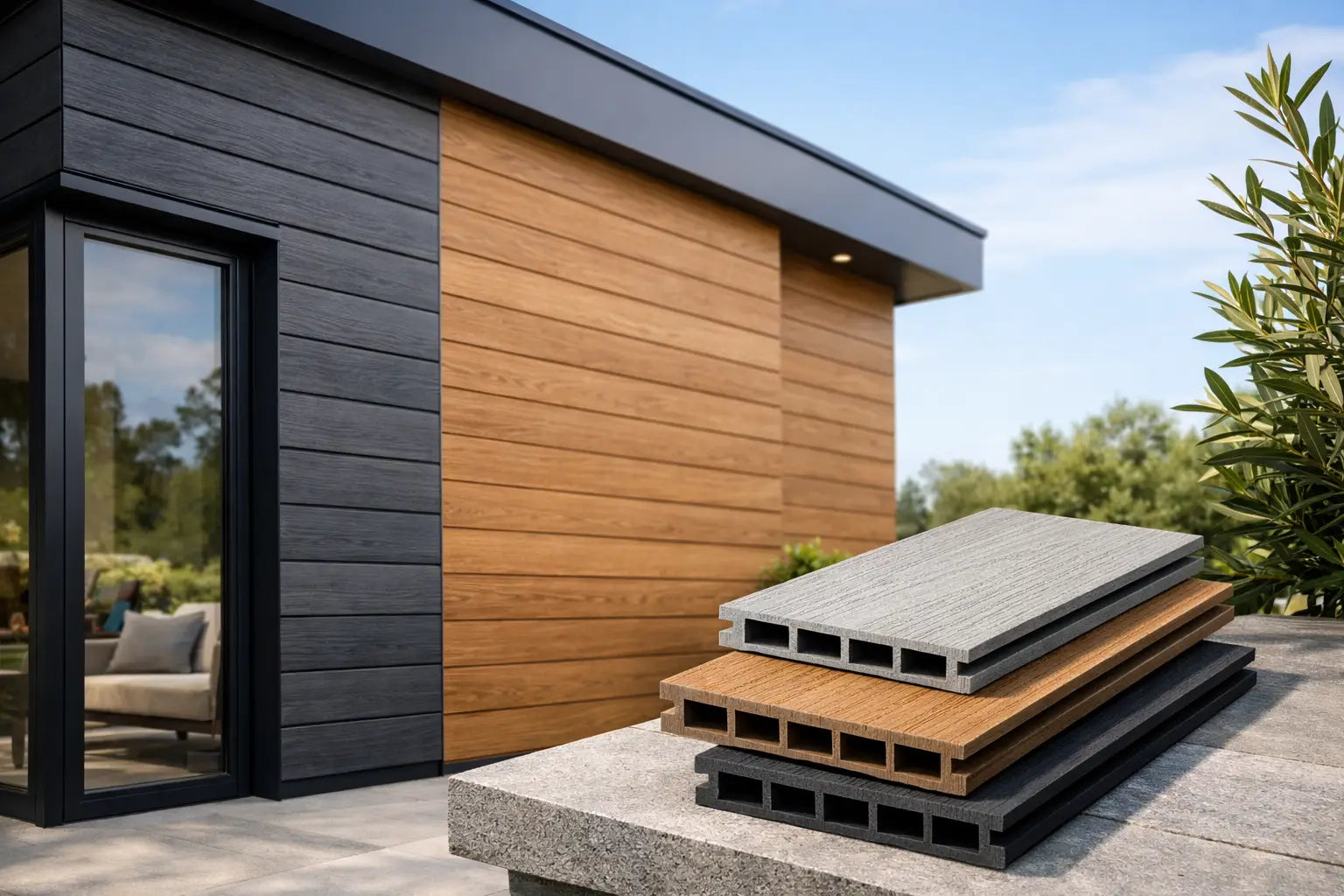
A facade should not only look good on the day of installation. It must also remain sleek after rain, sun, frost, and years of use. This is precisely why more and more homeowners and professionals are looking at the advantages of composite facade cladding. It's not just about appearance, but about less maintenance, predictable quality, and a finish that stays neat for a long time.
For those who want to clad a modern home, extension, garden office, or exterior wall, composite is a logical alternative to traditional wood. The wood look remains popular, but the disadvantages of sanding, painting, and premature weathering are increasingly weighing on many people. Then you want a material that is practical and visually correct.
Composite facade cladding combines fibers and plastics into a stable and durable product. In practice, this mainly means one thing: less hassle. While wood is susceptible to moisture absorption, warping, and intensive maintenance, composite is designed to withstand outdoor conditions much better.
You will notice this difference not only after a few months but especially in the long run. A facade is not a detail you want to tackle every year. So you'd rather choose a solution that lasts a long time and supports the appearance of the building without requiring continuous work.
This is just as relevant for professionals. A contractor, facade specialist, or landscaper wants to work with material that is consistent, looks sleek, and immediately inspires confidence upon delivery. The same applies to private clients, but from a different angle: they mainly want to live beautifully without the burden of maintenance.
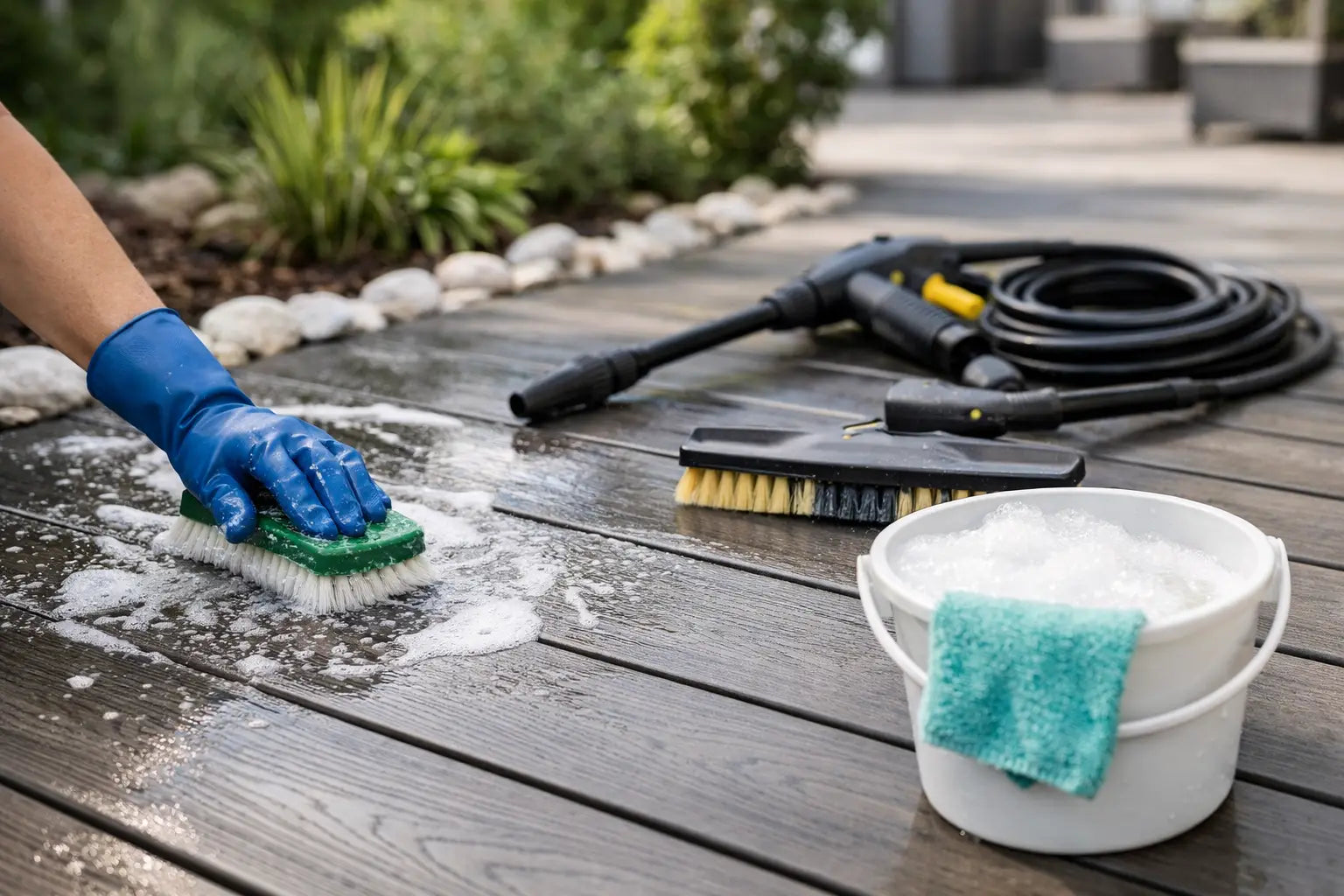
Perhaps the biggest advantage is minimal maintenance. A wooden facade often involves a recurring schedule of cleaning, sanding, staining, or painting. This costs time, money, and attention. Composite facade cladding requires much less of that. Regular cleaning is usually enough to keep the facade fresh.
For busy homeowners, this is a big plus. You maintain a well-groomed appearance without having to get started with maintenance products and tools every season. This is also attractive for commercial buildings, outbuildings, and holiday homes, as it helps you control maintenance costs better.
A facade has to endure a lot all year round. Bright sun, prolonged rain, wind, cold, and temperature fluctuations cause wear and tear on many materials. Composite, however, is developed to perform strongly under these conditions. The material is weather-resistant and fundamentally dimensionally stable, provided it is correctly installed.
This makes it suitable for various applications, from complete house facades to accent walls, dormer windows, and garden structures. Especially in climates with wet winters and warm summers, this predictability is a great advantage. You don't want a facade that quickly discolors, cracks, or deforms.
Many people want the warm look of wood, but not the associated maintenance. This is precisely where composite excels. The modern finish looks sleek, contemporary, and consistent. This makes it well-suited for new construction, renovation, and modern garden architecture.
The advantage also lies in uniformity. Natural wood comes with knots, color differences, and varying aging. This can be beautiful, but not everyone seeks that unpredictability. Composite offers a more controlled appearance. For projects where lines, color fastness, and a well-maintained finish are important, this often works better.