Total: €0,00
Taxes and shipping calculated at checkout

You choose composite decking precisely because you don't want to bother with sanding, oiling, and endless maintenance. Yet, even a low-maintenance floor looks better if you know the best way to clean a composite deck. With the right routine, you can keep the color fresh, prevent slipperiness, and extend the neat appearance that composite is known for.
Composite is strong, dimensionally stable, and designed for outdoor use. However, that doesn't mean dirt disappears on its own. Rain, sand, leaf debris, grease splatters from the barbecue, and green algae build up gradually. This is especially noticeable in shady spots or under trees.
Regular cleaning is therefore not a luxury, but smart preservation of its appearance. A clean deck looks neater, feels safer, and requires less intensive work in the long run. That's precisely what makes composite so attractive: low maintenance, provided you keep up with it properly.
The best approach is simple. Always start dry. Sweep away leaves, twigs, sand, and other loose dirt with a soft broom. If you don't do this first, you'll work the dirt into the texture or between the grooves with water.
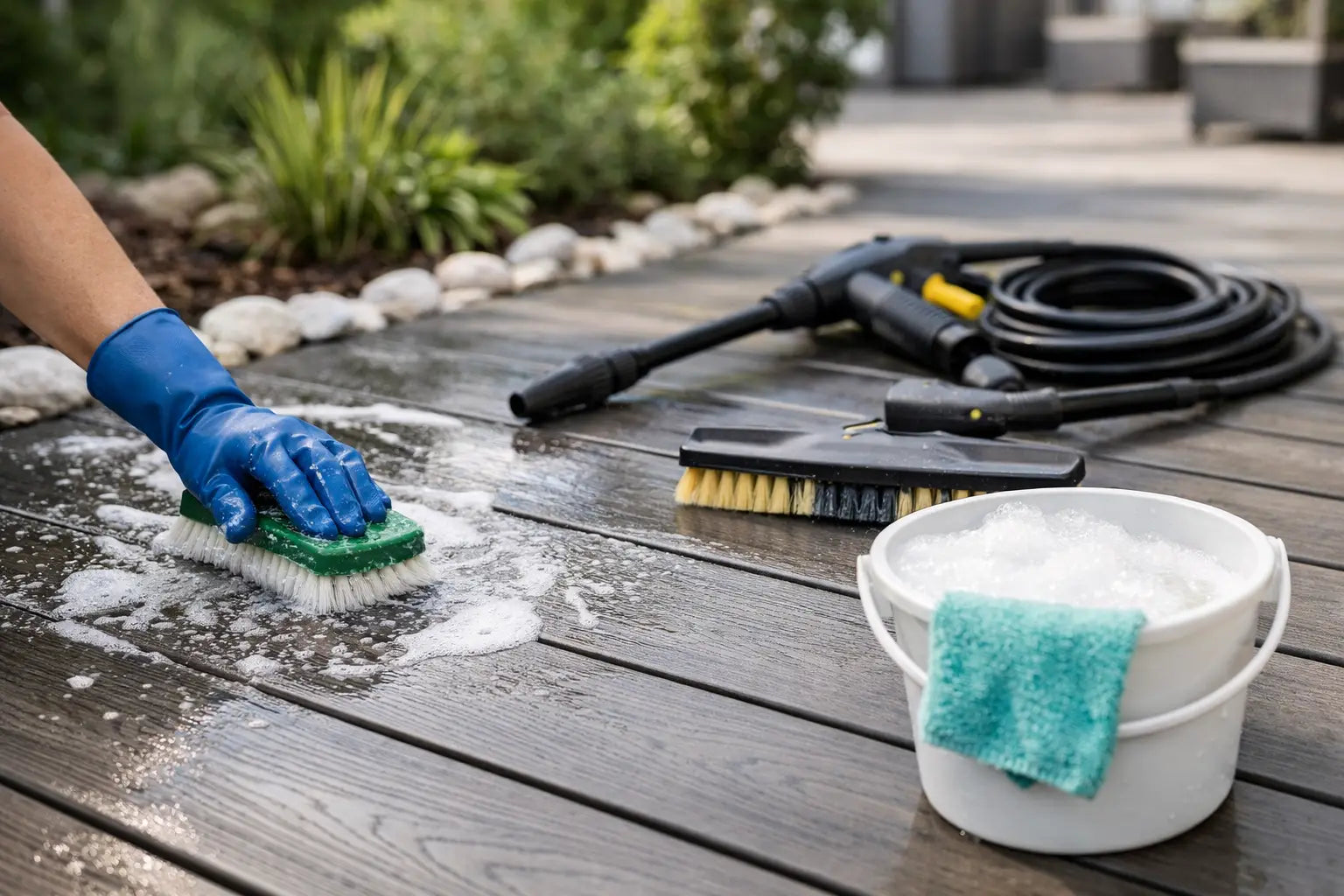
Afterward, use lukewarm water with a mild cleaning agent, such as a gentle all-purpose cleaner or a limited amount of soft soap. Scrub the planks with a soft brush along the length of the profile. This way, you effectively tackle dirt without unnecessarily stressing the surface.
Then rinse with clean water. Do not let soap residue dry, as it can cause a dull film. For normal maintenance, this is usually sufficient. For a deck that is easily accessible and not constantly in the shade, this basic routine often goes a long way.
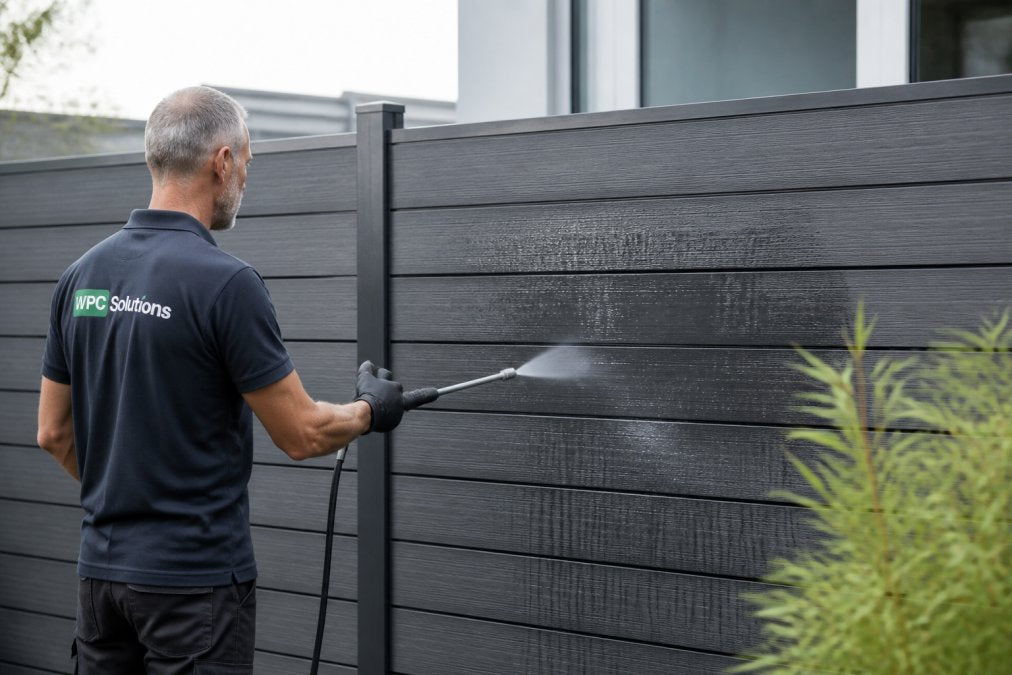
Damage to composite often occurs not from too little cleaning, but from too aggressive cleaning. A high-pressure cleaner seems fast, but it can roughen the surface if you work too close or use too much pressure. This can cause dirt to adhere more quickly later.
Chlorine, aggressive degreasers, solvents, and abrasive sponges are also not smart choices. They can damage the finish or cause color differences. This is especially true for newer planks with a protective outer layer. Low-maintenance does not mean that every cleaning agent is suitable.
If you are unsure about a product, test it first on a small, less visible area. That takes two minutes and prevents unnecessary damage to a larger surface.
That mainly depends on the location. A composite deck in full sun with little vegetation around it usually stays clean longer than a deck under trees or next to a pond. In practice, a simple routine works best: regular sweeping and a thorough cleaning a few times a year.
In the spring, a more extensive cleaning makes sense, as winter often leaves behind dirt, moisture, and stains. In the autumn, it's smart to remove leaves and organic material more quickly. If you leave wet leaves too long, discolorations or stubborn marks can occur.
For families who use their deck intensively, for example with garden furniture, children, or outdoor cooking, intermediate cleaning is often simply practical. The faster you react to visible dirt, the less effort you'll need later.
Green algae is one of the most common reasons to clean a composite deck. Especially in damp, cool places, a thin layer of algae or moss forms, which not only looks messy but can also become slippery.
The solution usually lies not in stronger agents, but in acting faster. Sweep the deck dry more often, ensure that leaves don't remain, and scrub away algae with water and a mild cleaning agent. Sometimes one treatment is not enough if the layer has been present for a longer time. In that case, repeating works better than scrubbing harder.
If your deck structurally suffers a lot from moisture, also look at the surroundings. Pots without saucers, poor drainage, or permanently shady areas make more of a difference than many people think. Cleaning helps, but smart prevention helps longer.
A deck should be used. Then you also have to deal with spilled wine, grease splatters, or food residues. For composite, the sooner you act, the better the result. Blot or wipe the stain immediately with water and a soft cloth or brush.
For grease stains, warm water with a mild degreasing cleaning agent often works well, as long as the product is not aggressive. Do not let dirt soak in for hours or days, especially not during warm weather. Heat can make some stains adhere more strongly to the surface.
Dark or light composite colors do not always react identically to dirt. On anthracite, dust and lime are sometimes more visible, while on lighter shades, organic dirt stands out more. This is not a quality difference, but a matter of visibility and usage environment.
Organic material can release tannins or dyes. Think of wet leaves, mud, or soil from planters. Rubber stoppers under furniture or pots that stay in the same place for a long time can also leave a mark.
Here, speed and regularity are particularly helpful. Move pots occasionally, keep the floor dry where possible, and remove dirt before it sets in. For superficial discolorations, patience is important. Some traces disappear over time through normal weather use and UV exposure, especially if you keep the deck neatly clean in the meantime.
Not every stain completely disappears in one go. That's not a sign that composite performs poorly. Outdoor material lives with the season, use, and weather influences. The difference is that composite does not require intensive after-treatment to look presentable again.
Sometimes yes, but only with caution. For stubborn dirt, some users opt for a high-pressure cleaner on a low setting, with sufficient distance from the surface. That can work, but it remains a risk if you don't know exactly how your deck is constructed.
For private users, manual cleaning is usually the safest choice. The same applies to professionals: working quickly is pleasant, but repairing damaged surfaces ultimately costs more time than carefully cleaning with the right tools. Especially with modern, neatly finished outdoor areas, you don't want to cause rough spots or color differences.
Those who choose composite want a neat outdoor space without the maintenance level of wood. This advantage remains, even if you clean occasionally. The difference lies in the effort. No sanding machine, no stain, no annual oil treatment. Just a practical routine that keeps the floor presentable.
That's why composite fits so well with modern gardens, decks, and project-based outdoor spaces. The material combines a wood look with ease of use and a long lifespan. For homeowners, that means less work on weekends. For professionals, it means fewer maintenance questions afterward and a neat delivery that continues to look good for longer.
At WPC Solutions, this idea is about more than just appearance. Low-maintenance materials must also be logical in practice: strong, stylish, and easy to keep clean. That's precisely where composite excels when applied correctly and maintained normally.
Don't make it harder than necessary. Sweep loose dirt weekly or as soon as you see leaves and sand accumulating. Also, schedule a thorough cleaning in the spring and, depending on the location, once more in the summer or autumn. If you see a stain, tackle it immediately instead of waiting until the next big cleaning.
Always use mild agents, a soft brush, and clean water. That sounds simple, and it is. This simple approach keeps a composite deck beautiful without unnecessary stress on the surface.
A deck should not only look neat on the day of installation, but also invite you to live on it months and years later. Those who approach composite deck cleaning as small, regular maintenance instead of postponed big work, will keep the deck beautiful for longer with minimal effort.