Total: €0,00
Taxes and shipping calculated at checkout

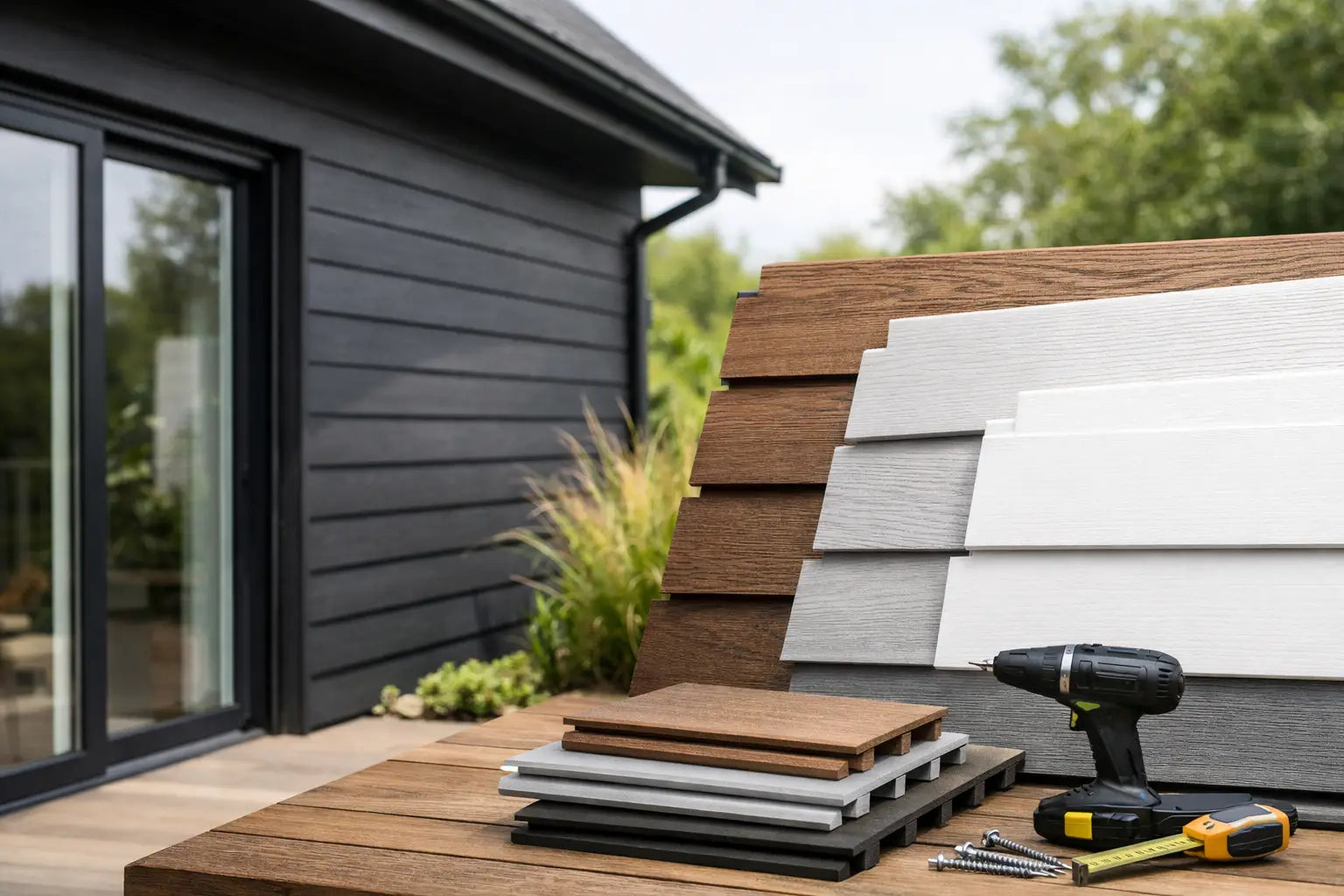
If you want an outdoor wood look without yearly sanding, staining, and repairing, external rabat panel cladding is an obvious choice. This is not a trendy option, but a practical upgrade for homes, outbuildings, canopies, and commercial properties that need a sleek appearance and low maintenance. This is precisely where rabat panels make a difference: a calm facade, a modern line, and a finish built for long-term value.
Rabat panels have been used on facades for years, but customer expectations have changed. The aesthetic of wood remains attractive, but its disadvantages are no longer acceptable to many people. Traditional wood works, discolors, requires periodic maintenance, and often needs more frequent repair over time. For private individuals, this means time and costs. For professionals, it also means a greater chance of discussions about aftercare and weathering.
That is why the demand for composite rabat panels for outdoor use is growing. You get the warm look of wood, but with much more consistent performance. The surface remains smooth longer, the color is more manageable, and the material is developed for weather resistance. This makes it an attractive option for a complete house facade, but also for smaller projects such as dormer windows, garden walls, facade strips, and outdoor storage sheds.
The biggest advantage often lies not in how it looks on day one, but in how it looks after five or ten years. A neat facade that requires little attention simply provides more convenience.
When comparing rabat panels, you quickly notice differences in color, profile, and price. However, these are not the only factors that count. For outdoor use, the choice primarily revolves around durability, ease of installation, and the quality of the overall system.
The profile largely determines the appearance. Some rabat panels have a classic, overlapping look, while others are sleeker and more modern. For a rural home, a more traditional line can work well, while new builds and modern extensions often require a sleek, horizontal facade. The right choice therefore depends on the architecture of the building and how much emphasis the cladding should provide.
In addition, colorfastness plays a role. Outdoor materials are exposed to sun, rain, temperature fluctuations, and dirt adhesion throughout the year. Good composite facade cladding is developed for this. This does not mean that there will never be any nuance or natural aging visible, but it does mean you do not want a material that quickly looks faded or greys unevenly.
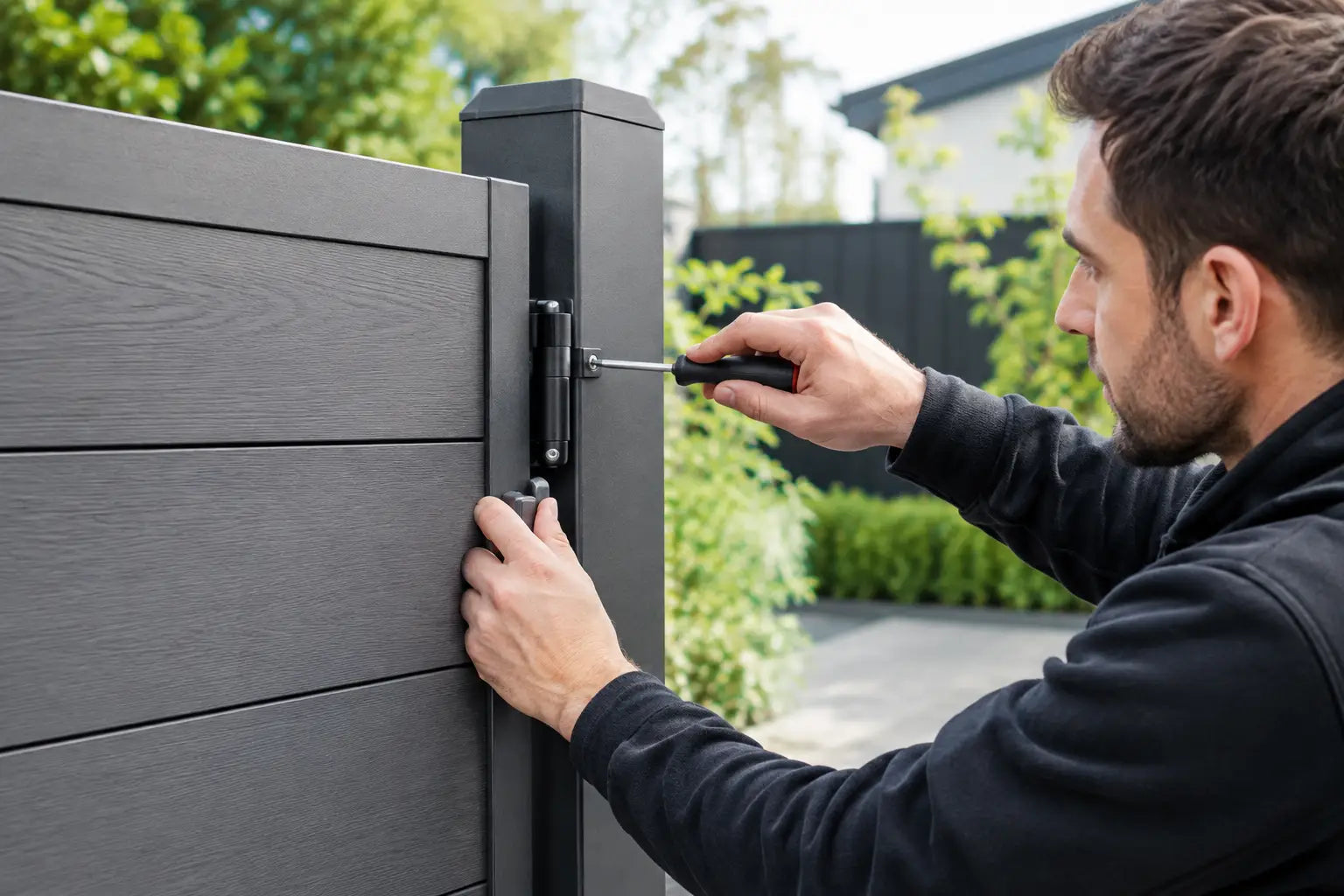
The substructure behind the panels is also important. Facade cladding only performs well if the construction is correct. Consider ventilation, a flat framework, and correct fastening. The rabat panel itself can be very strong, but without proper installation, the system will not do what it is supposed to do. For DIY enthusiasts, this is an important point of attention, and for professionals, it is a reason to work with complete and predictable systems.
Many people start their search by asking whether wood isn't cheaper or more attractive. That depends on when you look. At first glance, wood can seem appealing, especially with simpler wood types. But outdoor use is not judged solely on the purchase price. You judge it on maintenance, lifespan, and appearance over time.
Wood has character, but also movement. It can crack, warp, or discolor unevenly. Especially on facades fully exposed to sun or rain, you will see this sooner than initially expected. Composite rabat panels are much more consistent. They are made to keep the appearance sleek and significantly reduce maintenance. This makes them attractive for anyone who wants a modern facade without recurring annual work.
There is a nuance, however. Those who consciously choose natural weathering and the living character of real wood will experience composite differently. Composite is particularly strong for customers who value calm, uniformity, and convenience more than that completely natural variation. For many homes and outdoor projects, this is precisely the right consideration.
Facade cladding with rabat panels is more versatile than just for the front or side facade of a home. Its flexibility is precisely what makes it so popular. A storage shed immediately gets a higher quality appearance, an extension connects better with modern window frames, and a canopy immediately looks more finished.
It is also a smart choice for renovation projects. Old facade strips, weathered wooden cladding, or messy exterior walls can be visually significantly improved without the end result looking heavy or clunky. Because rabat panels are available in various colors and finishes, you can work towards contrast or a calm unity with the rest of the building.
For commercial applications, something extra also counts: representativeness. A neat exterior facade without visible wear supports a professional appearance. This also makes rabat panels interesting for office units, showroom facades, practice spaces, and hospitality environments.
A sleek facade does not start with the last panel, but with the preparation. The framework must be flat, the ventilation behind the cladding must be correct, and the alignment must be accurate from the first row. This sounds logical, but in practice, this often makes the difference between a project that looks premium and one that is just not convincing.
Horizontal installation is popular because it makes the facade optically wider and calmer. Vertical application can be interesting if you want to emphasize height or seek a modern architectural accent. Both directions can work well, as long as the detailing is done carefully.
Also consider corner finishing, connections around window frames, and the transition to roof edges or the foundation. These details precisely determine whether the facade looks like a complete system. Those who choose material based only on the visible surface often miss where the real quality experience comes from.
For the DIY enthusiast, therefore, a simple rule applies: only start when the substructure is clear. For professionals, predictability is paramount. The faster and neater the system is processed, the better it works out for planning, installation costs, and delivery quality.
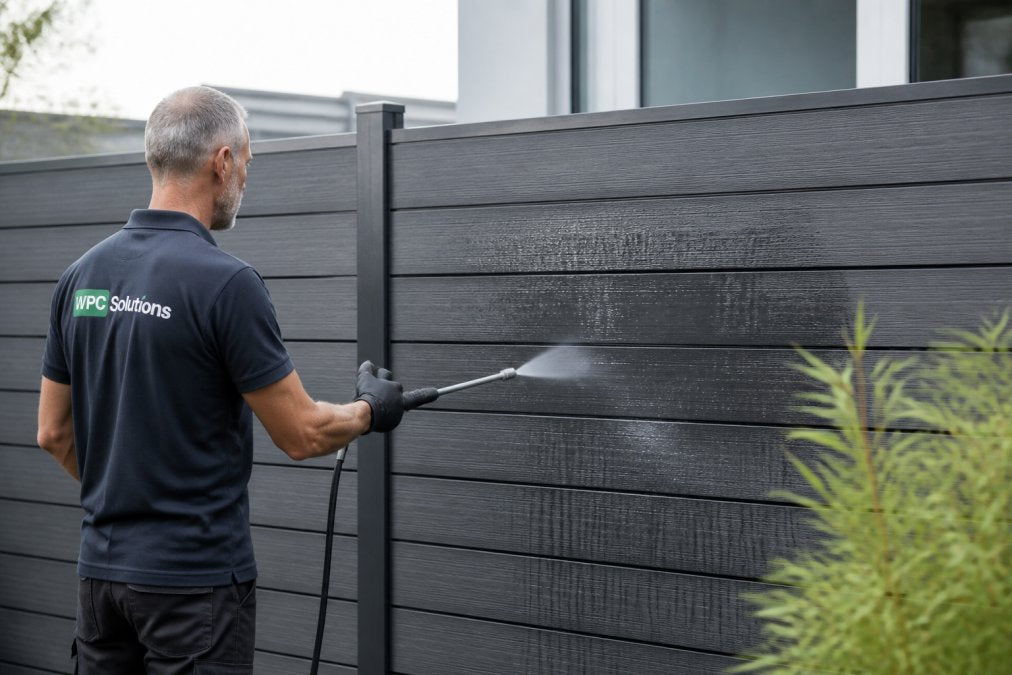
One of the strongest arguments for composite is its limited maintenance. You do not need to periodically sand, varnish, or stain. This saves a lot of work and keeps the total operating costs more manageable. However, low maintenance does not mean you never look at it again.
Like other outdoor materials, facade cladding remains more attractive if you remove dirt promptly. Think of dust, splash water, deposits, or leaves that remain on the facade for a long time. With simple cleaning, you keep the surface fresh and presentable. The difference is mainly that you do not need an intensive repair process to keep the cladding in good condition.
This is precisely why this solution fits so well with modern homeowners and business clients. You invest once in a neat finish and then benefit from years of ease of use.
This choice is particularly strong if you are looking for three things simultaneously: a modern appearance, low maintenance, and a material that is resistant to outdoor use. If you have a home, extension, or garden structure that you want to visually upgrade without extra maintenance burden, composite rabat panels are often a logical step.
It also works well for new construction or redevelopment. You build directly with materials that meet current expectations: sleek, durable, and practical. For contractors and facade specialists, this is attractive because customers are increasingly asking for solutions that remain beautiful without continuous maintenance costs.
The smartest purchase is rarely the cheapest per square foot. It is the choice that best balances installation, appearance, and lifespan. That is why more and more customers are looking at complete systems instead of just individual panels. At WPC Solutions, this approach aligns well with what the market demands: low-maintenance facade finishing with a wood look, fast delivery, and a result that is immediately convincing.
Anyone who takes their exterior facade seriously chooses not only cladding that looks good today, but a finish that also radiates calm, quality, and value years from now.