Total: €0,00
Taxes and shipping calculated at checkout

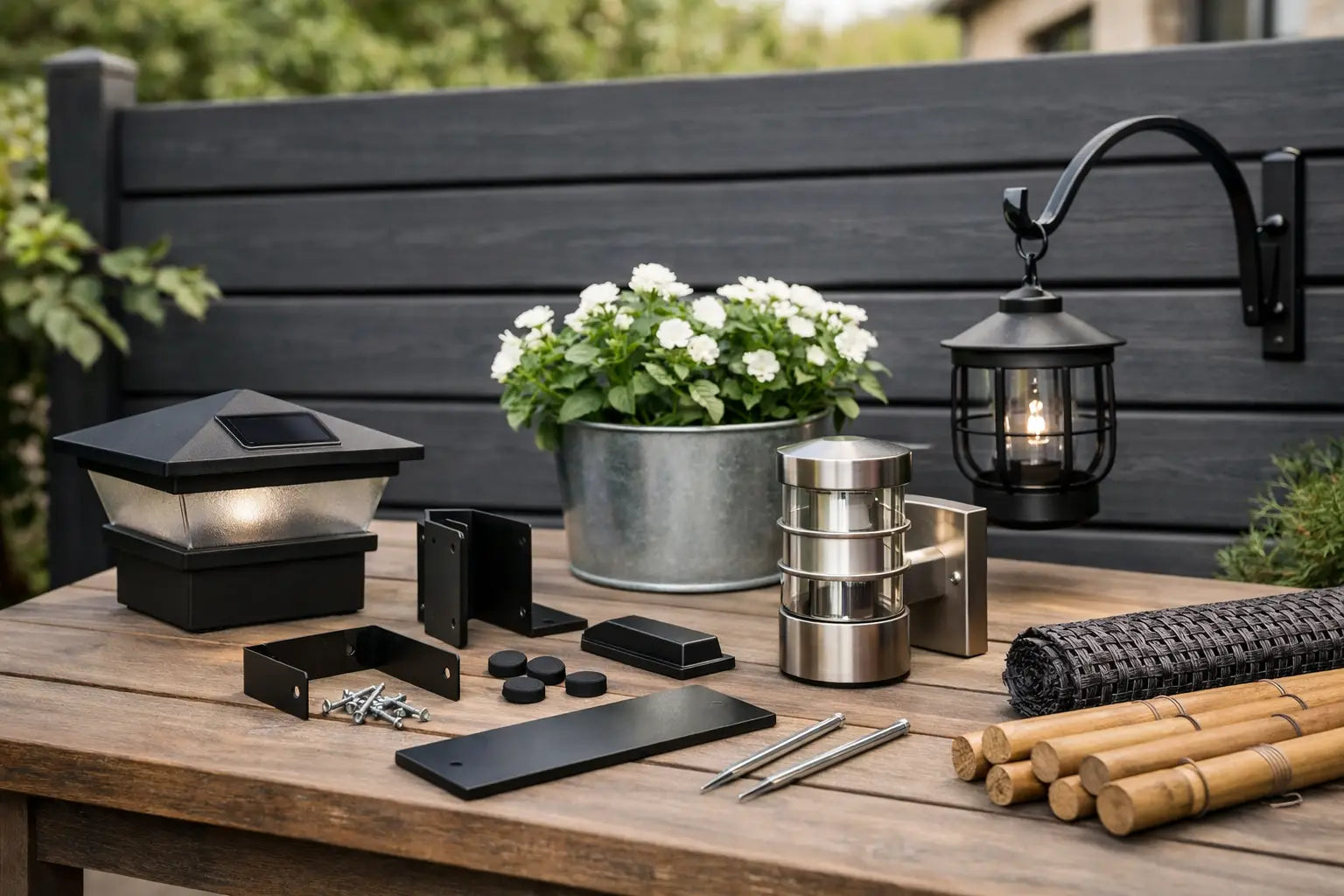
Een strakke schutting valt of staat niet met alleen de panelen. Juist bij schutting accessoires bestellen zie je snel het verschil tussen een project dat netjes, stevig en duurzaam staat en een erfafscheiding die na korte tijd al speling, kleurverschil of een rommelige afwerking laat zien. Wie slim bestelt, koopt daarom niet alleen de zichtdelen, maar denkt direct door naar bevestiging, eindafwerking en montagegemak.
Veel kopers focussen eerst op de schermen, palen of composiet planken. Begrijpelijk, want dat zijn de onderdelen die je direct ziet. Toch bepalen accessoires voor een groot deel hoe degelijk het eindresultaat wordt. Denk aan bevestigingsmaterialen, afdekkappen, hoekoplossingen, montageprofielen en rails. Dat zijn geen extraatjes, maar systeemdelen.
Voor particuliere klanten betekent dat minder kans op montagefouten en een nettere afwerking. Voor hoveniers en aannemers betekent het vooral tempo, voorspelbaarheid en minder correctiewerk op locatie. Als alle onderdelen op elkaar afgestemd zijn, werk je sneller en voorkom je improvisatie met losse materialen die eigenlijk net niet passen.
Bij composiet speelt dat nog sterker dan bij traditioneel hout. Het materiaal is onderhoudsarm, maatvast en ontworpen voor een strakke uitstraling. Dan wil je geen willekeurige accessoires gebruiken die afbreuk doen aan het geheel. Een moderne schutting vraagt om een modern systeem.
Wie schutting accessoires bestellen serieus aanpakt, kijkt verder dan schroeven alleen. In de praktijk gaat het meestal om drie groepen onderdelen: bevestiging, constructieve afwerking en visuele afwerking.
Onder bevestiging vallen bijvoorbeeld montageclips, schroeven, beugels en verbindingsstukken. Deze zorgen dat panelen en planken stevig gemonteerd worden zonder onnodige spanning of scheefstand. Bij een composiet schutting is het slim om te kiezen voor accessoires die qua materiaal en toepassing passen bij buitengebruik. Zo voorkom je vroegtijdige slijtage of roestvorming.
Constructieve afwerking draait om onderdelen zoals U-profielen, begin- en eindprofielen, tussenprofielen en paalafwerking. Die onderdelen houden de opbouw stabiel en zorgen voor een consistente montage. Zeker bij lange lijnen, hoogteverschillen of hoekopstellingen wil je hier niet op besparen.
Visuele afwerking is minstens zo relevant. Afdeklijsten, paalkappen en nette overgangen geven een schutting de uitstraling van een compleet systeem in plaats van een verzameling losse onderdelen. Dat zie je niet alleen terug in het eindbeeld, maar ook in de waardebeleving van de hele tuin.
Een veelgemaakte fout is accessoires selecteren op basis van losse prijs in plaats van op compatibiliteit. Dat lijkt voordelig, maar kan juist duurder uitpakken als onderdelen niet goed aansluiten. Je verliest tijd, moet ter plekke aanpassen of bestelt achteraf alsnog het juiste onderdeel bij.
Daarom werkt systeemdenken beter. Je bekijkt de schutting als één geheel: palen, panelen, rabatdelen, profielen en bevestiging moeten logisch op elkaar aansluiten. Dat is vooral belangrijk als je kiest voor onderhoudsarme materialen met een strakke, moderne afwerking. Bij zulke projecten valt elke onnauwkeurigheid sneller op.
Voor professionals is dit simpelweg efficiënter. Je wilt niet op de montagedag ontdekken dat een profiel een paar millimeter afwijkt of dat een paalkap visueel niet matcht. Voor doe-het-zelvers geeft een compleet systeem vooral rust. Minder twijfel, minder kans op verkeerde keuzes, en een beter eindresultaat.
Niet elke schutting vraagt om dezelfde accessoires. De juiste set hangt af van het type schutting, de lengte van het traject, de ondergrond en de gewenste uitstraling. Een vrijstaande erfafscheiding stelt andere eisen dan een schutting tussen bestaande muren. Een project in een open, winderige tuin vraagt om meer aandacht voor stabiliteit dan een beschutte stadstuin.
Kijk daarom eerst naar de opbouw. Werk je met losse composiet planken in profielen, met complete schermen of met een modulair pakket? Controleer daarna de maatvoering. Hoogte, breedte en paalafstand bepalen welke profielen en bevestigingspunten nodig zijn. Let ook op kleur en afwerking. Zwart beslag bij een moderne antraciet schutting kan perfect werken, terwijl een afwijkende tint juist storend oogt.
Een ander punt is onderhoud op lange termijn. Juist omdat composiet gekozen wordt vanwege het onderhoudsarme karakter, wil je accessoires die dat voordeel ondersteunen. Denk aan onderdelen die bestand zijn tegen vocht, temperatuurschommelingen en intensief buitengebruik. Een goedkope oplossing die sneller vervangt moet worden, is zelden de voordeligste keuze.
Bij online bestellen draait het niet alleen om prijs, maar ook om logistiek. Een schuttingproject loopt vertraging op als je hoofdmaterialen wel binnen hebt, maar de essentiële accessoires nog ontbreken. Daarom is compleet bestellen de slimste route. Niet in fases nadenken, maar vooraf het hele project in kaart brengen.
Dat betekent: eerst de constructie bepalen, daarna pas de aantallen afronden. Hoeveel palen? Hoeveel begin- en eindprofielen? Zijn er hoeken, hoogteverschillen of poortaansluitingen? Heb je extra afwerkkappen nodig? Deze aanpak voorkomt nabestellingen en maakt planning een stuk strakker.
Voor vakmensen is dat direct winstgevend. Minder losse ritten, minder stilstand, minder margeverlies. Voor particuliere klanten betekent het vooral een sneller project en minder frustratie. Als alles in één levering binnenkomt, kun je direct doorpakken.
Wie accessoires vergelijkt, ziet snel prijsverschillen. Toch is goedkoop niet automatisch slim. Een lagere stukprijs lijkt aantrekkelijk, maar alleen als de kwaliteit en pasvorm kloppen. Accessoires die niet bedoeld zijn voor het gekozen systeem kunnen de montage vertragen of de levensduur van de schutting negatief beïnvloeden.
Slim inkopen betekent kijken naar de totale waarde. Hoe snel kun je monteren? Hoe strak oogt het eindresultaat? Hoe groot is de kans dat je later moet herstellen of vervangen? Dat zijn de vragen die tellen. Zeker bij een duurzame composiet schutting wil je dat de details hetzelfde kwaliteitsniveau hebben als de hoofdconstructie.
Daar zit ook een esthetische kant aan. Een schutting met premium uitstraling verliest overtuigingskracht als de afwerking zichtbaar eenvoudig of rommelig is. Klanten investeren juist in composiet vanwege de combinatie van houtlook, lange levensduur en weinig onderhoud. Dan moet de afwerking daarop aansluiten.
De behoefte verschilt per klanttype, maar de kern is hetzelfde: je wilt snel zeker weten dat je de juiste onderdelen kiest. Particulieren zoeken vaak duidelijkheid en gemak. Zij willen geen technisch verhaal dat langer duurt dan de montage zelf. Wat zij nodig hebben, is een logisch assortiment met accessoires die direct passen bij de gekozen schuttingoplossing.
Professionals kijken scherper naar verwerkingssnelheid, maatvastheid en constante beschikbaarheid. Voor hen zijn betrouwbaarheid en herhaalbaarheid cruciaal. Als je vaker met hetzelfde systeem werkt, wil je kunnen rekenen op identieke kwaliteit en voorspelbare montage.
Precies daar zit de kracht van een specialistisch assortiment. Niet eindeloos veel losse universele onderdelen, maar doelgerichte accessoires die passen bij moderne composiet toepassingen. Dat werkt sneller, oogt beter en beperkt risico tijdens montage. Voor klanten die efficiënt willen bestellen zonder concessies aan uitstraling is dat gewoon de sterkste route.
De eerste fout is te laat nadenken over accessoires. Dan zijn de schermen al gekozen, maar blijken nog profielen, bevestiging of afdekkappen nodig. De tweede fout is uitgaan van standaardmaten zonder de feitelijke situatie op te meten. Een kleine afwijking in breedte of hoogte kan invloed hebben op de hele opbouw.
Een derde fout is verschillende systemen combineren in de hoop geld te besparen. Soms werkt dat, maar vaak levert het kleurverschil, pasproblemen of extra werk op. En een vierde fout is te krap bestellen. Zeker bij montage op locatie is een kleine reserve vaak verstandiger dan exact op nul inkopen.
Wie die fouten voorkomt, bespaart tijd en houdt grip op budget en planning. Dat geldt voor een compacte tuinafscheiding net zo goed als voor een groter project met meerdere lijnen en aansluitingen.
Als je online schutting accessoires bestellen wilt aanpakken zoals het hoort, begin dan niet bij losse details maar bij het complete eindbeeld. Welke uitstraling wil je bereiken? Welke constructie hoort daarbij? En welke accessoires maken dat systeem pas echt af? Zodra je die vragen goed beantwoordt, wordt bestellen veel eenvoudiger.
Een specialist als WPC Solutions speelt daar sterk op in met onderhoudsarme composietoplossingen, complete systemen en accessoires die gericht zijn op een strakke montage en een duurzame afwerking. Dat is precies wat werkt als je snel wilt schakelen zonder concessies te doen aan kwaliteit.
De beste keuze is meestal niet de accessoire die het minst kost, maar de accessoire die het project afmaakt. Wie daar vooraf scherp op let, bouwt niet alleen sneller, maar kijkt ook jaren later nog naar een schutting die gewoon klopt.