Total: €0,00
Taxes and shipping calculated at checkout

Een schutting die op papier goed lijkt, valt in de praktijk vaak tegen door één simpel probleem: het pakket klopt net niet. Te weinig schermen, verkeerde palen, geen rekening met hoogteverschil of een kleur die anders oogt dan verwacht. Wie een schutting pakket samenstellen wil, doet er dus goed aan om niet alleen naar de prijs per set te kijken, maar vooral naar het complete systeem.
Dat is precies waar het verschil zit tussen snel bestellen en slim bestellen. Een goede composiet schutting koop je niet als losse stapel onderdelen, maar als een doordachte combinatie van panelen, palen, bevestiging en afwerking. Zeker als je een moderne, onderhoudsarme tuin wilt die er over vijf jaar nog steeds strak uitziet.
Een compleet pakket samenstellen geeft controle. Je kiest niet alleen de uitstraling, maar ook de maatvoering, de stevigheid en het montagegemak. Dat is interessant voor huiseigenaren die één keer goed willen investeren, maar net zo goed voor hoveniers en montagebedrijven die snel en foutloos willen werken.
Bij traditionele houten schuttingen worden onderdelen vaak ter plekke aangepast. Dat lijkt flexibel, maar kost tijd en geeft meer kans op kleurverschil, kromtrekken en extra onderhoud. Bij composiet werk je juist het liefst met een systeem dat op elkaar is afgestemd. Dat levert een strakker eindbeeld op en voorkomt improvisatie tijdens montage.
Een pakket is ook financieel slimmer dan het los bestellen van alles wat later nog nodig blijkt. Een ontbrekende eindlat of extra paal lijkt klein, maar levert vertraging, extra transport en onnodige kosten op. Wie vooraf goed samenstelt, koopt doelgerichter in.
Voordat je kleuren of profielen kiest, moet duidelijk zijn wat de schutting moet doen. Gaat het om privacy in een achtertuin, een erfafscheiding rondom een nieuwbouwkavel of een nette afscheiding voor een groter project? Die functie bepaalt meteen de eisen aan hoogte, stabiliteit en afwerking.
Bij een compacte stadstuin speelt uitstraling vaak net zo zwaar mee als privacy. In een open tuin met veel wind is constructieve stevigheid belangrijker. En bij een professionele toepassing telt vooral dat het systeem snel leverbaar, uniform en onderhoudsarm is. Het antwoord is dus niet voor elke situatie hetzelfde.
Meet daarom eerst de totale lengte van het traject, kijk naar hoeken en hoogteverschillen en bepaal of er een poort of doorgang in moet komen. Controleer ook de ondergrond. Zachte grond, bestaande fundering of montage tegen een muur vragen elk om een andere aanpak.
De meeste fouten ontstaan bij de indeling. Een erf van 13 meter klinkt overzichtelijk, maar als je werkt met standaard vakmaten moet je weten waar je uitkomt. Anders houd je aan het eind een restmaat over die de hele lijn verstoort.
Werk daarom vanuit de beschikbare paneelbreedtes en bepaal daarna het aantal vakken. Soms is een iets andere verdeling visueel veel sterker dan één smal restvak. Bij moderne composiet schuttingen telt ritme in de vakverdeling zwaar mee voor het totaalbeeld.
Ook de hoogte vraagt aandacht. Hoger betekent meer privacy, maar ook meer windbelasting en een zwaardere uitstraling. In een open tuin kan een iets lagere, strakke schutting juist luxer ogen dan een massieve wand die te dominant wordt.
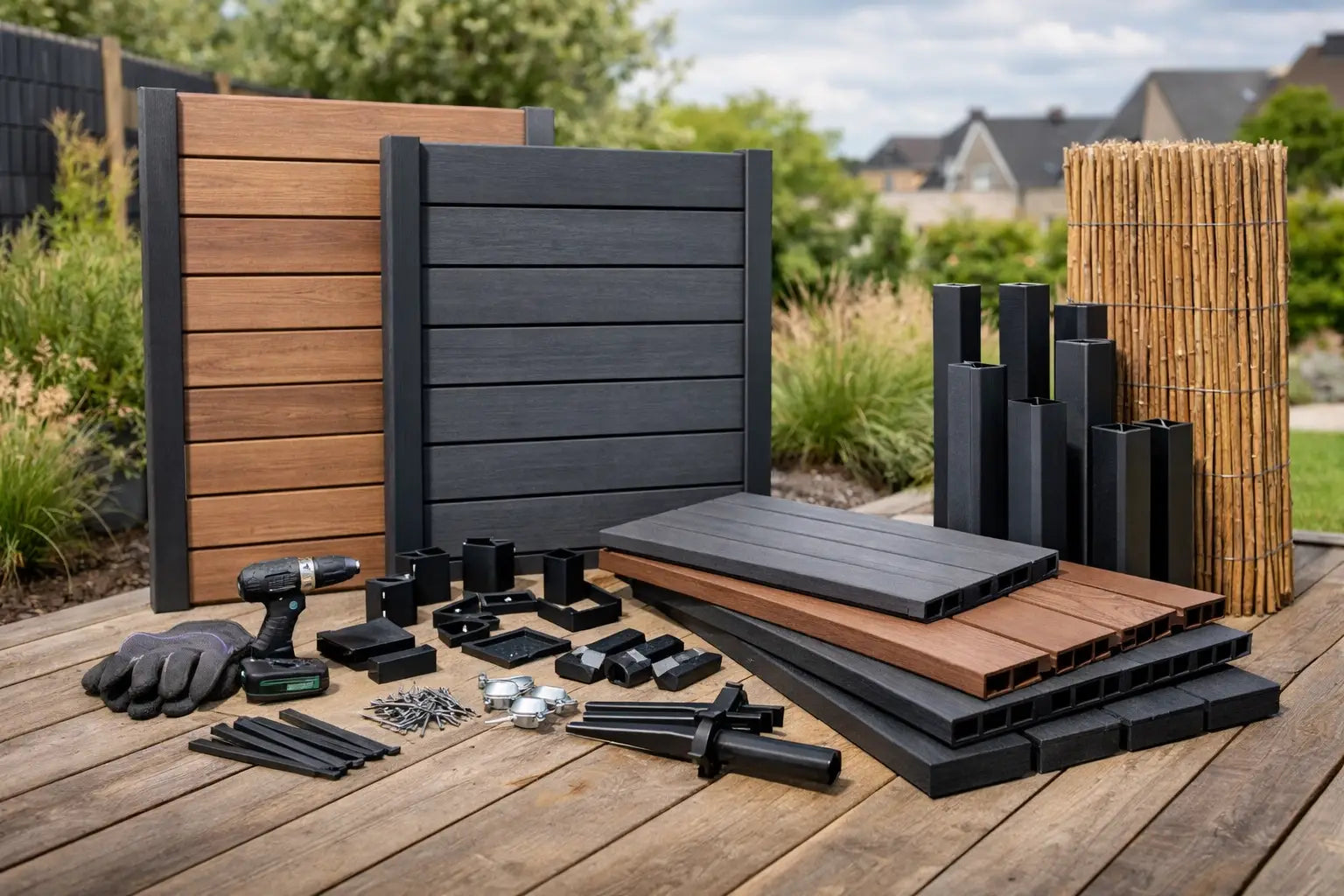
Wie een schutting pakket samenstellen gaat, heeft meer nodig dan alleen composiet planken. Een compleet systeem bestaat meestal uit schuttingdelen of losse rabatprofielen, palen, onderregels of startprofielen, afdeklijsten, bevestigingsmaterialen en vaak eind- of hoekoplossingen.
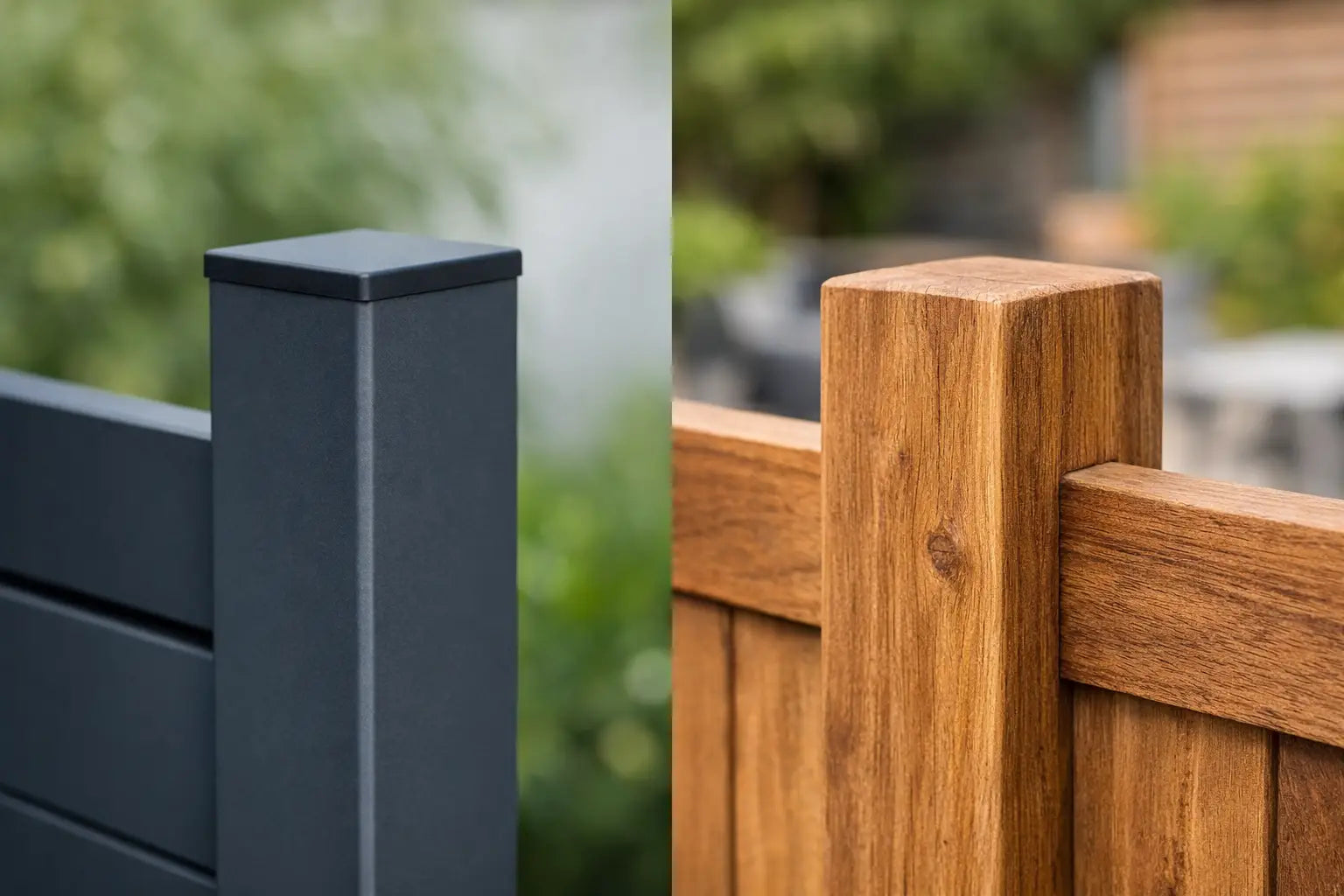
Daarbij komt de keuze tussen aluminium en andere draagconstructies. Aluminium palen en profielen zijn populair omdat ze strak ogen, vormvast blijven en mooi combineren met composiet. Dat past goed bij een onderhoudsarme tuin waarin alles rustig en modern moet ogen.
Vergeet ook de details niet. Juist afwerkkappen, kleurpassende profielen en nette aansluitingen maken het verschil tussen een schutting die degelijk staat en een schutting die echt af is. Zeker bij een premium uitstraling wil je geen rommelige overgangen of zichtbare noodoplossingen.
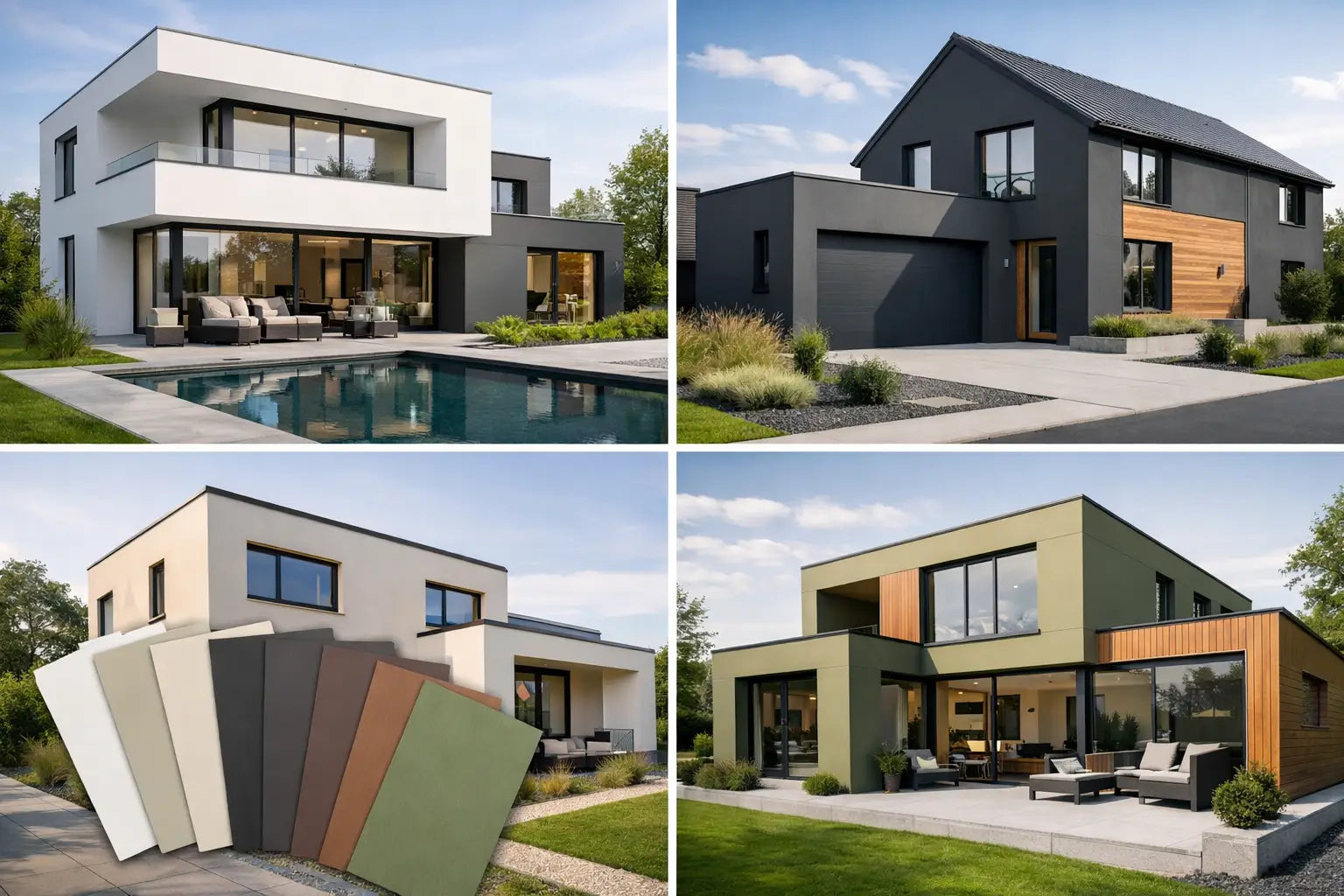
Antraciet, teak, walnut of een andere houtlook lijkt vooral een stijlkeuze, maar heeft ook invloed op hoe de tuin aanvoelt. Donkere tinten geven contrast en een moderne uitstraling. Warmere houtkleuren maken de buitenruimte zachter en natuurlijker.
Daarbij geldt dat lichtinval veel doet. Een kleur die online perfect lijkt, oogt in fel zonlicht anders dan in een beschutte tuin. Wie zeker wil zijn van de juiste match met bestrating, gevel of overkapping, kiest verstandig op basis van het totaalplaatje en niet alleen op productfoto's.
De structuur speelt ook mee. Een gladder profiel oogt vaak strakker en eigentijdser, terwijl een duidelijke houtnerf meer warmte geeft. Er is geen universeel beste keuze. Het hangt af van de stijl van woning, tuin en omliggende materialen.
Voor doe-het-zelvers draait een goed pakket vooral om duidelijkheid. Je wilt onderdelen die logisch op elkaar aansluiten, heldere maatvoering en zo min mogelijk zaag- en paswerk. Dan wordt montage overzichtelijk en blijft het resultaat strak.
Voor professionals telt daarnaast snelheid. Een project wordt rendabeler als materialen compleet, consistent en snel leverbaar zijn. Ook wil je kunnen rekenen op systemen die je vaker kunt toepassen, zodat je minder tijd kwijt bent aan uitzoekwerk per klus.
Daarom is het slim om bij het samenstellen al te denken als een monteur. Hoe worden de palen geplaatst? Waar komen de hoeken? Hoe werk je eindstukken af? En wat gebeurt er als de ondergrond niet volledig vlak blijkt? Een goed pakket voorkomt discussie op de dag van montage.
De eerste klassieke fout is te krap rekenen. Mensen meten de vrije afstand, maar vergeten de ruimte die palen, profielen of aansluitingen innemen. Daardoor klopt de optelsom op papier, maar niet in de tuin.
De tweede fout is alleen op prijs sturen. Een goedkope set lijkt aantrekkelijk, tot blijkt dat essentiële onderdelen apart moeten worden bijgeboekt. Dan ben je uiteindelijk duurder uit en lever je vaak in op uitstraling of stabiliteit.
Een derde fout is onvoldoende rekening houden met de omgeving. Wind, vocht, hoogteverschil en zichtlijnen bepalen mee welke opbouw verstandig is. Een schutting moet niet alleen mooi starten, maar ook mooi blijven staan.
Tot slot wordt afwerking vaak onderschat. Terwijl juist de bovenkant, de uiteinden en de aansluiting op een poort of gevel het meest zichtbaar zijn. Daar wil je geen compromis.
Begin met een eenvoudige schets met alle maten. Markeer rechte delen, hoeken, begin- en eindpunten en eventuele doorgangen. Kies daarna pas het type scherm of profiel dat qua stijl en hoogte past bij de ruimte.
Leg vervolgens het volledige pakket naast die tekening. Kloppen het aantal vakken, palen, hoekoplossingen en afwerklijsten? Past de kleur bij de rest van de tuin? En is het systeem logisch te monteren zonder improvisatie? Als je die vragen vooraf beantwoordt, voorkom je de meeste problemen.
Voor grotere projecten of als je meerdere elementen combineert, zoals een schutting met tuindeur of bijpassende palen, is maatgericht meedenken extra waardevol. Daar zit vaak de winst in tijd, uitstraling en faalkosten. Juist daarom kiezen klanten bij WPC Solutions vaak voor complete, onderhoudsarme systeemoplossingen in plaats van losse onderdelen bij elkaar te zoeken.
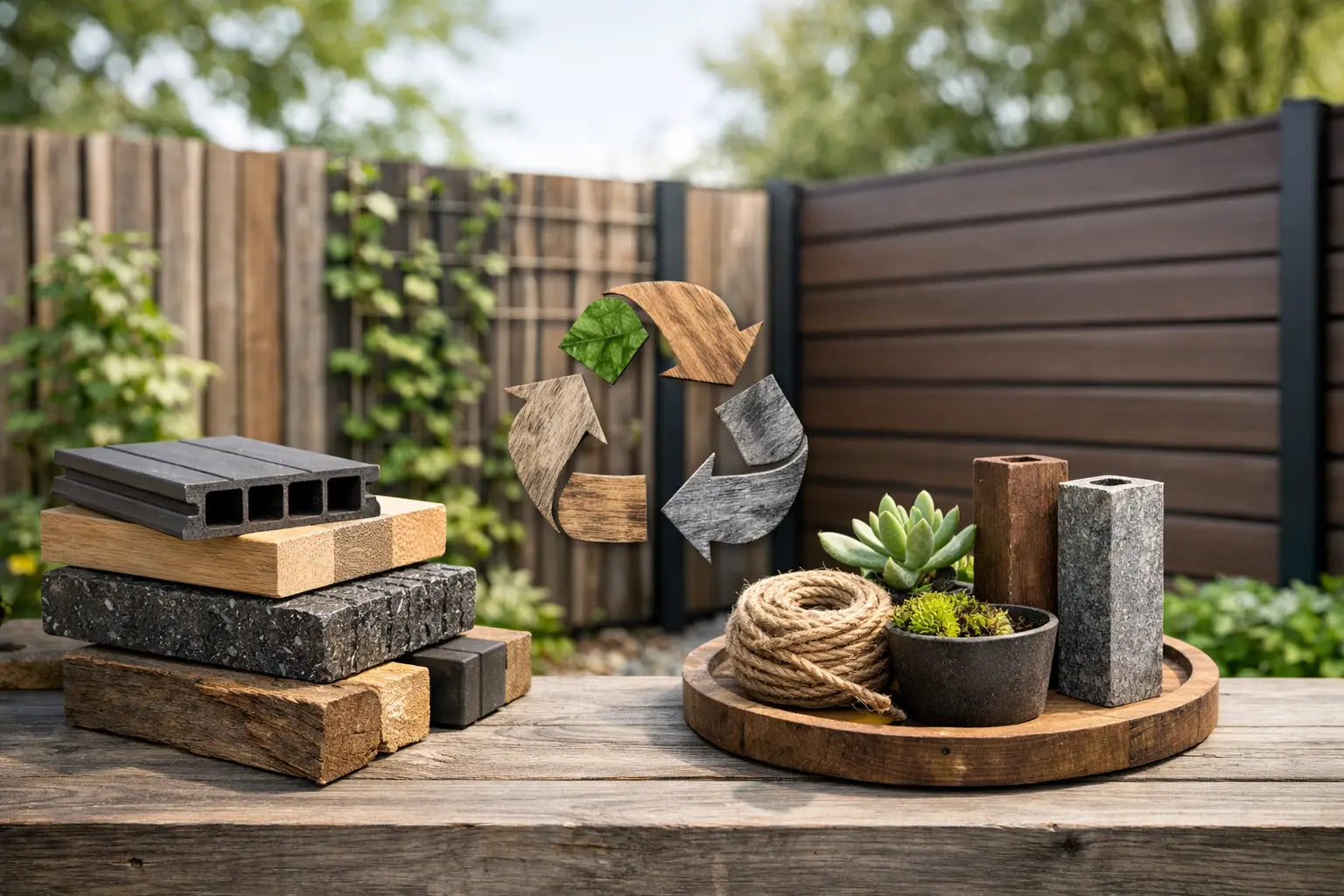
Een goed pakket zie je niet alleen terug in de montage, maar vooral in de jaren daarna. De schutting blijft strak, de kleur blijft rustig ogen en je hebt geen terugkerend onderhoud zoals schuren, beitsen of delen vervangen die kromtrekken. Dat maakt composiet aantrekkelijk voor iedereen die wel kwaliteit wil, maar geen extra werk.
Ook esthetisch betaalt een goede samenstelling zich uit. De lijnen lopen door, de vakken zijn in balans en de afwerking klopt. Dat geeft een tuin meer rust en maakt de hele buitenruimte waardevoller, of het nu gaat om een particuliere achtertuin of een professioneel aangelegd project.
Wie slim bestelt, koopt dus niet zomaar een paar panelen. Je stelt een systeem samen dat past bij de plek, de stijl en het gebruik. En juist daar begint een schutting waar je elke dag met meer plezier naar kijkt.