Total: €0,00
Taxes and shipping calculated at checkout

Een terras, schutting of gevel in composiet kiest u juist voor het gemak: de warme uitstraling van hout, zonder jaarlijks schuren, beitsen of oliën. Toch betekent composiet onderhoud niet dat u nooit iets hoeft te doen. Stof, pollen, bladeren, regenstrepen en algen kunnen zich op ieder buitenmateriaal hechten. Met een paar gerichte handelingen houdt u composiet jarenlang schoon, kleurvast en strak.
Het grote voordeel zit in de eenvoud. U hoeft geen onderhoudsplan met zware middelen of tijdrovende behandelingen in te plannen. Regelmatig reinigen met water, een zachte borstel en een geschikt reinigingsmiddel is doorgaans voldoende. Zo blijft uw buitenproject de moderne afwerking houden waarvoor u het hebt gekozen.
Composiet is opgebouwd uit houtvezels en kunststof. Die combinatie maakt het materiaal sterk, vormvast en bestand tegen wisselende weersomstandigheden. In tegenstelling tot onbehandeld hout trekt composiet minder vocht aan, splintert het niet snel en hoeft het niet te worden geschilderd.
Aan de oppervlakte kan vuil zich echter nog steeds ophopen. Vooral op horizontale delen, zoals vlonderplanken, blijven zand, bladeren en organisch materiaal langer liggen. In vochtige of schaduwrijke zones kunnen groene aanslag en algen ontstaan. Dat tast de constructie meestal niet direct aan, maar het maakt het oppervlak wel minder fris en kan een vlonder gladder maken.
Ook bij composiet schuttingen en rabatdelen is reinigen zinvol. Regen spoelt veel weg, maar fijne stofdeeltjes, spatvuil en pollen kunnen zich afzetten in groeven, naden en langs palen. Door dat vuil tijdig weg te nemen, blijft de kleur en textuur van het systeem beter zichtbaar.
Een basisreiniging voert u het best uit in het voorjaar en nog eens aan het einde van het buitenseizoen. Bij een druk belopen terras, een vlonder onder bomen of een schutting langs een drukke weg kan vaker reinigen verstandig zijn. Wacht niet tot vuil zich vastzet.
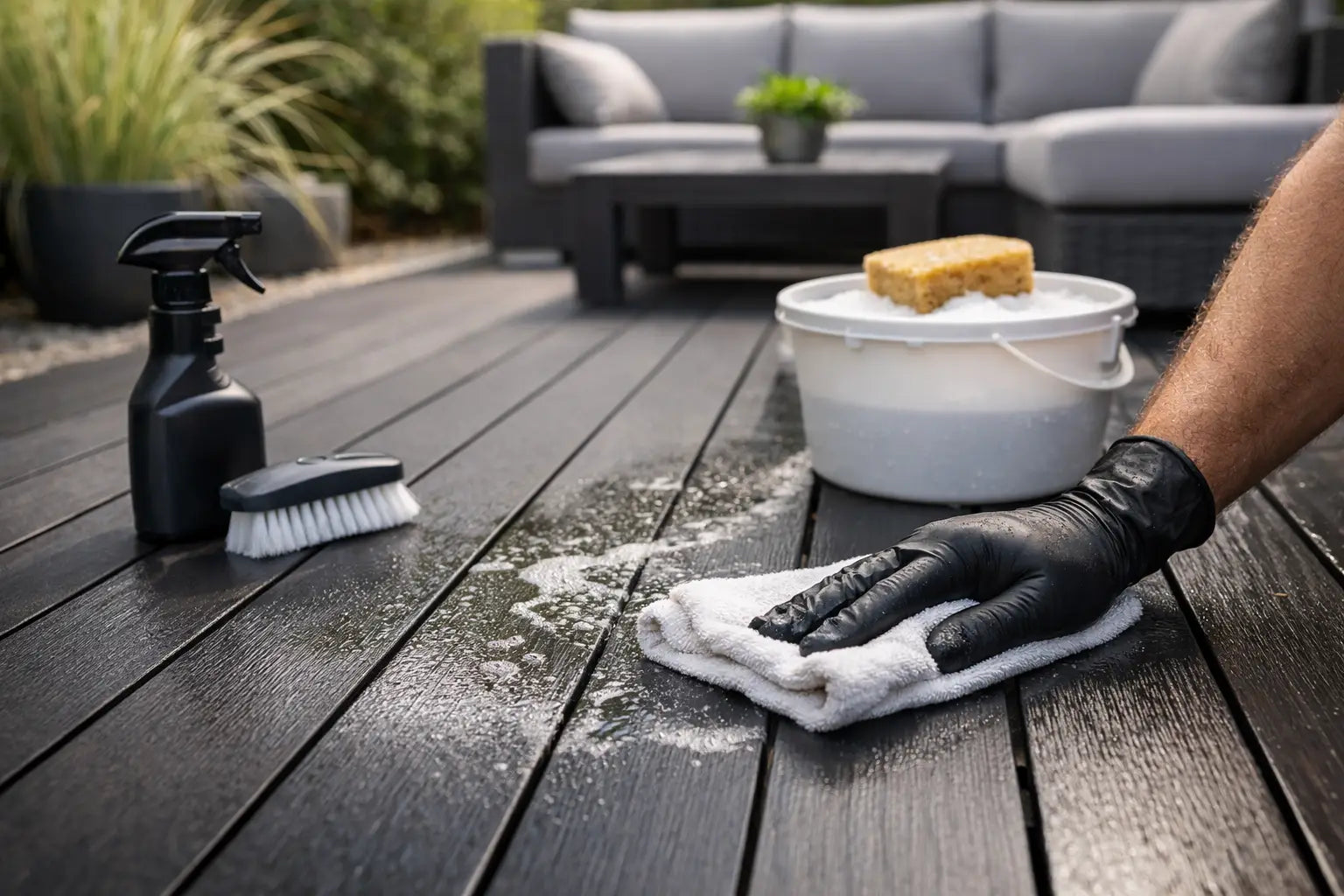
Verwijder eerst los vuil met een zachte bezem. Spoel het oppervlak daarna af met schoon water. Gebruik vervolgens lauwwarm water met een milde, pH-neutrale reiniger die geschikt is voor composiet. Werk met een zachte borstel in de lengterichting van de plank of het profiel. Daarmee reinigt u de structuur zonder krassen te maken.
Spoel goed na zodat er geen zeepresten achterblijven. Laat het materiaal vervolgens aan de lucht drogen. Een licht kleurverschil tussen nat en droog composiet is normaal en verdwijnt zodra het oppervlak volledig droog is.
Gebruik liever geen schuurspons, staalwol of harde borstel. Die kunnen een matte plek of zichtbare krassen veroorzaken, vooral op een geborstelde houtlook. Ook agressieve producten met chloor, sterke oplosmiddelen of een hoge zuurgraad zijn geen standaardoplossing. Controleer bij twijfel altijd eerst een klein, minder zichtbaar deel.
Een omgevallen drankje, vetspat van de barbecue of modderschoenen zijn geen reden voor paniek. Het verschil zit vooral in snelheid. Hoe eerder u een vlek verwijdert, hoe kleiner de kans dat deze in de structuur blijft zitten.
Neem vloeistoffen op met een doek en reinig het oppervlak vervolgens met water en een mild middel. Vet verwijdert u met een geschikte composietreiniger en een zachte borstel. Spoel daarna ruim na. Bij hardnekkige vlekken is het verstandig om de instructies van het reinigingsproduct nauwkeurig te volgen in plaats van harder te schrobben.
Roestvlekken vragen om extra aandacht. Laat metalen tuinmeubels, bloempotten of gereedschap niet langdurig nat op een composiet vlonder staan. Gebruik waar nodig voetjes of beschermers onder meubels en verplaats losse objecten regelmatig. Zo voorkomt u vochtkringen, vuilranden en plaatselijke verkleuring.
Niet ieder composietproduct krijgt met dezelfde belasting te maken. Een vlonder vraagt meer aandacht dan een verticale gevelbekleding, simpelweg omdat er op wordt gelopen en vuil langer blijft liggen.
Veeg een composiet vlonder regelmatig schoon, zeker in de herfst. Bladeren en aarde houden vocht vast en kunnen algenvorming versnellen. Reinig de planken bij voorkeur op een droge dag, zodat u goed ziet waar vuil of vlekken zitten.
Een pressure washer kan, maar alleen met beleid. Gebruik een lage druk, houd voldoende afstand en richt de straal in de lengterichting van de plank. Een te krachtige straal van dichtbij kan het oppervlak beschadigen of de structuur ruwer maken. Voor de meeste reinigingsbeurten zijn een tuinslang en zachte borstel de veiligere keuze.
Controleer meteen of de ruimte tussen de planken vrij is. Goede afwatering en ventilatie onder de vlonder helpen om het oppervlak sneller te laten drogen. Dat is niet alleen prettig voor de uitstraling, maar beperkt ook de kans op gladheid.
Composiet schuttingen hebben weinig onderhoud nodig, maar profiteren van een jaarlijkse wasbeurt. Spoel zand en stof van de panelen en reinig groeven met een zachte borstel. Let extra op de onderzijde van de schutting, waar opspattend vuil en plantresten zich kunnen verzamelen.
Knip klimplanten en struiken terug wanneer ze langdurig tegen de panelen drukken. Composiet is weerbestendig, maar luchtcirculatie rondom de erfafscheiding blijft wenselijk. U voorkomt daarmee vochtophoping en houdt de strakke lijn van de schutting zichtbaar.
Bij tuinpoorten controleert u daarnaast de scharnieren, sluiting en bevestigingsmaterialen. Dat is geen onderhoud aan het composiet zelf, maar wel essentieel voor een deur die soepel opent en sluit.
Verticale rabatdelen en gevelbekleding verzamelen doorgaans minder vuil dan een terras. Een jaarlijkse controle is vaak genoeg. Spoel stof en regenstrepen af met water en reinig zichtbare vervuiling plaatselijk.
Kijk bij gevelbekleding ook naar ventilatieopeningen en aansluitingen. Maak die vrij van bladeren, insectennesten en vuil. Het composiet blijft daardoor droog aan de achterzijde en de gevel behoudt zijn nette, gelijkmatige uitstraling.
Voor akoestische wandpanelen binnenshuis is de aanpak nog eenvoudiger. Stof regelmatig af met een zachte, droge doek of stofzuiger met borstelmond. Gebruik zo min mogelijk water, zeker bij panelen met een vilten achterwand, en verwijder vlekken direct met een licht vochtige doek.
Composiet is onderhoudsarm, niet ongevoelig voor verkeerd gebruik. Vermijd daarom deze vier situaties:
In het voorjaar verwijdert u wintervuil, groene aanslag en resten van bladeren. Dit is het beste moment voor een grondige reiniging van uw vlonder, schutting en tuinpoort. Controleer meteen de bevestigingen, afwatering en vrije ruimte tussen planken.
In de zomer is snel handelen bij barbecuevet, zonnebrand, eten en drank het belangrijkst. Veeg zand geregeld weg, vooral wanneer kinderen, huisdieren of tuinmeubels veel over het terras bewegen. Zand werkt anders als fijn schuurpapier onder stoelpoten.
In de herfst voorkomt regelmatig vegen dat bladeren nat worden en aan het materiaal kleven. In de winter hoeft u doorgaans weinig te doen. Verwijder sneeuw bij voorkeur met een kunststof schep of zachte bezem, niet met een metalen rand die krassen kan maken.
Wie kiest voor een compleet systeem van WPC Solutions, kiest voor een buitenruimte die niet elk jaar opnieuw aandacht opeist. Geef composiet een korte, consequente schoonmaakbeurt en besteed de rest van uw tijd aan wat uw tuin, terras of gevel moet opleveren: een verzorgde uitstraling die klaar is voor dagelijks gebruik.