Total: €0,00
Taxes and shipping calculated at checkout

A wooden fence often looks good on day one. Three seasons later, the real work begins: cleaning, sanding, staining, replacing loose parts. Those who are tired of this will naturally turn to a maintenance-free property line. Not because it's a trend, but because it saves time, costs, and recurring hassle.
For many homeowners and professionals, the choice is no longer just about privacy. The property line must look sleek, withstand rain and sun, last a long time, and preferably be ordered and installed correctly from the start. This is precisely where a low-maintenance composite system gains ground over traditional wood.
The biggest gain lies in what you no longer have to do. No annual painting, no worries about wood rot, and no color differences that become increasingly visible after a few wet winters. This makes a maintenance-free property line interesting for individuals who primarily want convenience, but equally for landscapers and contractors who need to deliver a predictable and durable end result.
Then there's the aesthetic appeal. Modern composite fences combine a neat wood look with a much more consistent finish than many natural materials. This creates tranquility in the garden design. Especially with new constructions, modern pergolas, and sleek paving, this consistent line is often exactly what completes a project.
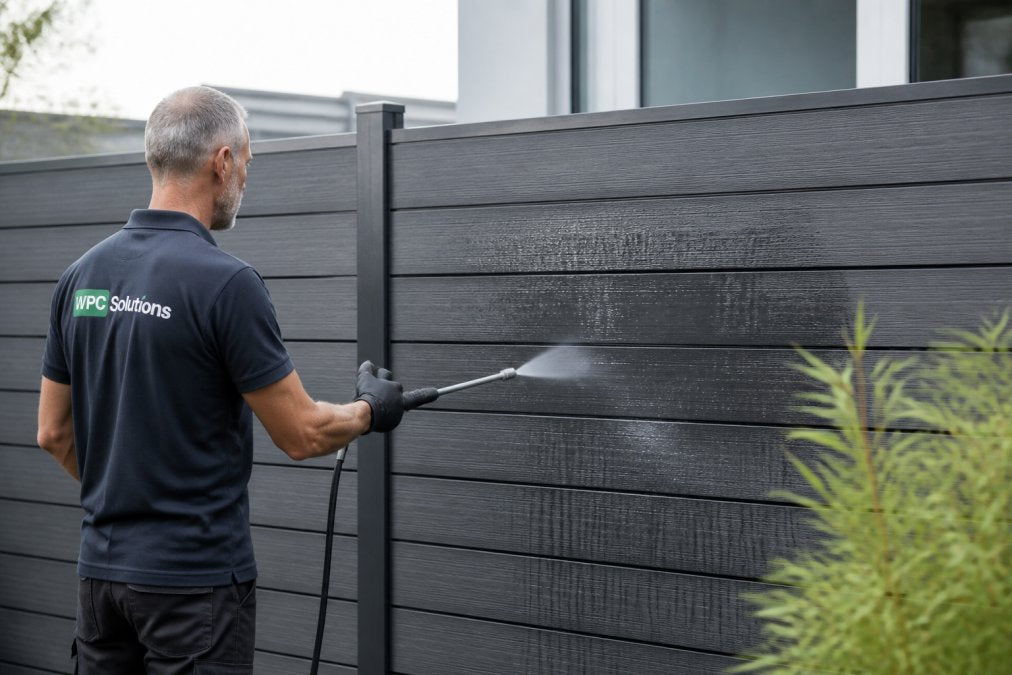
However, maintenance-free is not the same as completely carefree. Composite can also get dirty from dust, green deposits, or splashing sand. The difference is that cleaning is usually limited to rinsing or cleaning with water and a soft brush. So, you replace intensive maintenance with simple periodic maintenance.
In practice, this usually involves systems made of composite, aluminum, or a combination thereof. For those who want a warm look without the disadvantages of wood, composite is often the logical choice. The material is dimensionally stable, weather-resistant, and designed for long-term outdoor use.
A complete system usually consists of fence panels or loose boards, posts, cover strips, and fasteners that are coordinated. This may sound technical, but it is precisely this system structure that makes the difference. Loosely assembled solutions sometimes seem cheaper, but they more often cause problems during assembly, dimensioning, and finishing.
For professionals, this is important for planning. For DIYers, it is just as important, because a complete system prevents errors and makes assembly more predictable.
Wood remains a beloved material, mainly due to its natural appearance. But outdoors, wood is also a material with characteristics that you need to consider: movement, discoloration, cracking, and wear due to moisture. Those who choose wood almost always also choose maintenance.
Composite handles this differently. It retains its shape and appearance longer, is more resistant to weather influences, and requires much less attention in use. As a result, the initial investment may sometimes be higher, but the costs over the years are often more favorable. Fewer maintenance products, fewer replacements, fewer hours of work.
This does not mean that composite is automatically the best option in every situation. In a very rural garden where graying wood is actually desired, real wood may fit aesthetically better. But if the requirement is: sleek, durable, and as little maintenance as possible, then composite usually has the better credentials.
Ideally, you don't buy a maintenance-free property line based solely on color or price per panel. The lifespan and the final appearance are just as strongly determined by the system's construction. Consider the quality of the posts, the stability of the boards, and the finish of the top.
Color is more than taste. Anthracite, teak, gray, and black all look different in sunlight, shade, and wet weather. Therefore, viewing a sample is not an unnecessary luxury, especially if the fence needs to match facade cladding, garden tiles, or a canopy.
The height and degree of privacy also play a role. In a terraced house, you often want maximum privacy reduction. In a front garden or corner arrangement, a lighter design might work better. Professionals also look at wind load, subsoil, and fastening. These are not details, but conditions for a property line that will still look sleek years from now.
A strong board in a weak system remains a weak solution. Therefore, choose not only based on material, but on the whole: posts, profiles, fasteners, and finish must be coordinated. This prevents play, misalignment, and uneven seams.
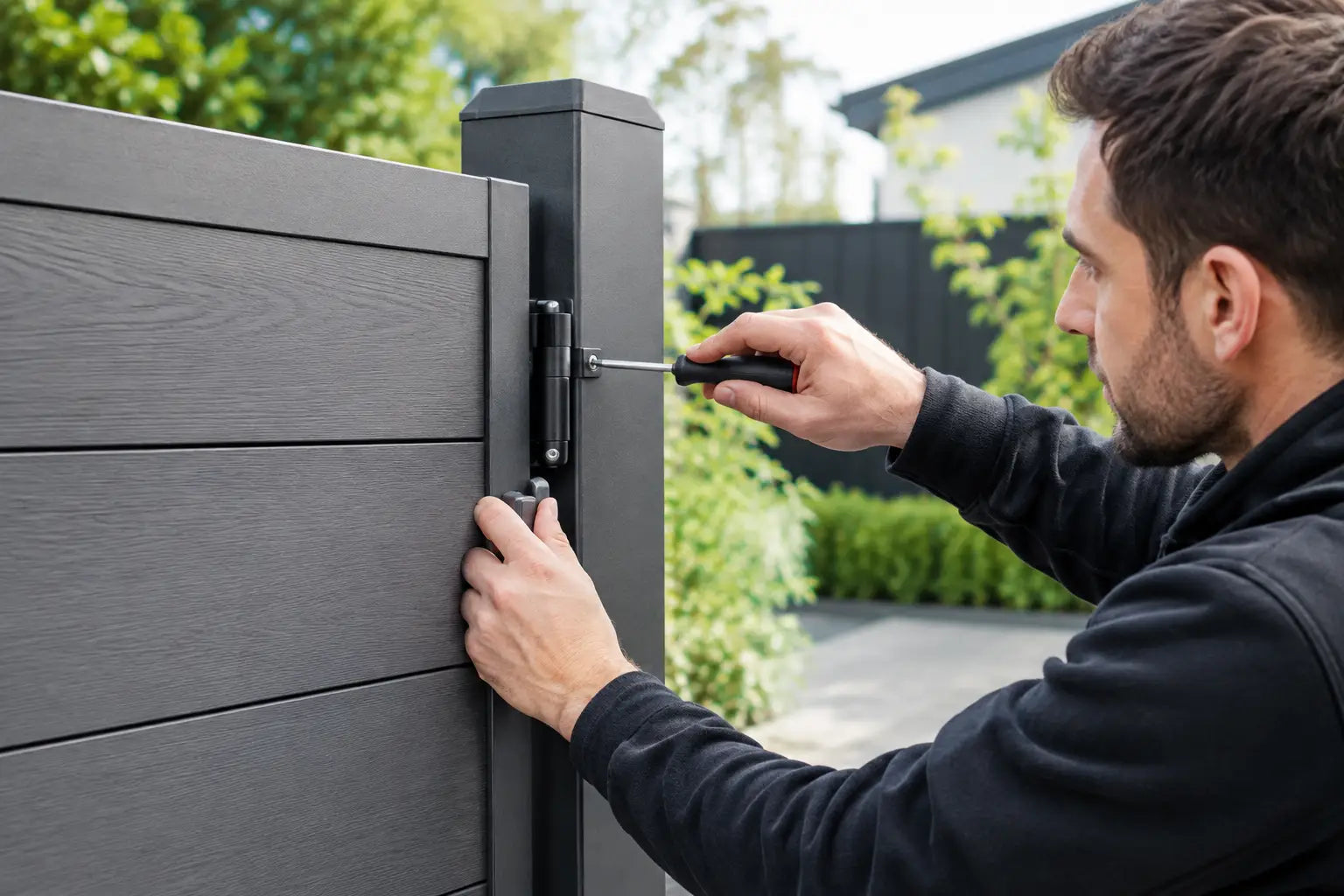
Some systems are much easier to install than others. This saves assembly time and limits the margin of error. If one part needs to be replaced later, a modular system is also more practical than a solution that is completely fixed or difficult to access.
For private customers, the calculation is usually simple. A maintenance-free property line saves time and prevents recurring maintenance costs. You don't have to take weekends off for staining, and you don't face the same chore every spring.
In addition, the utility value of the garden also increases. A neat, sleek fence immediately provides more privacy and completes the outdoor space. Especially in compact gardens or modern backyards, this ensures tranquility and a well-maintained appearance. It simply feels like a finished project.
Another advantage is predictability. You know better how the material will hold up and how the color will develop than with traditional wood. For those investing in a garden renovation, this is a pleasant certainty.
For landscapers, contractors, and installation companies, not only the appearance matters, but especially the reliability in delivery, assembly, and lifespan. A maintenance-free property line based on composite fits well here, because the material offers few surprises during processing and use.
This translates into fewer service questions afterwards. Fewer complaints about warping, peeling finishes, or accelerated aging simply means a stronger end result for your customer. And a satisfied customer more often leads to repeat business or recommendations.
For larger projects, speed also plays a role. Complete systems with clear dimensions and matching accessories make purchasing and planning much more efficient. This is precisely why specialized suppliers such as WPC Solutions are interesting for both individual orders and complete property line projects.
The first is that maintenance-free would be the same as indestructible. Every outdoor product has to deal with use, dirt, and weather influences. Good material greatly limits maintenance, but does not completely eliminate normal care.
The second misconception is that only the lowest price matters. A cheap fence may seem attractive on paper, but if the finish is less sleek, assembly takes more time, or parts need to be replaced faster, the advantage quickly shifts. The true value lies in durability, appearance, and ease of use over several years.
The third is that all composite is the same. That is not the case. Differences in composition, color fastness, profile structure, and system quality directly affect performance and appearance. Therefore, comparing based on product photos alone is rarely enough.
Often yes, but not always in exactly the same way. In a modern garden, a sleek composite fence almost automatically works well. In a more natural or rural setting, it depends on color, texture, and the combination with greenery, paving, and other materials.
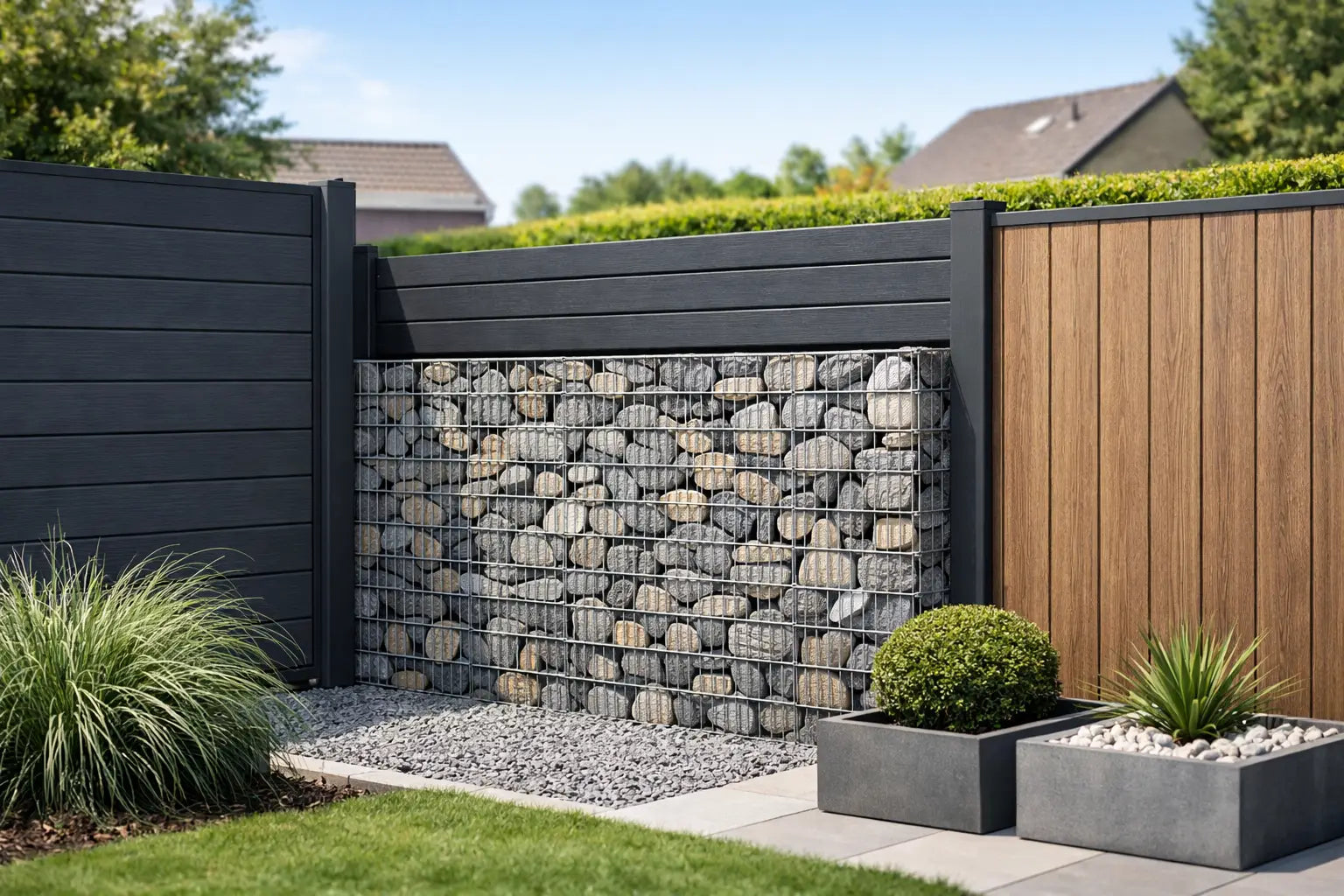
Precisely there, customization in appearance is important. A warm wood look can bridge the gap between modern convenience and a natural garden experience. Dark shades look powerful and luxurious, while lighter colors feel more spacious and softer. The right choice is not only in the material, but also in how the system matches the rest of the design.
Those who approach it smartly do not buy a fence as a separate product, but as part of the overall picture of the garden and home. Then the property line becomes more than a boundary. It becomes a fixed, stylish base that you want to have no worries about for years to come.
If you have to choose again now, ask yourself one practical question: do you want to spend time on maintenance in the coming years, or would you rather invest directly in a solution that continues to perform and look sleek?