Total: €0,00
Taxes and shipping calculated at checkout

Nobody wants a crooked wooden fence that discolors or warps after just two seasons. When buying a composite fence kit, most people aren't looking for a hobby project, but rather a sleek boundary that lasts a long time, requires little maintenance, and looks good right away. That's precisely where the strength of a complete kit lies: you're not just buying panels, but a coherent system.
Gathering individual components might seem cheaper at first, until you realize that profiles, posts, fasteners, and finishes don't quite align. A complete fence kit prevents that. You know in advance which components belong together, what dimensions fit, and what the final result will look like.
For private customers, this means less research and more certainty. For landscapers and installers, it primarily means speed on site and less chance of delays. This is especially important for larger projects. You want materials that are immediately workable and have a consistent appearance from the first to the last section.
Composite also has a clear practical advantage over traditional wood. You get the warm look of wood, but without annual sanding, staining, or replacing damaged parts. This often makes the higher initial price a smart choice in the long run.
Not every kit is automatically the right choice. The best purchase depends on the location, the desired aesthetic, and the installation method. A fence along a sleek new-build garden often requires something different from a boundary around a family garden or a project-based installation for multiple homes.
Always start with the total length and desired height. That sounds obvious, but this is often where things go wrong. Don't just measure the property line, but also consider elevation differences in the garden, existing walls, the position of a gate, and space for posts. A kit that fits on paper must also align beautifully in practice.
For standard gardens, a fixed panel size often works quickly and efficiently. If you're dealing with unusual dimensions, it's wise to determine in advance where you need custom work or clever partitioning. This prevents you from ending up with a final section that visually stands out.
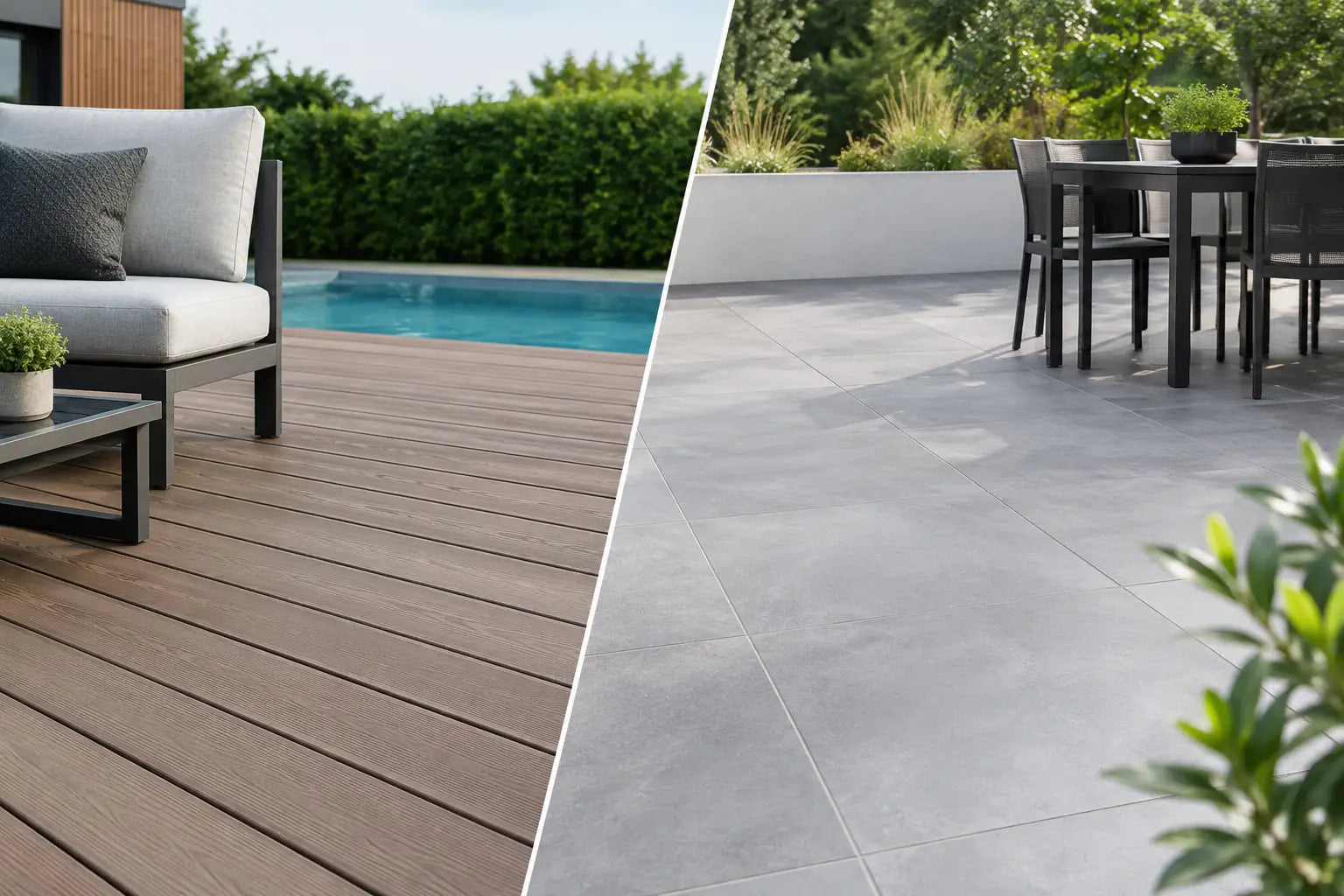
Composite is often chosen for its modern, neat appearance. In that case, color is not a detail, but a decisive factor. Anthracite and black look sleek and architectural. Brown and teak tones, on the other hand, provide more warmth and blend well with gardens with a lot of greenery or natural paving.
Don't just look at the color itself, but at the complete picture. How does the fence combine with your facade, patio, garden furniture, and any outdoor lighting? A fence is not an isolated element. The best choice enhances the entire outdoor space.
Most people choose a fence for privacy, but fully enclosed isn't always automatically better. In a wind-prone garden or on an open corner plot, it might be wise to consider the construction and the load on the posts. The relationship with light incidence also plays a role. A tall, dark fence can provide tranquility, but also make a garden feel smaller.
Therefore, it pays to look beyond just height and price. A good kit combines appearance with stability and suits how you use the garden.
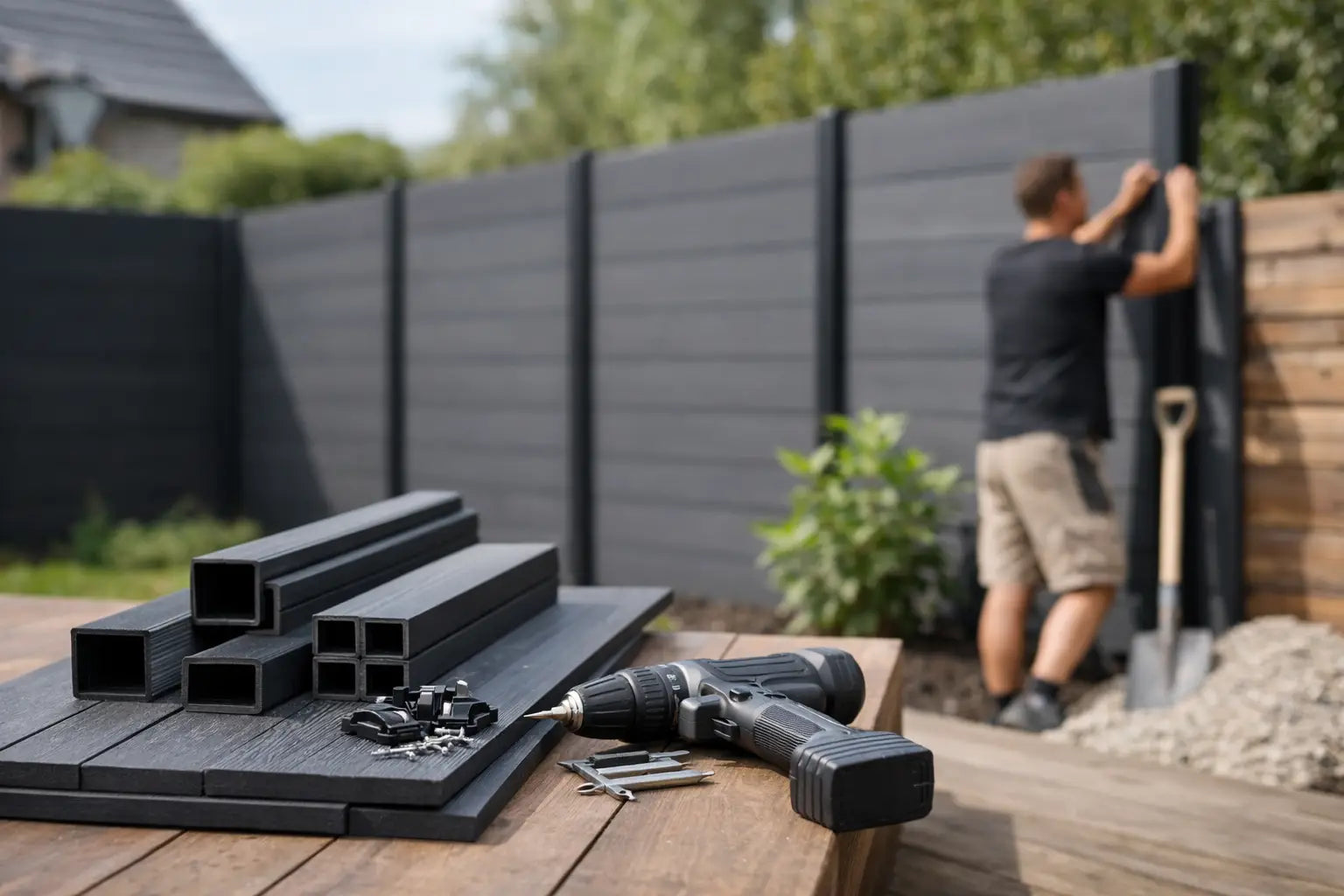
A strong composite fence kit consists of more than just screen panels. You want a complete solution that you can get started with immediately. Think of composite boards or panels, matching posts, cover strips, base rails or U-profiles, and the necessary fasteners.
It is precisely this complete nature that makes the difference in ease of installation. If components are technically matched, you work faster and neater. This is reflected in the finish. No improvisation on site, no color differences between components, and less risk of incorrect orders.
This is especially pleasant for DIYers. You don't have to be a specialist to achieve a good result, as long as the foundation is correct. For professionals, it's primarily a way to calculate smarter and plan more efficiently.
With composite fences, it's not just about the lowest kit price. A cheap kit can end up being expensive if the construction is less stable, the finish looks simpler, or components need to be replaced sooner. Conversely, a higher price is only worthwhile if you see it reflected in quality, appearance, and lifespan.
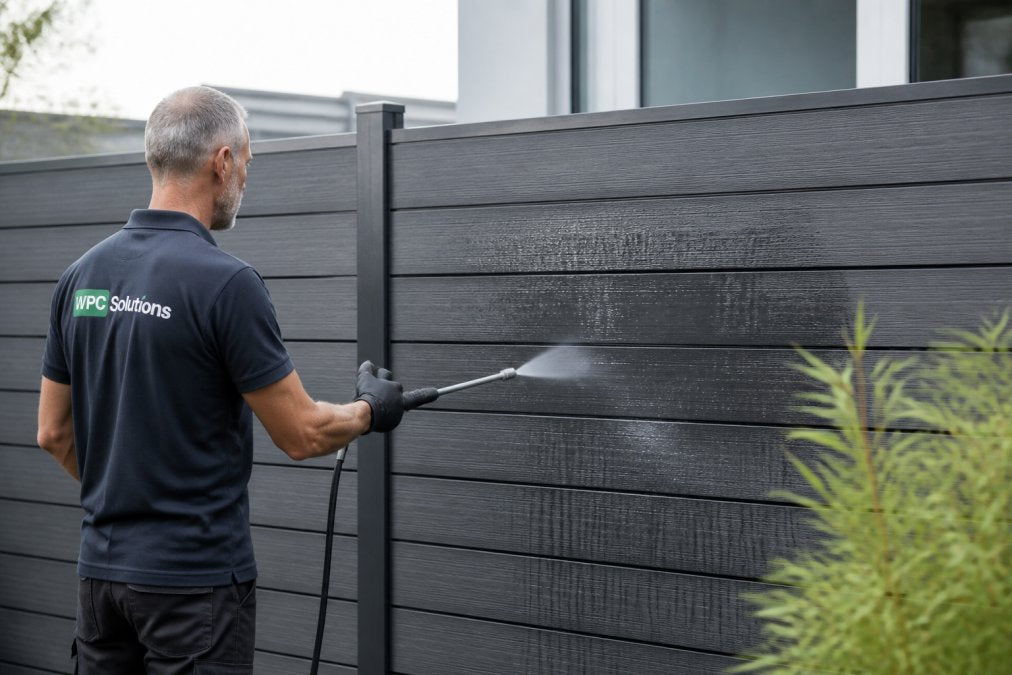
Therefore, pay attention to the overall picture. How truly low-maintenance is the material? How colorfast will it remain over time? Does the system lend itself to quick and neat installation? And are the components delivered complete, so you don't incur additional costs?
Those who buy purely based on the initial price often compare too narrowly. Those who look at years of use, maintenance costs, and long-term appearance usually make a better choice. That's precisely why composite is so attractive to people who want to invest well once.
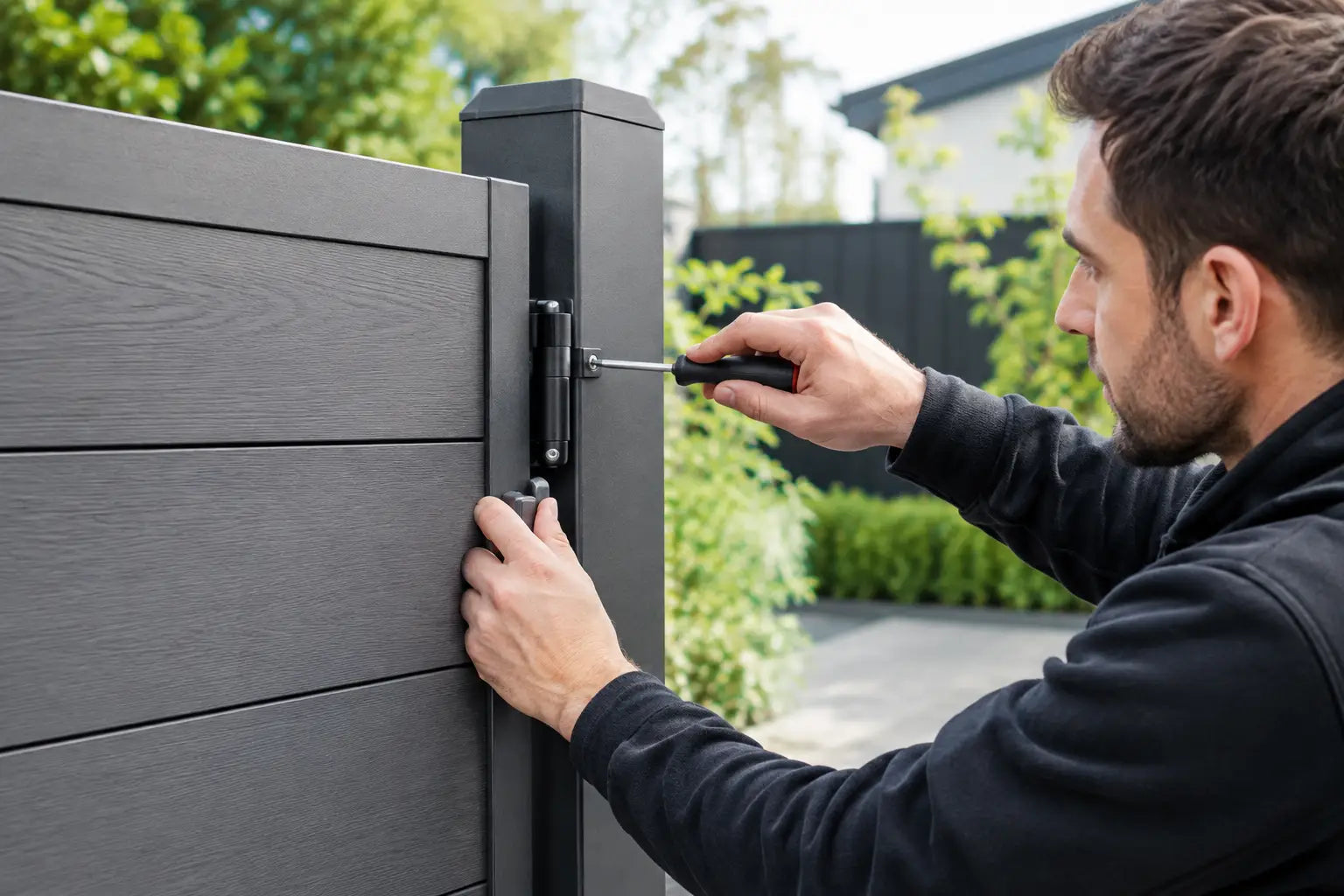
Buying a composite fence kit is one step, installation is the next. For handy DIYers, self-assembly is often perfectly feasible, provided the subsurface is suitable and the dimensions are well-prepared. A straight line, solid foundation, and correct placement of the posts are more important than speed.
Nevertheless, outsourcing is sometimes smarter. Especially for longer boundaries, elevation differences, or projects where the finish absolutely must be perfect. For landscapers and contractors, time on site costs money. A system that installs quickly and works predictably then offers immediate benefits.
So there is no universally correct choice. It depends on your experience, available time, and the desired final quality. But in both cases: a complete kit simplifies the process.
The first mistake is measuring too late. Not roughly, but exactly. Including posts, overlap, and connection points. The second mistake is choosing a color based on a single product photo. Outdoor light, paving, and planting affect the final impression much more strongly than many buyers realize.
Another mistake is underestimating the impact of details. Think of end profiles, neat top finishes, and the connection with a garden gate or existing construction. These are precisely the points where a fence can look cheap or, conversely, perfectly finished.
Also important: don't just buy for today. Think ahead. Will the system still suit the garden if you later add new paving, a canopy, or outdoor lighting? A modern, low-maintenance foundation gives you more freedom in the long run.
For homeowners who are tired of painting and wood rot, it's a logical step. You get a neat boundary with a luxurious look and much less maintenance. This makes composite interesting for new-build homes, renovation projects, and gardens that need a sleeker upgrade.
For professionals, the value lies primarily in reliability. You want material that is readily available, looks consistent, and can be processed without hassle. Complete system solutions help to work faster and plan projects better. This is not only practical, but also commercially strong towards the end customer.
Those who want to intelligently combine price, appearance, and ease of use therefore often opt for composite. Not because it's a trend, but because in practice it simply prevents many problems.
A good purchase doesn't start with the discount, but with clarity. What length do you need, what color suits the house, how will the fence be installed, and what level of finish do you expect? If that foundation is clear, you can compare much more effectively.
With a specialist like WPC Solutions, the added value lies precisely in that complete picture: low-maintenance quality, modern appearance, fast delivery, and kits designed for neat and efficient installation. This is relevant for the private buyer who wants to decide quickly, but just as much for the professional who focuses on planning and results.
You don't buy a fence for one season. You buy peace, appearance, and less maintenance for the years to come. Therefore, don't choose the kit that only seems good today, but the kit that still feels like the right choice five years from now.