Total: €0,00
Taxes and shipping calculated at checkout

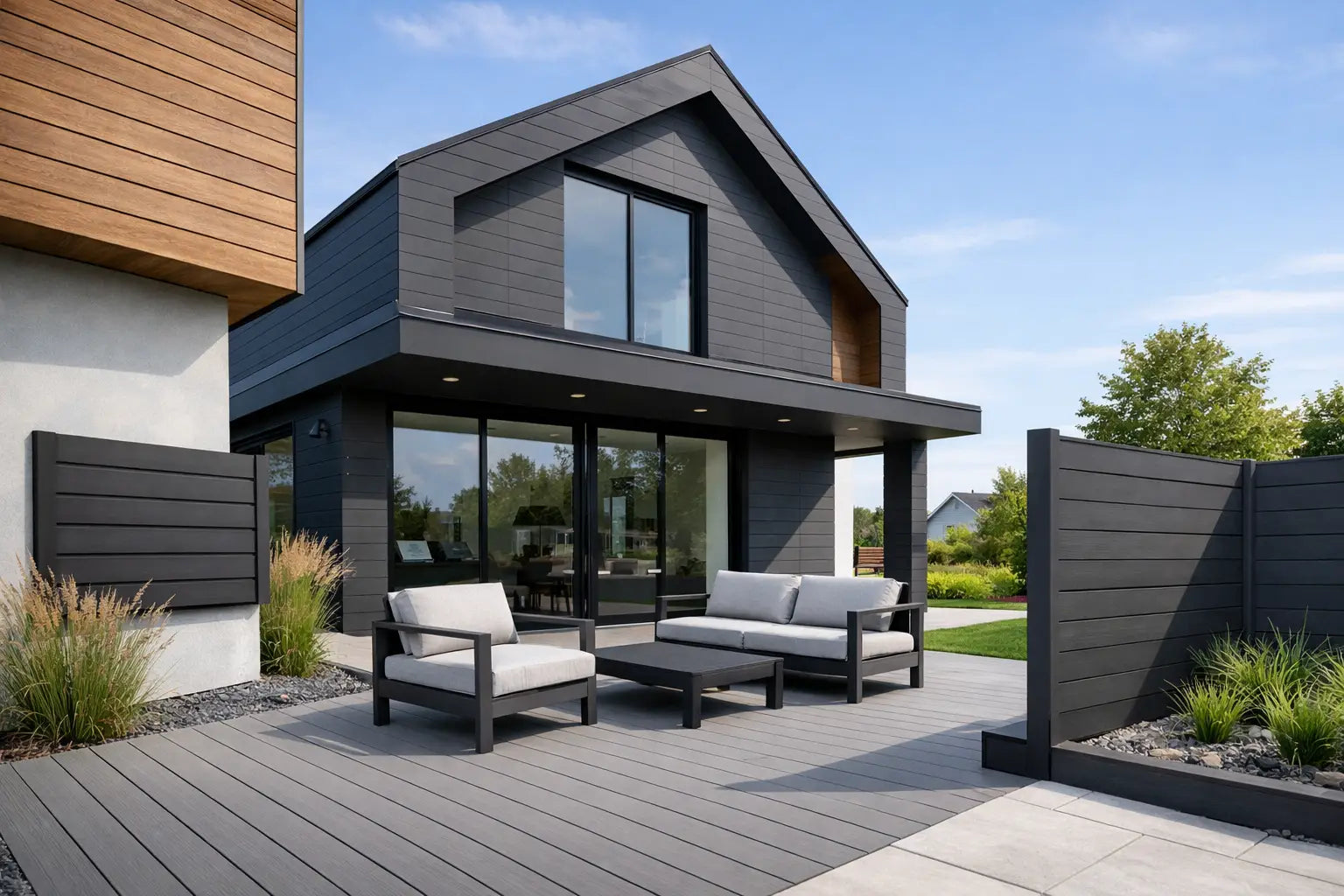
Een nieuwbouwwoning is het moment om onderhoud niet vooruit te schuiven, maar direct goed te regelen. Wie kiest voor composiet nieuwbouw, combineert een warme houtlook met een strakke, moderne afwerking die bestand is tegen regen, zon en dagelijks gebruik. Van gevel tot erfafscheiding en van terras tot tuindeur: met composiet creëert u één consistente stijl rond de woning, zonder jaarlijks schuren, beitsen of schilderen.
Voor particuliere kopers betekent dat meer tijd om van de woning en tuin te genieten. Voor aannemers, hoveniers en montagebedrijven betekent het werken met voorspelbare materialen, complete systemen en een afwerking die bij oplevering al klopt.
Nieuwbouw heeft vaak een heldere basis: moderne lijnen, grote raampartijen, rustige gevelkleuren en een tuin die nog volledig vorm moet krijgen. Traditioneel hout kan daar prachtig bij aansluiten, maar vraagt ook aandacht. Zon, vocht en temperatuurwisselingen zorgen na verloop van tijd voor verkleuring, vuil, splinters of werking van het materiaal. Dat is precies wat veel nieuwbouwkopers willen voorkomen.
Composiet bestaat doorgaans uit houtvezels en kunststof. Die combinatie levert planken en panelen op met een natuurlijke uitstraling en een hoge weerbestendigheid. Het materiaal rot niet zoals onbehandeld hout en hoeft niet geschilderd of gebeitst te worden. Een periodieke reiniging met water en een zachte borstel is in veel gevallen voldoende om de afwerking verzorgd te houden.
Dat maakt composiet niet automatisch voor elke toepassing de enige juiste keuze. Wie bewust een vergrijzende, levende houtlook zoekt, kan de natuurlijke verandering van echt hout juist waarderen. Maar voor wie kiest voor een rustige uitstraling, minder onderhoud en een lange gebruiksduur, is composiet een logische keuze vanaf de eerste bouwfase.
De sterkste nieuwbouwprojecten voelen niet als losse keuzes. De gevelbekleding, schutting, poort en vlonder sluiten visueel op elkaar aan, ook wanneer ze verschillende functies hebben. Daarom is het slim om vóór de aanleg van de tuin of de montage van de gevel een materiaalplan te maken.
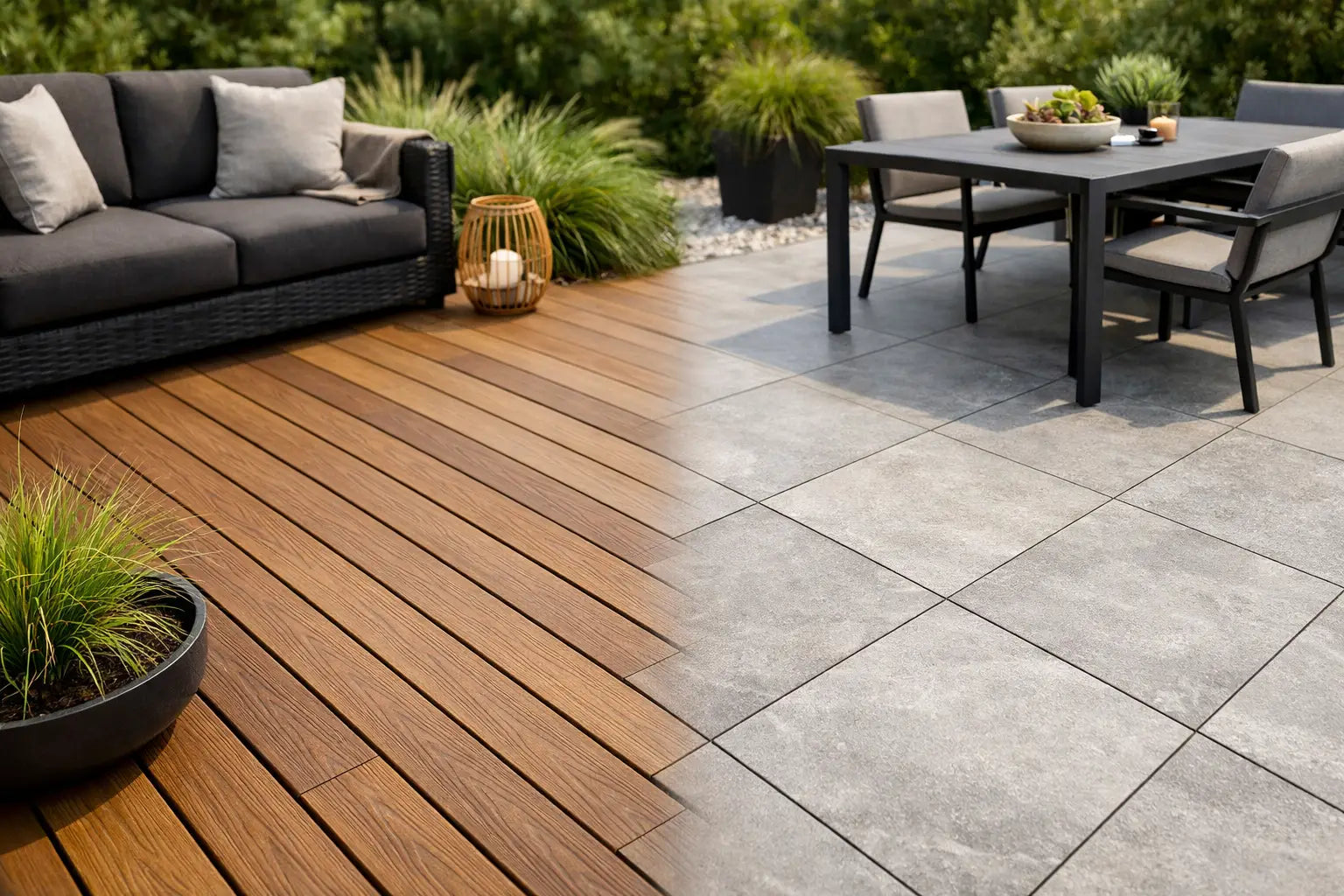
Kies eerst de basiskleur. Antraciet en zwart geven een krachtig, architectonisch contrast met lichte steen, stucwerk of wit kozijnwerk. Warme bruin- en teaktonen brengen meer sfeer in een tuin met veel groen. Grijze composiettinten vormen een rustige middenweg en passen goed bij beton, aluminium en moderne bestrating.
Kijk daarna naar de profilering. Brede rabatdelen geven een gevel een kalm en eigentijds vlak. Smalle lijnen kunnen juist hoogte of ritme benadrukken. Voor een schutting maakt de keuze tussen horizontale en verticale planken veel verschil: horizontaal oogt breed en modern, verticaal vaak klassieker en hoger. Door die keuzes op elkaar af te stemmen, krijgt het hele perceel meer samenhang.
Composiet rabatdelen zijn geschikt om een aanbouw, dakkapel, bijgebouw, overkapping of accentgevel meer karakter te geven. Vooral bij nieuwbouw, waar gevels soms strak maar vlak ogen, zorgt een composiet accent voor diepte en warmte zonder een druk ontwerp te maken.
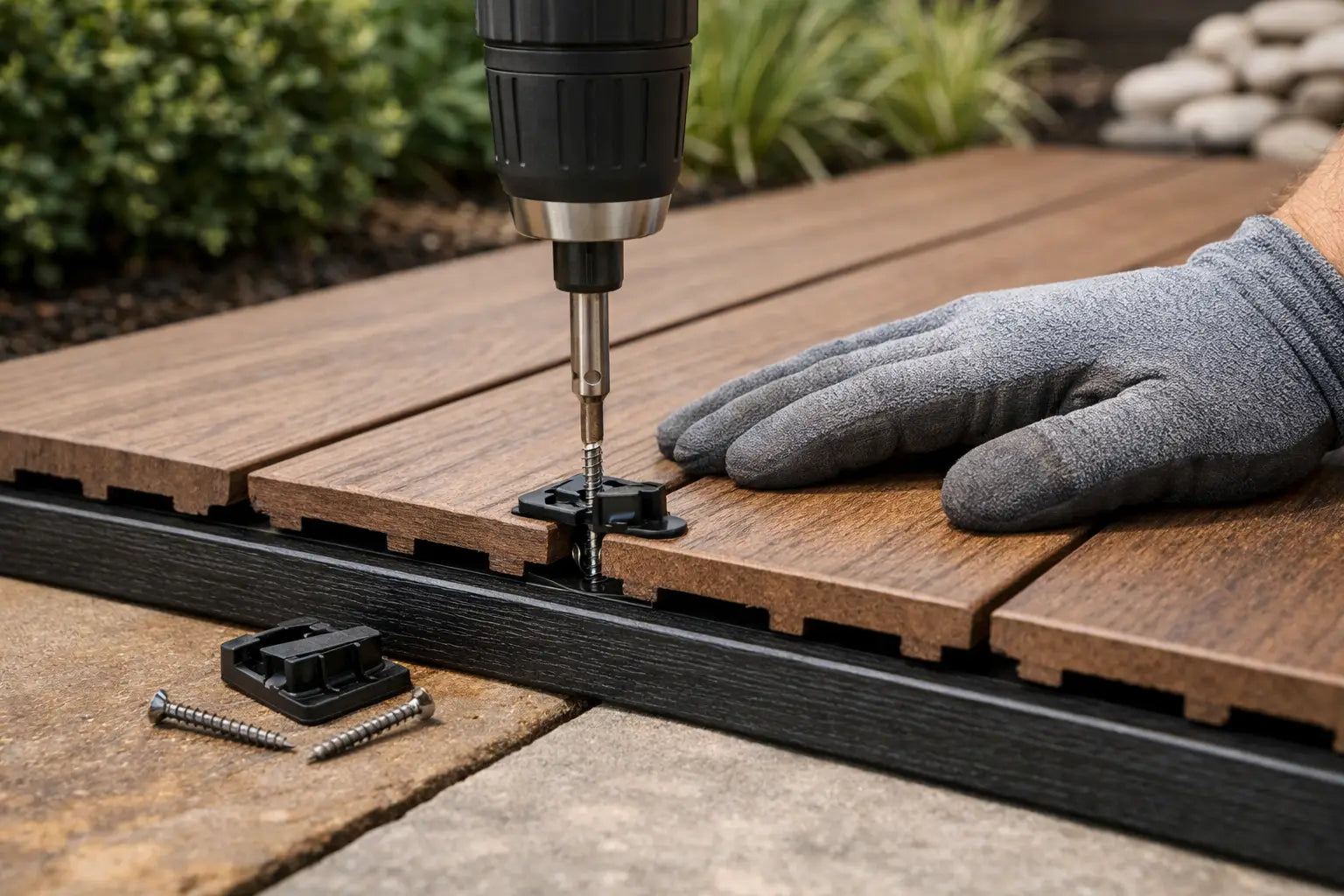
Bij gevelbekleding draait het niet alleen om de zichtzijde. Een correcte achterconstructie, ventilatieruimte en bevestiging zijn bepalend voor een duurzaam resultaat. Houd rekening met uitzetting en krimp door temperatuurverschillen en volg altijd de montagevoorschriften van het gekozen systeem. Een te strak gemonteerde plank kan zijn vorm verliezen of spanning opbouwen.
Controleer ook de lokale bouwregels, brandvereisten en eisen van de aannemer of vereniging van eigenaren voordat u een gevel wijzigt. Bij een nieuwbouwwoning kunnen aanvullende bepalingen gelden voor het aanzicht of voor werkzaamheden binnen de garantieperiode.
Een kale nieuwbouwtuin vraagt om privacy, structuur en een duidelijke erfgrens. Een composiet schutting biedt dat snel, zonder dat de tuin meteen gesloten of zwaar hoeft te voelen. Door composiet planken te combineren met aluminium profielen, afdeklijsten en passende palen ontstaat een strak systeem met een nette afwerking aan beide zijden.
Een compleet schuttingpakket voorkomt dat u losse onderdelen bij elkaar moet zoeken. Let bij het bepalen van de bestelling op de totale lengte, gewenste hoogte, het aantal tussenpalen en eindpalen, plus eventuele hoekopstellingen. Denk ook vooruit aan een poort. Een composiet tuindeur in dezelfde kleur houdt de lijn van de schutting intact en voorkomt een losstaande oplossing die later niet meer mooi aansluit.
Gebruik bij een lange erfafscheiding niet alleen de laagste aankoopprijs als uitgangspunt. De kwaliteit van profielen, palen en bevestigingsmaterialen bepaalt mede of de schutting recht, stil en verzorgd blijft. Een compleet systeem is vooral voor vakmensen en doe-het-zelvers praktisch: minder improvisatie op locatie, een gelijkmatiger resultaat en een duidelijker montageproces.
Bij nieuwbouw worden terras en tuin vaak pas na oplevering aangelegd. Dat is een kans om de binnen- en buitenruimte beter met elkaar te verbinden. Composiet vlonderplanken zorgen voor een strak terras bij een schuifpui, buitenkeuken, loungehoek of zwembad.
Ook hier is de onderconstructie essentieel. Zorg voor voldoende draagpunten, een vlakke basis en afschot zodat water kan weglopen. Composiet is weerbestendig, maar stilstaand water en slechte ventilatie zijn voor geen enkel terras ideaal. Kies bovendien een plankprofiel en reliëf dat passen bij het gebruik. Rond een zwembad of op een plek waar vaak met natte voeten wordt gelopen, verdient grip extra aandacht.
Composiet is eenvoudig in gebruik, maar niet gedachteloos te monteren. Een goede voorbereiding bespaart materiaal, tijd en correctiewerk. Meet elk vlak afzonderlijk in en neem niet alleen de zichtmaten op. Houd ook rekening met profielen, tussenruimtes, hoekafwerking en de richting waarin planken lopen.
Gebruik deze vier vragen als praktische bestelcheck:
Onderhoudsarm betekent niet dat een oppervlak nooit aandacht nodig heeft. Stuifmeel, modder, bladeren en aanslag kunnen zich ophopen, vooral op beschutte of vochtige plekken. Door vuil geregeld te verwijderen blijft de kleur helderder en wordt de kans op gladheid kleiner.
Vermijd agressieve middelen, staalwol en hogedrukreiniging van zeer dichtbij. Die kunnen het oppervlak onnodig beschadigen. Gebruik liever water, een mild reinigingsmiddel dat geschikt is voor composiet en een zachte borstel. Bij plaatselijke vlekken geldt: handel snel en volg de onderhoudsinstructies van het product.
Houd ook rekening met lichte kleurvariatie of verandering in de eerste periode na montage. Dat verschilt per product en kleur. Wie een exact eindbeeld verwacht, doet er goed aan dit vooraf met samples te beoordelen. Transparante verwachtingen horen bij een duurzame materiaalkeuze.
Composiet kan in aanschaf meer kosten dan de meest eenvoudige houten plank. Daar staat tegenover dat schilderen, beitsen en frequente vervanging doorgaans minder of niet nodig zijn. De werkelijke vergelijking gaat daarom over de complete levensduur: materiaal, montage, onderhoud, uitstraling en tijd.
Voor een koopklare nieuwbouwtuin is dat vaak een overtuigend verschil. U investeert één keer in een afwerking die bij de woning past en die niet ieder voorjaar opnieuw op de planning staat. Met schuttingpakketten, rabatdelen, vlonderplanken, tuindeuren en bijpassende accessoires kan WPC Solutions die lijn doorvoeren van gevel tot erfgrens.
Kies vooral niet op kleur alleen. Een composietoplossing wordt pas echt sterk wanneer maatvoering, onderconstructie, afwatering en afwerking net zo zorgvuldig zijn gekozen als de plank zelf. Dan blijft de nieuwbouw niet alleen op de opleverdag strak, maar ook wanneer de tuin volwassen is geworden en de woning echt als thuis voelt.