Total: €0,00
Taxes and shipping calculated at checkout

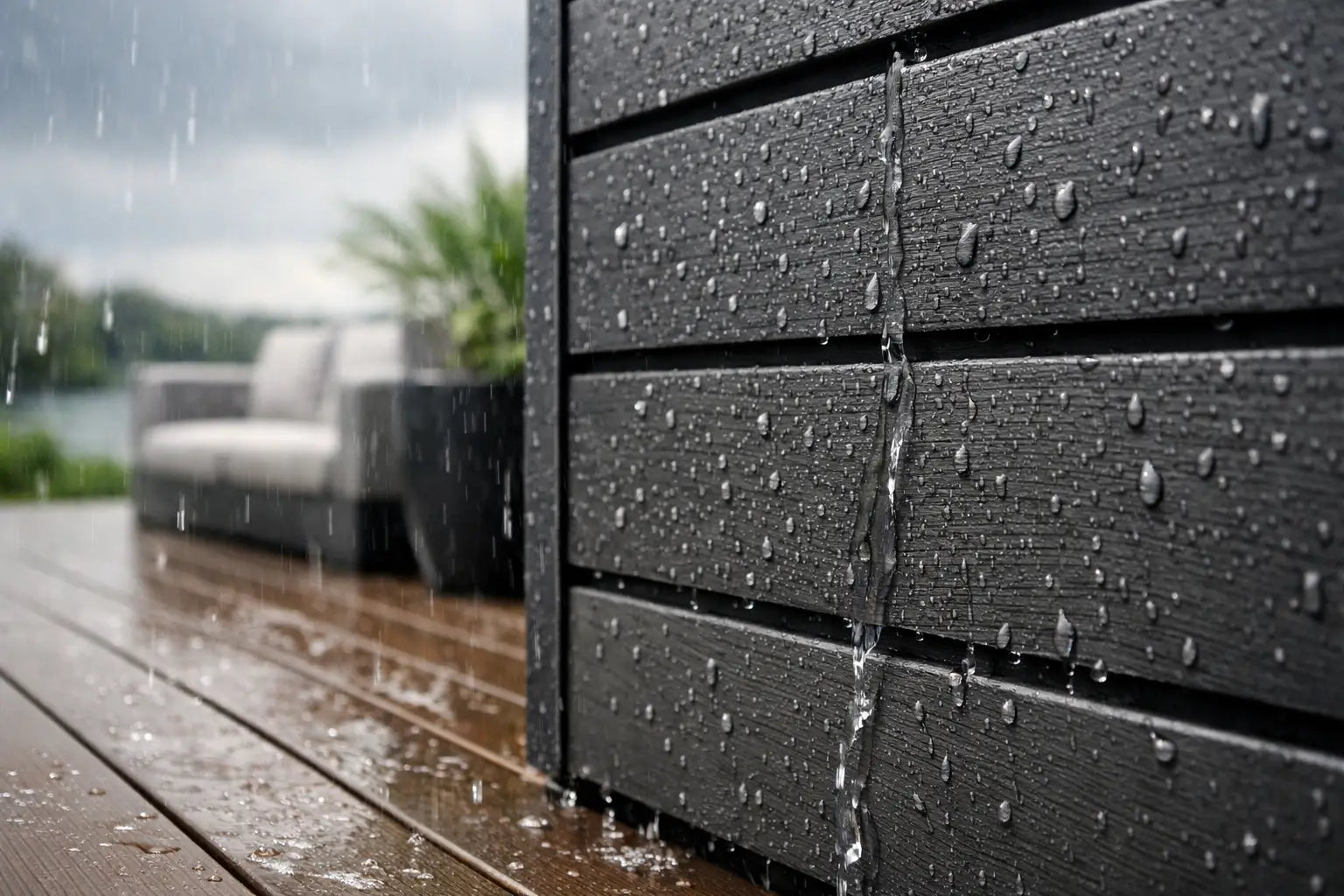
A facade, fence, or wall panel endures a lot outdoors: rain hitting the surface, splashing water, morning dew, snow, and prolonged humidity. Therefore, the question are composite panels waterproof is much more than a detail when purchasing. You want to know if the material will stay beautiful, won't rot, and won't need re-treating every spring.
The short answer: quality composite panels are very resistant to moisture and rain. They absorb significantly less water than traditional wood and do not rot as untreated wooden parts can. However, waterproof does not mean that every panel, every substructure, and every mounting method is automatically problem-free. Proper application and sufficient ventilation partly determine how long your finish will remain sleek.
Composite, often called WPC, usually consists of wood fibers or wood flour in combination with plastic and binders. This combination gives the material the warm, natural look of wood, while the plastic component helps keep moisture out. Where wood can absorb moisture, swell, and then shrink again, composite remains much more stable in normal outdoor conditions.
You particularly notice this in places where wood often becomes vulnerable: along a fence that regularly gets wet from the wind, on a facade with little sun, around a terrace, or on a garden wall close to plants. Composite panels do not need to be stained, oiled, or impregnated annually to remain resistant to rain. Cleaning with water and a soft brush is usually sufficient to remove dirt, dust, and light buildup.
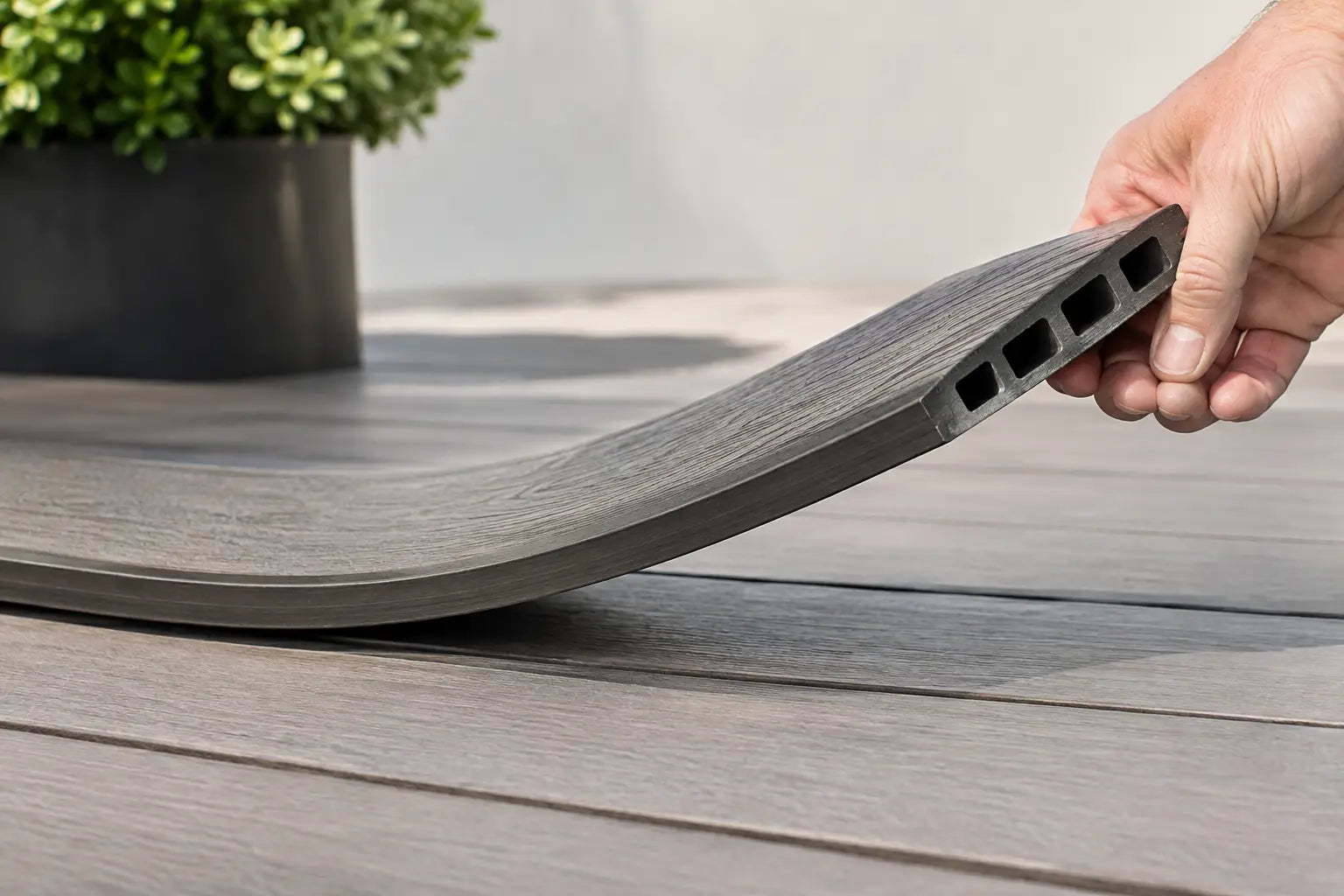
The degree of water resistance varies by product type. Solid WPC parts, co-extrusion panels with a protective outer layer, and hollow tongue-and-groove panels each have their own construction. A high-quality protective layer generally offers extra resistance to moisture, stains, and discoloration. For a horizontal fence, facade cladding, or wall finish, it is therefore wise to look not only at the color and wood look, but also at the construction of the panel.
A composite panel itself can withstand rain perfectly, but a complete wall or facade is not automatically waterproof. This distinction is crucial. In facade cladding, composite often forms the visible layer that drains precipitation. Water can still get behind this layer due to wind pressure, seams, or connections. Therefore, a facade cladding system requires a ventilated cavity, battens, and correct finishing at the bottom and top.
With fences, this is different. A composite fence does not have to be a water-retaining facade construction, but it must be able to drain water. Do not place panels continuously in standing water and ensure that the underside is not against wet ground or accumulating leaves. Especially in low areas of the garden, prolonged contact with moisture and dirt can lead to buildup that you would rather avoid.
The seams also require attention. Composite works less than wood, but it does expand slightly with heat and contract again at lower temperatures. The prescribed space between parts and at end profiles is therefore not a finishing error, but necessary for a neat, durable installation. Panels mounted too tightly can build up tension under temperature fluctuations.
Not the composite itself, but the details around it usually cause problems. Think of a wooden substructure that is insufficiently protected, screws that are not suitable for outdoor use, or a sealed facade without air circulation. Water that cannot escape anywhere remains behind the panels. This can eventually affect the construction, even if the composite cladding itself remains in good condition.
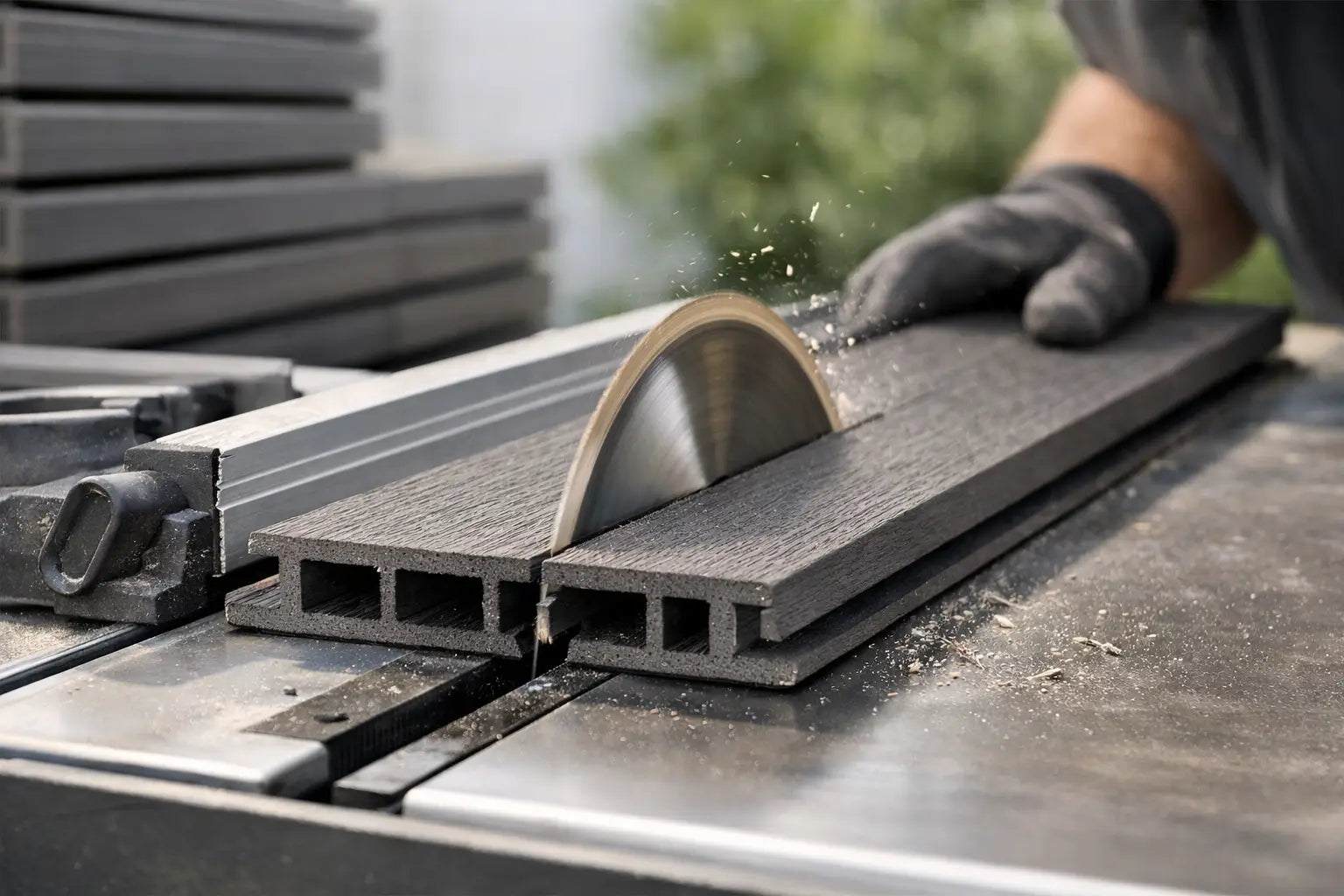
Also pay attention to saw cuts and open chambers in hollow profiles. Use the appropriate end caps, finishing profiles, or sealing strips. This not only gives your project a sleeker appearance, but also prevents dirt, insects, and excess moisture from accumulating in open parts.
A low-maintenance finish starts with an installation that takes water into account. For facade cladding, this usually means working on a flat, sturdy batten structure and leaving enough space behind the tongue-and-groove panels for ventilation. Rainwater can then run along the surface, while any moisture behind the cladding can evaporate.
Mount tongue-and-groove panels according to the recommended direction and ensure that overlaps or click connections drain water outwards. For vertical facade cladding, a correct bottom rail and ventilation opening are extra relevant. For horizontal mounting, water should not be able to remain on an edge or in a profile. Small details here make the difference between a neat facade for years and a construction that requires unnecessary maintenance.
For composite fences, a stable foundation is key. Secure posts firmly, consider the height and wind load of the screen, and use components that are coordinated as a system. Place the bottom board or bottom profile sufficiently above the ground. This prevents prolonged contact with mud, leaves, and splashing water.
Always use fastening material suitable for outdoor use. Stainless steel or other corrosion-resistant fasteners help prevent rust stains and discoloration around screw points. Pre-drill where necessary and do not overtighten screws. A panel must be firmly attached, but still have room to move naturally with temperature differences.
Water-resistant composite is low-maintenance, not maintenance-free in the literal sense. Rain washes away a lot of loose dirt, but dust, pollen, bird droppings, and green growth can still adhere to the surface. Especially on a shady north side or under trees, periodic cleaning is wise.
Rinse panels with clean water and for stubborn dirt, use a soft brush with a mild cleaning agent suitable for composite. Avoid aggressive solvents, steel wool, and abrasive agents. These can damage the finish layer or cause a dull spot. A high-pressure cleaner is only advisable when the manufacturer allows it and when you maintain sufficient distance.
In addition, check facade cladding once a year to ensure ventilation openings are free of leaves and dirt. For fences, check that the ground around the posts drains well. This takes little time, but helps maintain the neat appearance and long lifespan of your investment.
Wood remains a characterful material, but requires more attention outdoors. Untreated wood can absorb moisture, warp, split, and eventually rot. With the right stain, oil, or impregnation layer, you can slow down this process, but that protection must be renewed periodically. For large fences or facades, this maintenance burden quickly adds up.
Composite offers a solution for those who want a modern wood look without annual painting or treatment. The material is dimensionally stable, low-splintering, and resistant to changing weather conditions. For homeowners, this means more time to enjoy the garden. For landscapers, contractors, and installation companies, it means a predictable system that can be finished neatly and requires little aftercare.
There is a practical consideration. Composite can get hotter in full sun and the color perception changes with light incidence. Therefore, if in doubt, first request a sample. This way, you can assess the structure, hue, and finish at the place where the panels will actually be installed.
For a fence, the combination of water-resistant boards, strong posts, and neat profiles is particularly decisive. For facade cladding, a well-ventilated substructure is added. For a canopy, garden room, or wall near a swimming pool, it is wise to pay extra attention to water drainage, splash zones, and how edges are finished.
WPC Solutions offers complete composite systems where individual panels, posts, profiles, and accessories connect. This makes it easier to achieve a neat finish, without improvising with components that were not designed for the same application.
Measure carefully beforehand, consider how rainwater reaches your facade or property boundary, and reserve space for ventilation and expansion. Then you not only choose a water-resistant composite panel, but you build a finish that remains sleek, calm, and well-maintained season after season.