Total: €0,00
Taxes and shipping calculated at checkout

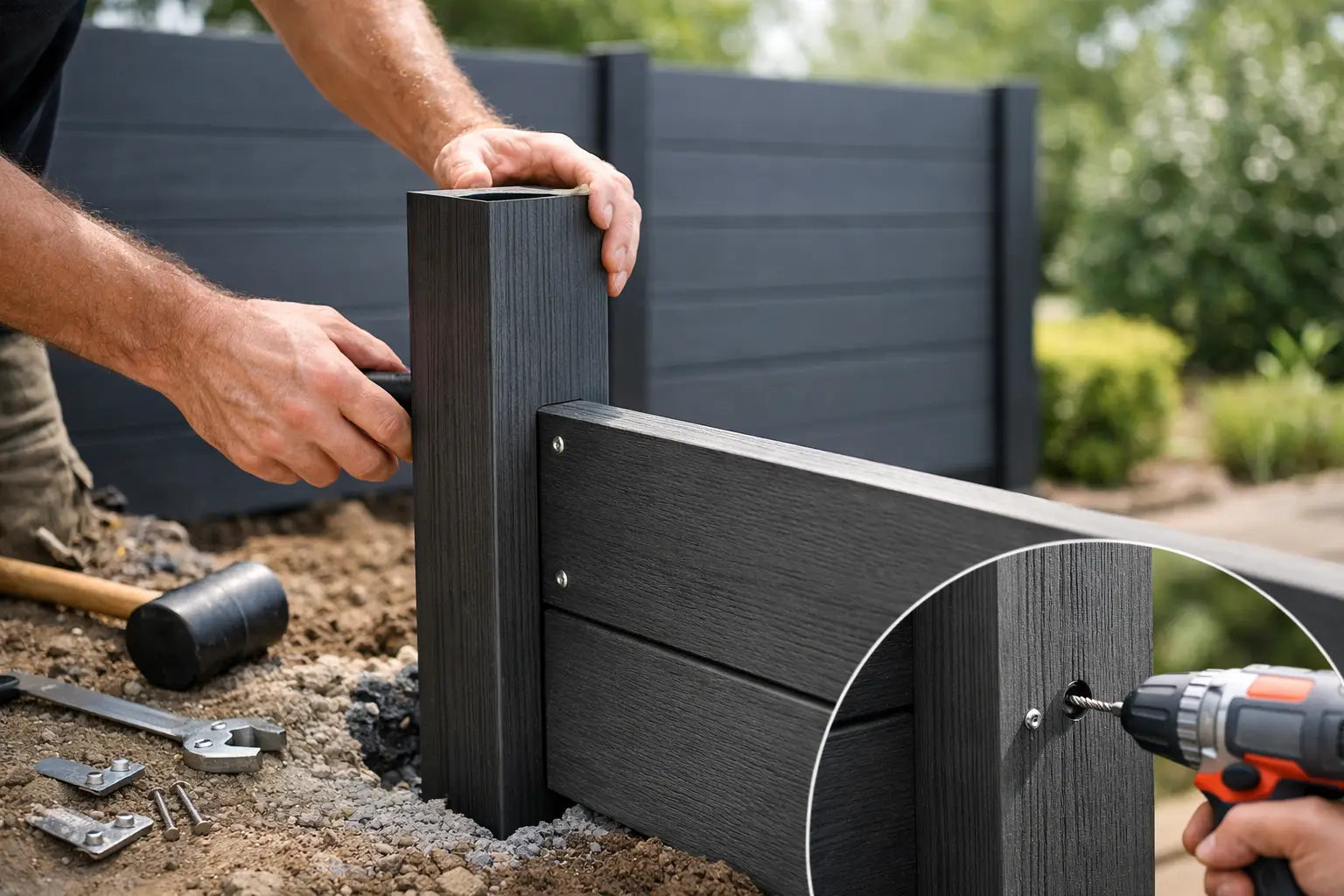
A fence only looks truly neat when every post is exactly in line. In composite garden post installation, this foundation not only determines the final appearance but also how stable your entire fence remains in wind, rain, and varying temperatures. Therefore, take your time for marking out, foundation work, and alignment. Composite is low-maintenance and colourfast, but a durable result always starts with precise installation.
For a modern garden, a composite fence is a smart choice: the warm wood look without annual sanding, staining, or replacement. With the right garden posts, fastening materials, and installation sequence, you build a system that will look neat for years. This applies to a compact backyard, as well as to a long property boundary or a project-based installation.
Before the first post goes into the ground, mark out the entire fence line. Stretch a string line at the desired height and mark the centre line of each post. Don't just measure from the starting point: also check the total length and divide it into equal sections. A small deviation per section will be surprisingly visible at the end of the fence.
The correct centre-to-centre distance depends on the chosen fence system, the width of the composite boards, and the intermediate profiles used. Always follow the dimensions of the system. Sections that are too large can result in boards being poorly supported or sagging. Sections that are too small require extra material and can disrupt the clean lines.