Total: €0,00
Taxes and shipping calculated at checkout

Je ziet het vaak pas als de oude erfafscheiding op is: verkleurd hout, kromgetrokken planken en elk voorjaar opnieuw beitsen. Dan komt de echte vraag op tafel: welke composiet schutting kiezen als je wel de warme uitstraling van hout wilt, maar niet het onderhoud dat erbij hoort? Juist daar maakt een goede keuze verschil - in uitstraling, levensduur en montagegemak.
Een composiet schutting koop je niet alleen op kleur. Het is een systeemkeuze. De combinatie van schermen, palen, bevestiging, afwerking en eventuele deur bepaalt hoe strak het eindresultaat wordt en hoeveel plezier je er later van hebt. Voor zowel huiseigenaren als vakmensen geldt hetzelfde: hoe beter de keuze vooraf, hoe sneller de plaatsing en hoe sterker het geheel.
De juiste schutting hangt vooral af van drie dingen: de stijl van je woning, de gewenste mate van privacy en de belasting van de locatie. Een moderne achtertuin vraagt vaak om strakke lijnen en rustige kleuren zoals antraciet, teak of grijs. Bij een meer natuurlijke tuin werkt een warme houtlook meestal beter. Dat lijkt een smaakkwestie, maar het heeft ook invloed op hoe zichtbaar vuil, stof en weersporen zijn in het dagelijks gebruik.
Daarnaast is privacy niet voor iedereen hetzelfde. De een wil een volledig gesloten erfafscheiding, de ander liever een meer open uitstraling met wat lucht en licht. Composiet biedt daar veel ruimte in. Je kunt kiezen voor gesloten rabatdelen voor maximale afscherming, maar ook voor systemen met decoratieve tussenprofielen of afwisselende banen voor een lichtere look. Zeker in kleinere tuinen kan een volledig dichte wand zwaar ogen. Dan is het slim om niet alleen naar privacy te kijken, maar ook naar ruimtelijk effect.
De locatie speelt net zo hard mee. Staat de schutting vol in de wind, dan wil je een stabiel systeem met degelijke palen en een montage die daarop berekend is. Bij een beschutte stadstuin ligt de nadruk vaker op uitstraling en snelle plaatsing. Voor professionals is dat een praktisch punt: een compleet systeem met op elkaar afgestemde onderdelen voorkomt improvisatie op de bouwplaats.
Wie zich afvraagt welke composiet schutting kiezen, komt al snel uit bij de opbouw van de planken. Holle composiet delen zijn populair omdat ze gunstig geprijsd zijn en toch een strakke, duurzame oplossing bieden. Ze zijn licht in gewicht, prettig te verwerken en geschikt voor veel standaard toepassingen in particuliere tuinen.
Massieve delen voelen zwaarder en robuuster aan. Ze worden vaak gekozen bij intensiever gebruik, hogere eisen aan stevigheid of projecten waar een extra solide uitstraling gewenst is. Daar staat tegenover dat ze doorgaans duurder zijn en zwaarder in montage. Voor een gemiddelde achtertuin is massief niet altijd noodzakelijk. Voor een luxe project, een winderige locatie of een situatie waarin de schutting extra zwaar belast wordt, kan het juist wel logisch zijn.
Hier geldt dus geen standaardantwoord. Goedkoper is niet automatisch minder goed, en zwaarder is niet automatisch slimmer. Het hangt af van het project, het budget en de gewenste afwerking.
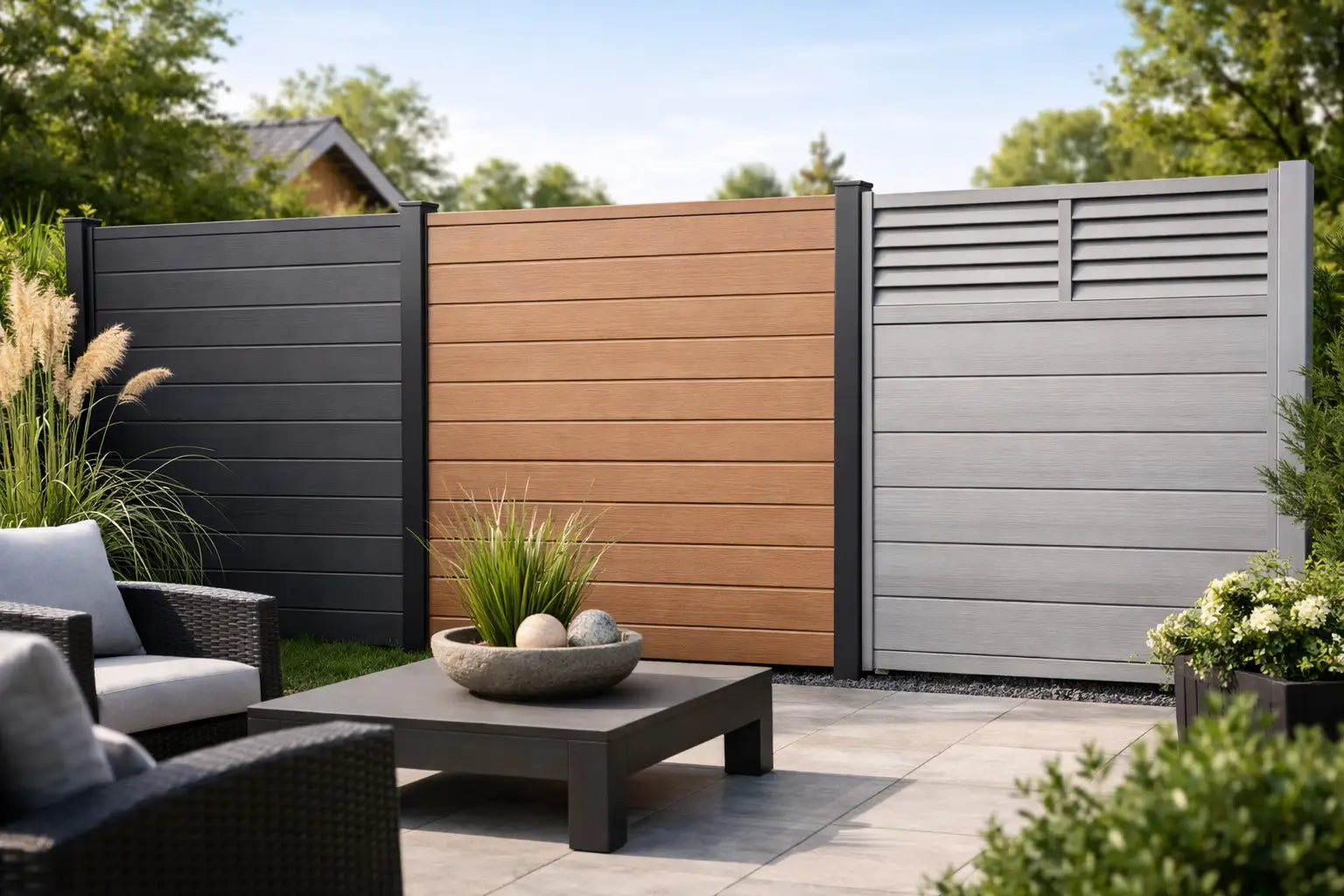
Kleur is vaak het eerste waar mensen op selecteren, maar het is ook een gebruikskeuze. Donkere tinten zoals antraciet geven een strakke, moderne uitstraling en passen goed bij aluminium details, zwarte kozijnen en eigentijdse tuinen. Ze ogen luxe en rustig, maar laten op zonnige plekken warmte sterker opbouwen.
Lichtere houttinten voelen zachter en natuurlijker aan. Ze combineren makkelijk met groen, keramische tegels en houten veranda-elementen. Ook zijn stof of lichte aanslag soms minder nadrukkelijk zichtbaar. Dat maakt ze aantrekkelijk voor gezinnen of voor tuinen waar geleefd wordt.
Naast kleur is de oppervlaktestructuur belangrijk. Een fijne houtnerf geeft meer warmte en karakter. Een gladdere afwerking oogt minimalistischer en moderner. Voor veel kopers is een sample daarom geen overbodige stap. Op een scherm ziet elke kleur er net anders uit dan in daglicht in de eigen tuin.
Als privacy de hoofdreden is, kies dan niet alleen voor dichte panelen, maar kijk ook kritisch naar de totale opbouw. Een schutting is pas echt gesloten als de aansluiting tussen planken, palen en profielen goed is uitgewerkt. Losse keuzes in onderdelen kunnen leiden tot kieren, hoogteverschillen of een minder strak beeld.
Een compleet schuttingsysteem heeft daar een duidelijke voorsprong. De onderdelen zijn op elkaar afgestemd, de montage verloopt sneller en de afwerking is consistenter. Zeker als je meerdere delen achter elkaar plaatst of een hoekopstelling maakt, wil je geen discussie achteraf over pasvorm of kleurverschil.
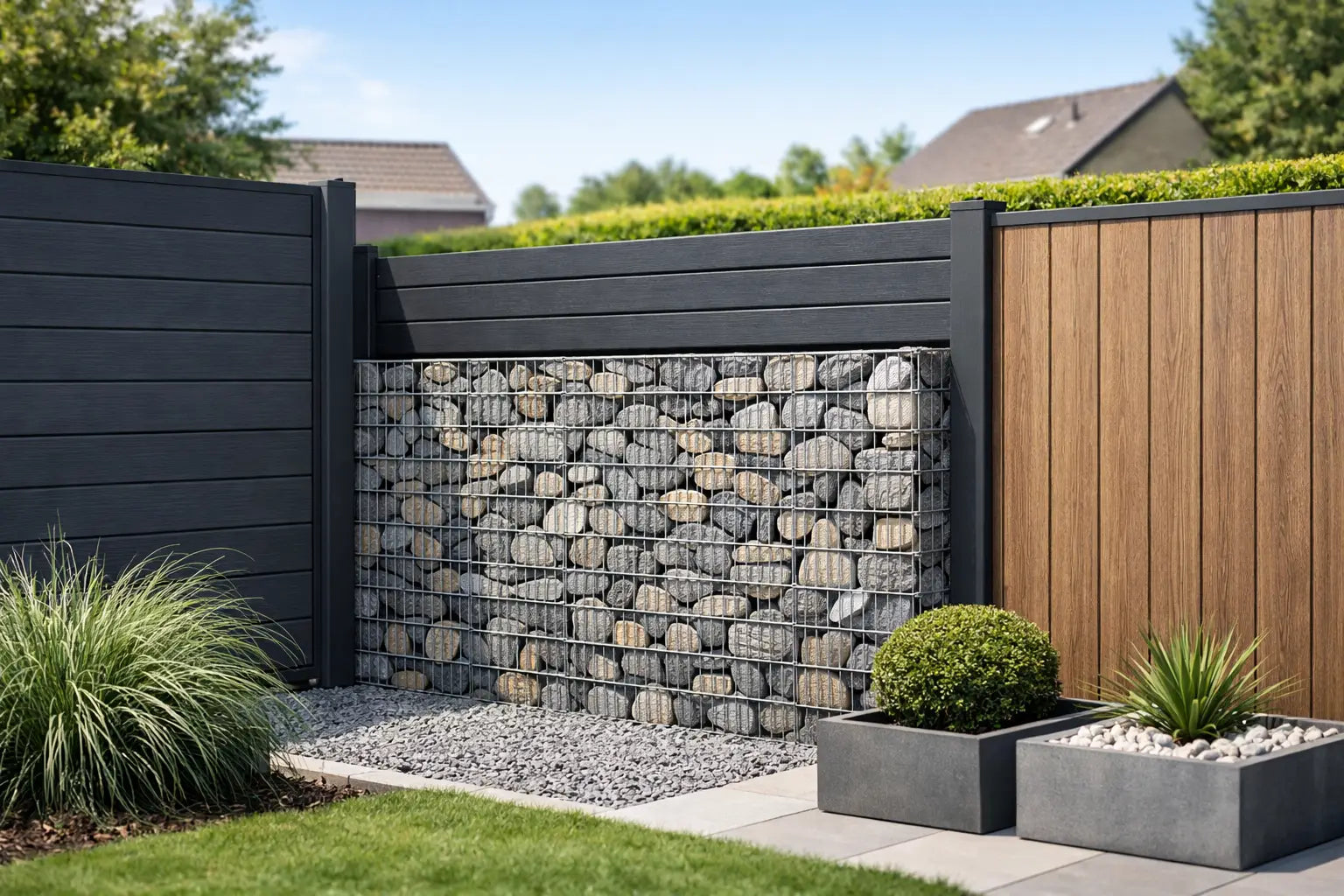
Vergeet ook de hoogte niet. Een hogere schutting geeft vanzelfsprekend meer afscherming, maar kan een tuin compacter laten lijken. In een diepe tuin is dat zelden een probleem. In een kleine patio of rijtjestuin loont het om te kijken hoe je privacy combineert met lucht. Soms werkt een gesloten onderzijde met een subtiel decoratief bovenstuk beter dan één volledig massieve wand.
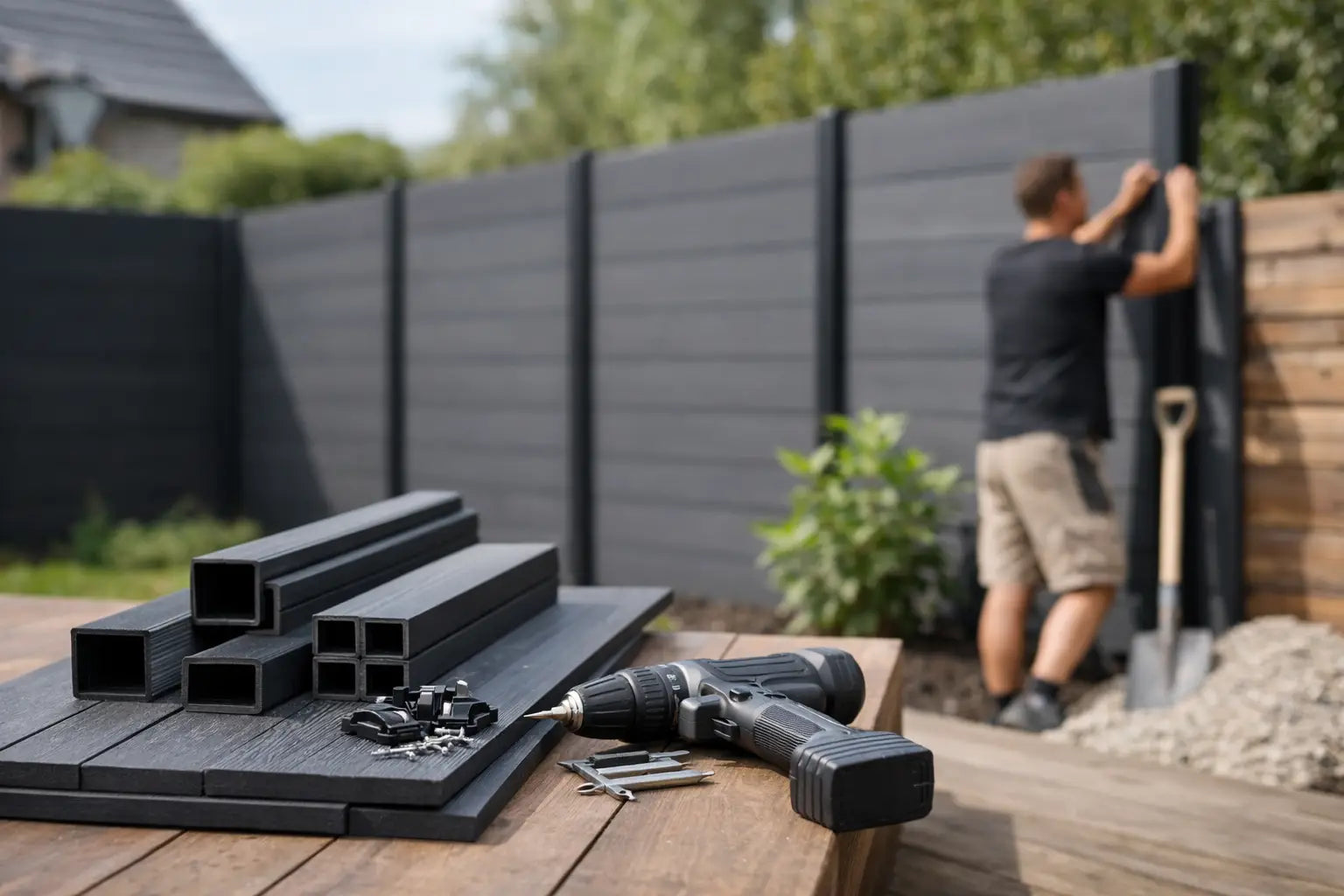
Voor doe-het-zelvers is montage vaak net zo belangrijk als materiaal. Een composiet schutting is aantrekkelijk omdat het systeemmatig opgebouwd is. Dat betekent minder zaagverlies, minder nabehandeling en een voorspelbaarder resultaat. Maar er zit verschil tussen losse componenten verzamelen en kiezen voor een compleet pakket.
Een compleet pakket bespaart tijd. Je weet dat palen, liggers, afdeklijsten en panelen bij elkaar passen. Dat is prettig als je snel wilt doorpakken of werkt met een strakke planning. Voor vakmensen betekent het minder kans op vertraging en minder restpunten bij oplevering.
De ondergrond verdient ook aandacht. Op een stabiele, goed voorbereide fundering komt elk systeem beter tot zijn recht. Wie daarop bespaart, betaalt vaak later in scheefstand of spanning op de constructie. Composiet is onderhoudsarm, maar niet foutcorrigerend. Een strak product vraagt om een strakke plaatsing.
Composiet schuttingen zijn er in meerdere prijsklassen. Dat verschil zit niet alleen in merk of kleur, maar vooral in materiaalopbouw, profielkwaliteit, UV-bestendigheid, afwerking en de compleetheid van het systeem. Een lagere instapprijs lijkt aantrekkelijk, maar als je later extra accessoires, profielen of aangepaste bevestiging nodig hebt, loopt het totaalbedrag alsnog op.
De slimste vergelijking maak je daarom op systeemniveau. Wat krijg je precies voor de prijs? Hoe compleet is het pakket? Hoeveel werk blijft er nog over? En hoe lang blijft de uitstraling mooi zonder extra onderhoud? Dat laatste is voor veel kopers de echte winst. Je investeert niet alleen in een schutting, maar in jaren zonder schuren, schilderen of vervangen.
Voor wie projectmatig werkt, telt ook leverbaarheid mee. Snelle en voorspelbare levering is geen detail, maar een planningseis. Zeker als je meerdere tuinen of een complete buitenruimte in één keer wilt afwerken, wil je materiaal dat direct inzetbaar is en past binnen een strak bouwproces.
Strakke, moderne tuinen vragen meestal om rechte lijnen, rustige kleuren en een uniforme opbouw. Dan werkt een composiet schutting met aluminium accenten, diepe kleuren en een minimalistische afwerking het sterkst. Het resultaat oogt verzorgd en eigentijds zonder dat je daarna vastzit aan onderhoud.
Bij een warmere of meer organische tuin mag het materiaal juist iets zachter ogen. Denk aan natuurlijke kleurtinten en een houtstructuur die aansluit op beplanting, overkapping of vlonder. Dat geeft dezelfde praktische voordelen, maar met een vriendelijkere uitstraling.
Twijfel je tussen modern en natuurlijk, kies dan voor tijdloos in plaats van uitgesproken. Een neutrale tint met een subtiele nerf blijft langer mooi bij veranderende smaak of aanpassingen in de tuin. Dat maakt de keuze op lange termijn vaak sterker.
De vraag welke composiet schutting kiezen wordt vaak benaderd als een kwestie van smaak. In de praktijk gaat het om gebruik, montage en levensduur. Wil je vooral rust en privacy, dan kies je voor een gesloten systeem met strakke afwerking. Wil je snel kunnen plaatsen met voorspelbaar resultaat, dan is een compleet pakket de meest efficiënte route. En wil je vooral jarenlang klaar zijn, dan kijk je verder dan de aanschafprijs alleen.
Daarom werkt een specialistische aanpak beter dan los winkelen op alleen foto of korting. WPC Solutions speelt daar sterk op in met complete systemen, moderne afwerkingen en onderhoudsarme kwaliteit die direct praktisch inzetbaar is voor zowel particuliere klanten als professionals.
De beste schutting is uiteindelijk niet de duurste of de populairste, maar de oplossing die er over vijf jaar nog net zo goed bij staat als op de dag van montage.