Total: €0,00
Taxes and shipping calculated at checkout

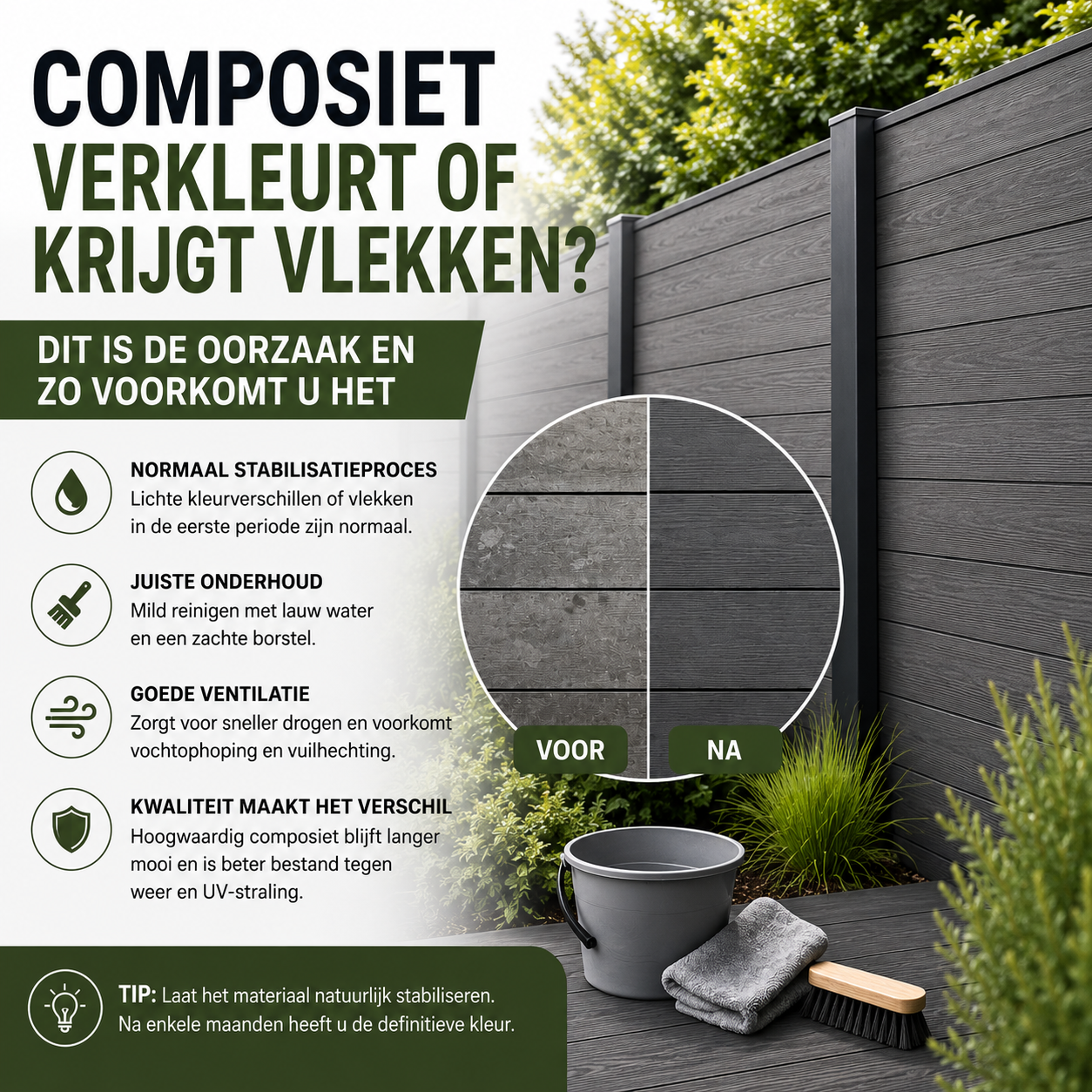
Many people choose composite garden materials for their low-maintenance properties, long lifespan, and modern appearance. However, doubts often arise when a new composite fence, deck, or facade cladding shows slight color variations, stains, or streaks in the first few months.
Fortunately, in many cases, this is completely normal and easy to prevent or resolve.
A common situation with new composite garden materials is that slight color differences, water rings, dust residues, or streaks become visible after installation. This sometimes makes it seem as if the material is discolored or damaged.
In reality, this is often related to the natural stabilization process of composite and external influences such as rain, sunlight, dust, and temperature changes.
Composite consists of a combination of wood fibers and plastic. Due to weather influences, moisture, and UV light, the material needs to settle in the period immediately after installation. This can cause temporary color differences or slight stains.
Many people try to clean composite intensively with aggressive agents immediately. This can be counterproductive and cause damage to the surface.
Cleaning too vigorously or incorrectly can damage the protective layer, causing dirt to adhere more quickly to the material.
Composite is easy to keep looking good when maintained correctly. In most cases, mild cleaning is sufficient.
New composite garden materials may change color slightly in the first few months. This is part of the natural aging and stabilization process of the material. Over time, the composite will acquire its final appearance.
Not all composite materials are the same. Cheaper variants often contain more wood fibers, less UV protection, and a less strong top layer. This can lead to stains, discolouration, or deformation more quickly.
Quality composite garden materials are more resistant to moisture, sunlight, and temperature changes. This means they remain beautiful for longer and require significantly less maintenance.
Always ensure a stable subsurface and sufficient air circulation. Especially with composite fences, decks, and facade cladding, good ventilation prevents moisture accumulation and extends the lifespan of the material.
Slight stains or color differences in new composite garden materials are usually not a defect, but part of the material's natural process. With correct installation, sufficient ventilation, and mild maintenance, composite remains sleek, durable, and low-maintenance for years.
Those who choose quality composite materials choose a modern garden solution that is resistant to weather, wind, and daily use.