Total: €0,00
Taxes and shipping calculated at checkout

A deck should not only look good on the day of installation. It should also continue to look neat after rain, full sun, and intensive use. This is precisely why more and more homeowners and professionals are choosing composite decking solutions: the warm look of wood, but with much less maintenance and a longer lifespan.
Anyone who has ever had a wooden deck knows the pattern. First, it looks beautiful, then the work begins. Sanding, oiling, discoloration, splinters, and in some places wear or warping. With composite, it's different. The material is developed for outdoor use and combines wood fibers with plastic, making the boards more stable, weather-resistant, and low-maintenance.
This does not mean that every composite deck is automatically the best choice for every situation. The difference lies in the quality of the board, the finish, the system's construction, and the installation method. This is precisely where you make the difference between a deck that looks decent and a deck that remains neat for years.
For private customers, the convenience is particularly attractive. You don't have to deal with intensive maintenance every season. For gardeners, contractors, and installation companies, predictability also counts. A good system with fixed dimensions, a neat finish, and reliable delivery simply works faster and more professionally.
The main reason to choose composite is clear: less maintenance, without sacrificing appearance. A good composite deck has a modern wood look and remains visually more consistent than traditional wood. You see less cracking, splinters, and severe graying.
In addition, durability is a strong argument. Composite boards are made for long-term outdoor use and can handle moisture, temperature fluctuations, and intensive loads well. This makes them interesting for both compact city gardens and spacious patios around homes, hospitality areas, or project-based outdoor zones.
The finish also plays a role. With composite, you often work with a complete system of boards, substructure, and fasteners. This creates a calmer look, clean lines, and a more professional end result. This is a great advantage, especially for modern gardens.
Not every board fits every project. The right choice depends on use, location, and desired appearance. A deck in full sun requires something different than a deck in the shade or by the water. It also matters whether it's a family deck with a lot of foot traffic, or a more decorative outdoor space.
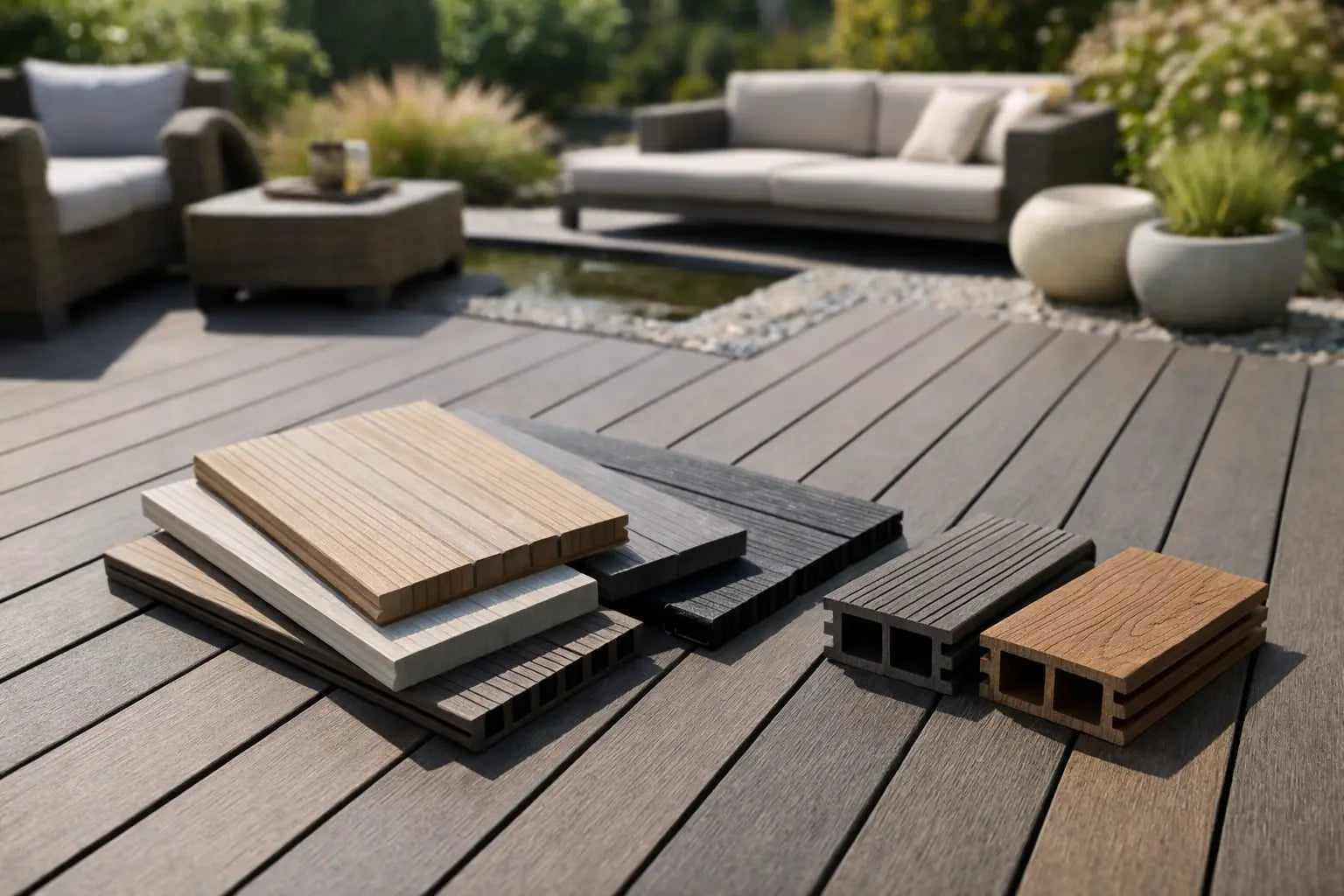
Solid boards often feel heavier and sturdier. They are often chosen for more intensive use and projects where a solid appearance is important. Hollow-chamber boards are lighter and often more attractive in terms of price. For many residential applications, this is a smart choice, as long as the construction and support are well-matched.
The best option therefore depends on load, budget, and installation method. Those who mainly want maximum sturdiness will look more towards solid. Those who want to build efficiently with a sharp price-quality ratio often end up with a high-quality hollow-chamber board.
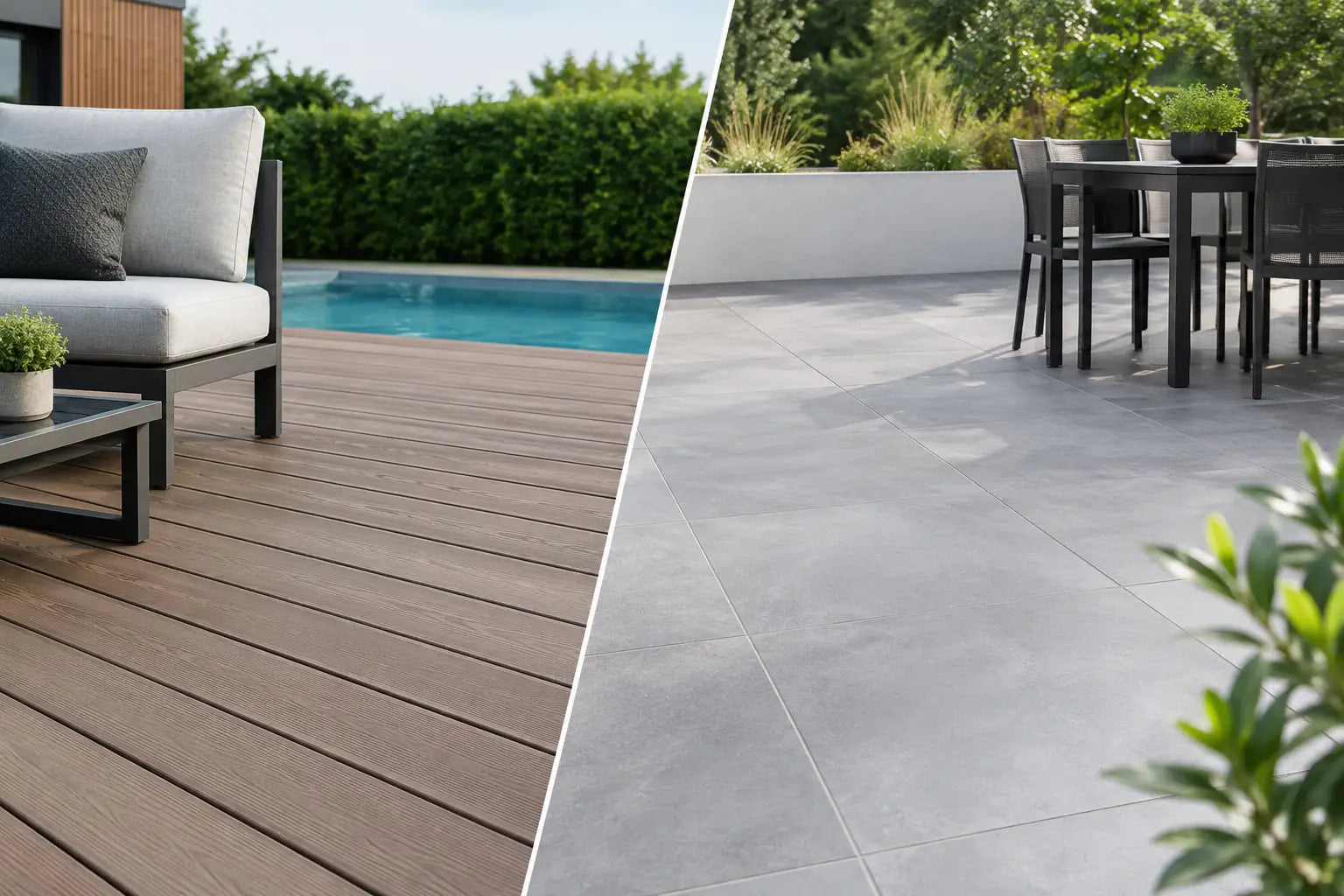
Color determines more than just the look. Darker shades give a luxurious, modern appearance, but can feel warmer in direct sunlight. Lighter colors look spacious and often stay a little cooler. Small details such as grain structure, brushed finish, or a double-sided profile also influence the final image.
Therefore, do not choose solely based on a loose product photo. Look at the overall style of the home, facade, and garden. A sleek deck works best when the material and color match the rest of the outdoor space.
A deck must feel safe, even in damp conditions. Therefore, the surface of the board is important. Many composite boards have a profile or structure that provides extra grip. This is pleasant in the rain, around an outdoor kitchen, or in gardens where children play.
At the same time, you don't want too coarse a finish that holds dirt or is difficult to clean. Here too, it's about balance between appearance, comfort, and practical use.
Even the best decking board performs poorly if the foundation is not right. A composite deck stands or falls with the substructure, the correct center-to-center distances, and sufficient ventilation. Those who save on this will later see it reflected in sagging, instability in the deck, or a less neat finish.
A flat and stable subfloor is the first step. This is followed by a substructure that matches the span and load of the boards. During installation, expansion and contraction due to temperature differences must be taken into account. Composite works less than wood in some respects, but still expands and contracts under the influence of heat and cold.
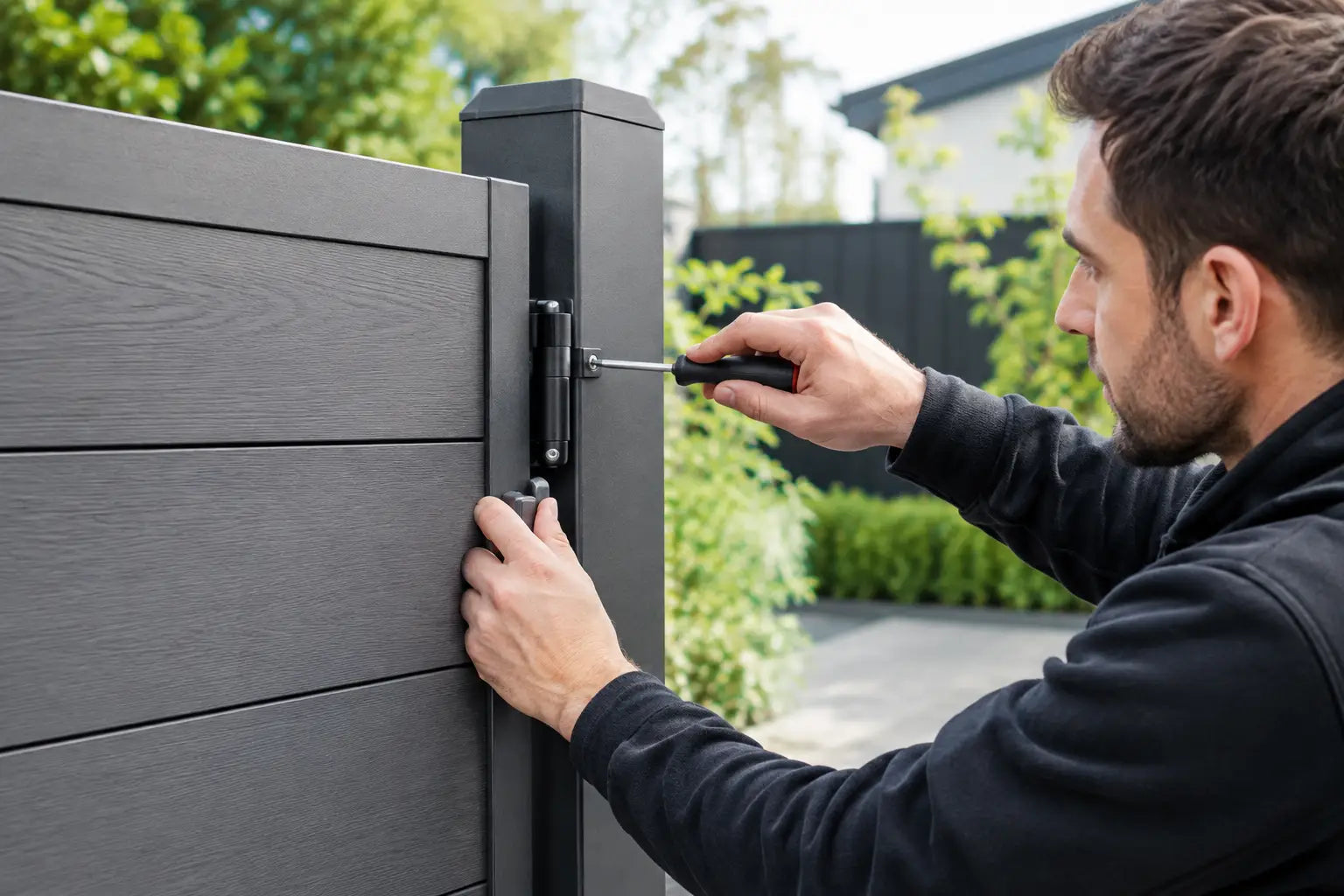
Therefore, correct joint sizes and fastening clips are not a detail, but a basic requirement. A good system keeps the deck neat, ensures even gaps, and makes installation faster and more consistent.
For many experienced DIY enthusiasts, a composite deck is perfectly feasible to install themselves, provided the preparation is good. Straight lines, correct measurements, and a solid substructure make the work manageable. For larger projects, differences in height, or complex shapes, professional installation is often smarter.
Professionals mainly save time with system thinking. If boards, clips and accessories logically connect, you work faster, deliver a neater result, and avoid improvisation on site. This is not only practical but also commercially interesting if you want to plan efficiently.
Low maintenance is different from completely maintenance-free. Even a composite deck stays nicer if you clean it regularly. Leaves, sand, and organic dirt can accumulate, especially in shady areas or between the joints.
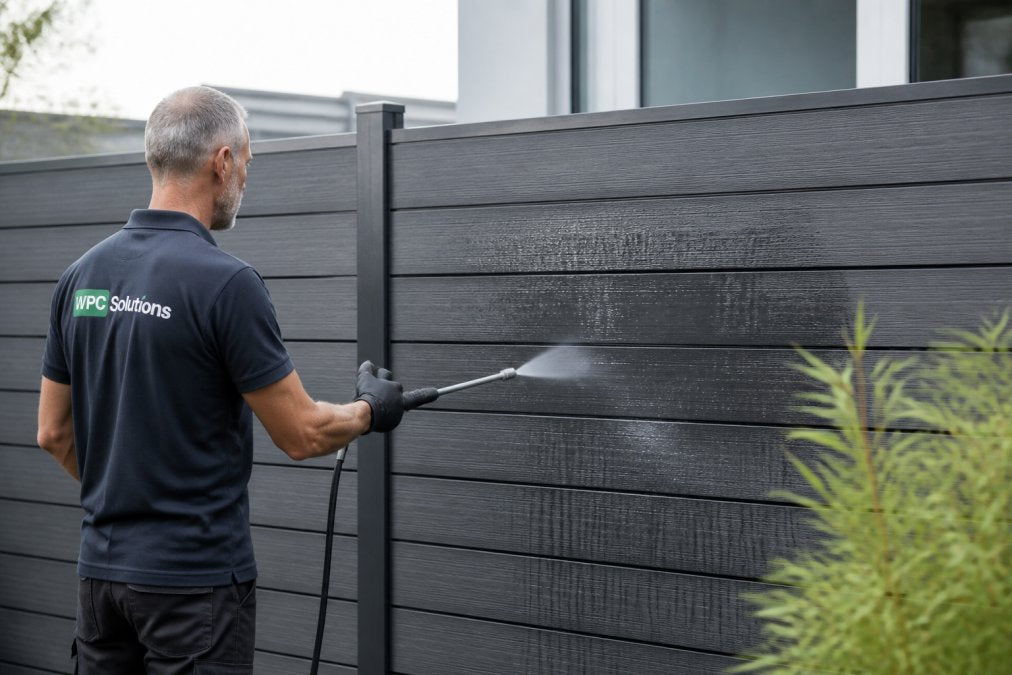
In practice, normal maintenance is simple. Regular sweeping and occasional cleaning with water and a suitable cleaning agent are often sufficient. You don't have to sand, stain, or oil like with wood. That saves time, costs, and recurring annual work.
However, it is wise not to leave stains for too long. Think of grease splashes from a barbecue or wet leaves that remain for a long time. The faster you clean, the easier it is to keep the surface beautiful.
The purchase price of composite is often higher than that of basic wooden boards. However, the comparison is not complete. Those who only look at the purchase miss the bigger picture. The total costs also include maintenance, replacement, finishing, and lifespan.
A cheap wooden deck may seem attractive in the short term, but it often requires more labor and more maintenance products. Moreover, after a few seasons, it often looks less neat. With composite, you pay more upfront, but you benefit from less maintenance and a more consistent appearance in the long term.
For many customers, this is precisely the reason to take the plunge. Especially if the deck is an important part of the home experience, you don't want a material that requires attention every year.
Composite works strongly in modern gardens, patios, roof terraces, and around wellness or lounge areas. The material fits well with clean lines, contemporary facades, and low-maintenance outdoor design. It is also a logical choice in projects where speed and a neat system structure are important.
For water features or very damp locations, good ventilation is extra important. And for large surfaces with a lot of sun exposure, you need to consciously deal with color choice and expansion space. These are not disadvantages, but factors that you need to take into account beforehand.
That is precisely why a specialist approach works better than just choosing a board based on price. At WPC Solutions, it's not just about the product, but about complete composite solutions that are visually strong and technically correct.
A strong deck rarely stands alone. It becomes more beautiful when it is part of a whole. Consider a combination with composite fences, garden posts, lighting, or facade accents in the same modern style. This gives the outdoor space more tranquility and more value.
For private customers, this means a garden that feels finished rather than put together. For professionals, it means fewer color differences, less material hassle, and a more consistent end result for the client. This not only makes a project more beautiful but also easier to sell.
Those who build a deck today are increasingly choosing long-term comfort. Not every project requires the same board or the same construction, but the direction is clear: sleek, durable, and low-maintenance beats traditional maintenance work. If you choose wisely, you are not building a deck for one season, but an outdoor space that you will enjoy for years without worries.