Total: €0,00
Taxes and shipping calculated at checkout

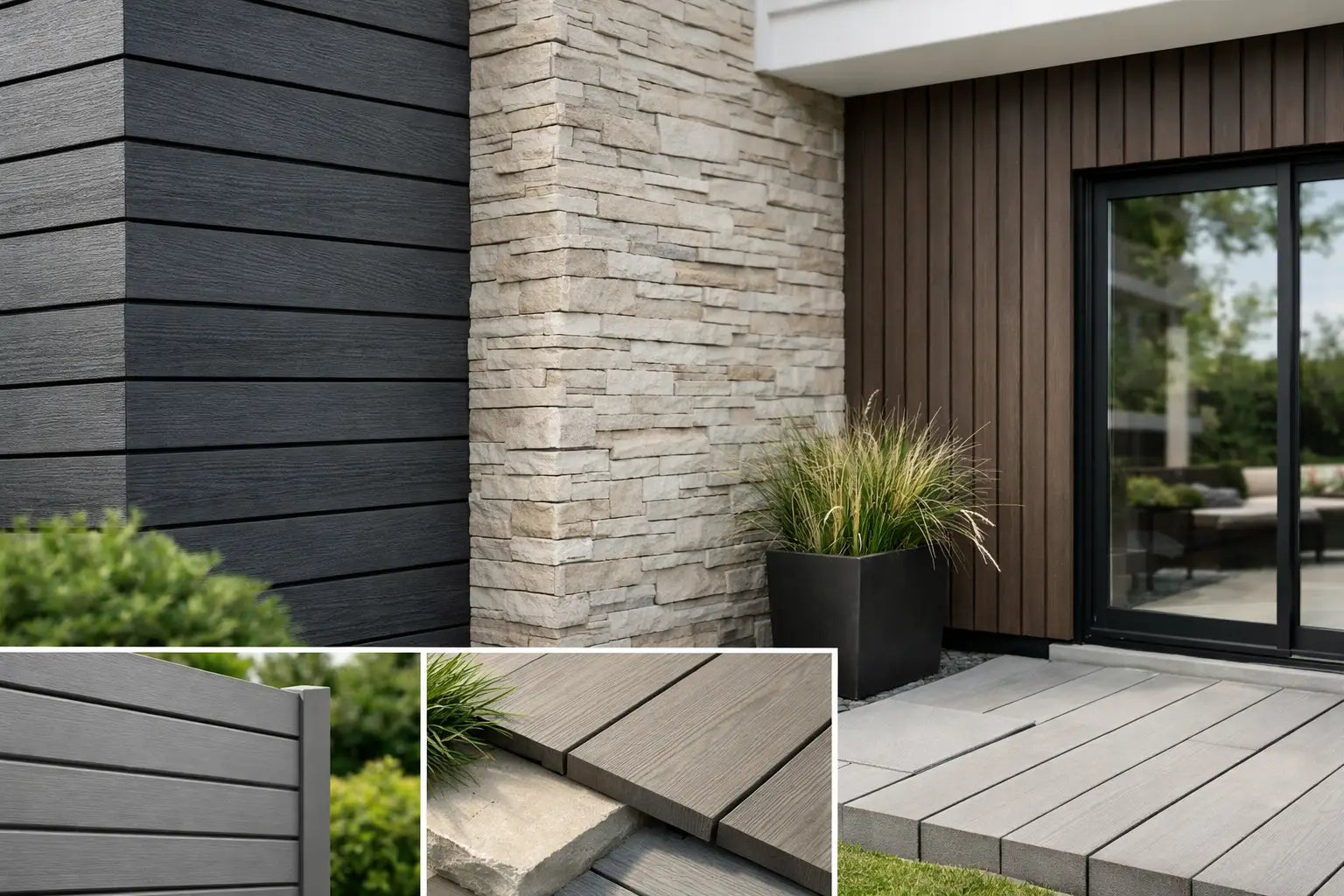
A facade must remain sleek for years, even after intense sun, driving rain, frost, and fluctuating temperatures. Those looking for the best low-maintenance exterior cladding materials therefore look beyond just color and price. The right choice determines how much time you spend on painting, cleaning, and repairing - and how modern your home, extension, veranda, or outdoor space looks.
For many homes, composite cladding is the practical middle ground: the warm look of wood, without the annual maintenance round. But plastic, metal, fiber cement, and stone each have their own strengths. Below, you can compare the materials on appearance, maintenance, lifespan, and application.
Low-maintenance does not mean that a facade never needs attention. Dust, green deposits, and pollen adhere to almost any exterior material. The difference lies in recurring tasks. Do you have to sand, stain, varnish, repair joints, or replace rotten parts? Then a material is not low-maintenance in practice.
A strong choice for outdoors has a colorfast finish, absorbs little moisture, and is resistant to mold, insects, and temperature fluctuations. Installation also counts. A well-ventilated facade system prevents moisture from remaining behind the cladding. This protects not only the facade boards, but also the structure behind them.
Also pay attention to the location. A south-facing facade has to deal with a lot of UV radiation. A side under trees is more prone to dirt and green deposits. On the coast, wind and salt exposure play a role. The best material is therefore always tailored to the situation, not just a product photo.
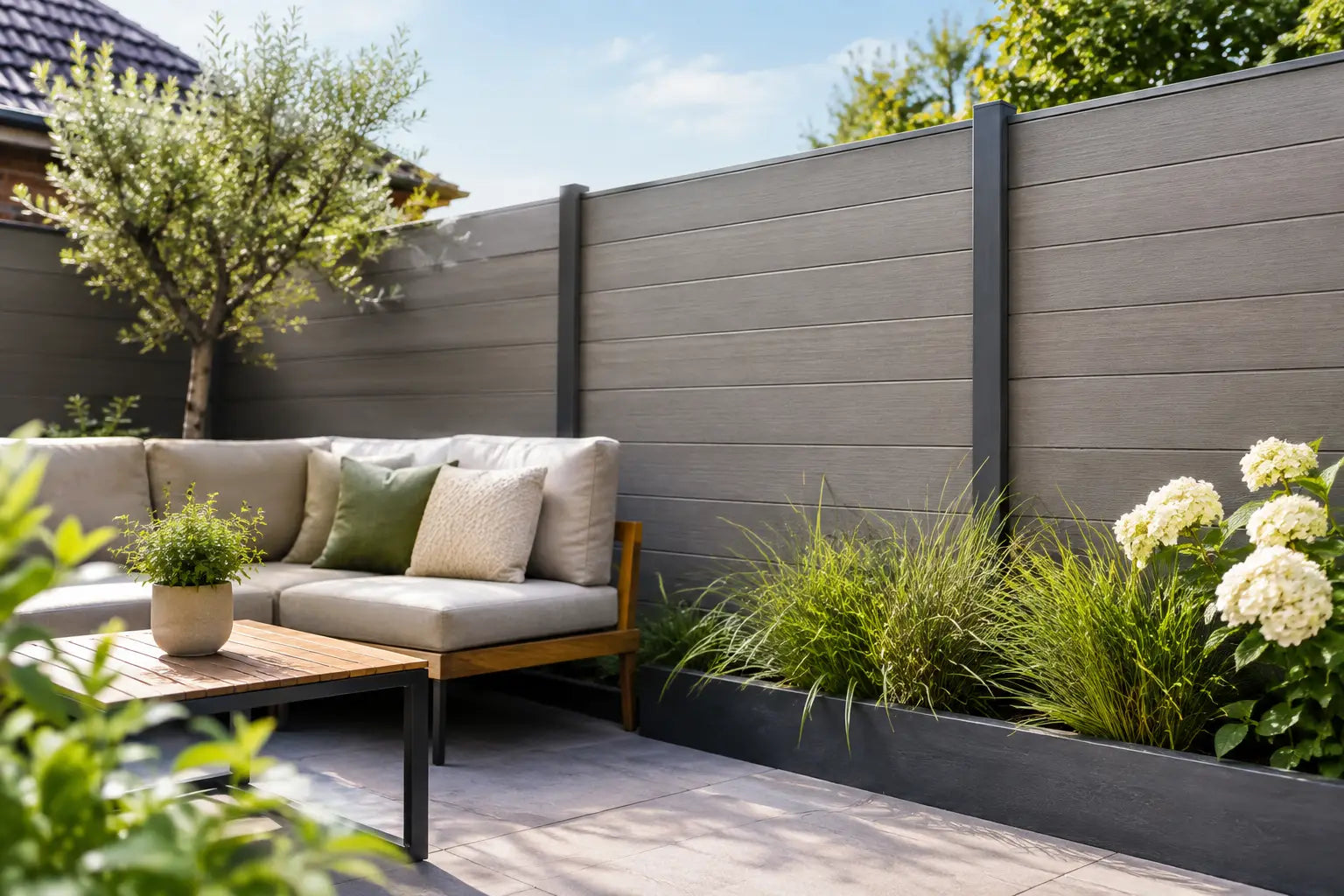
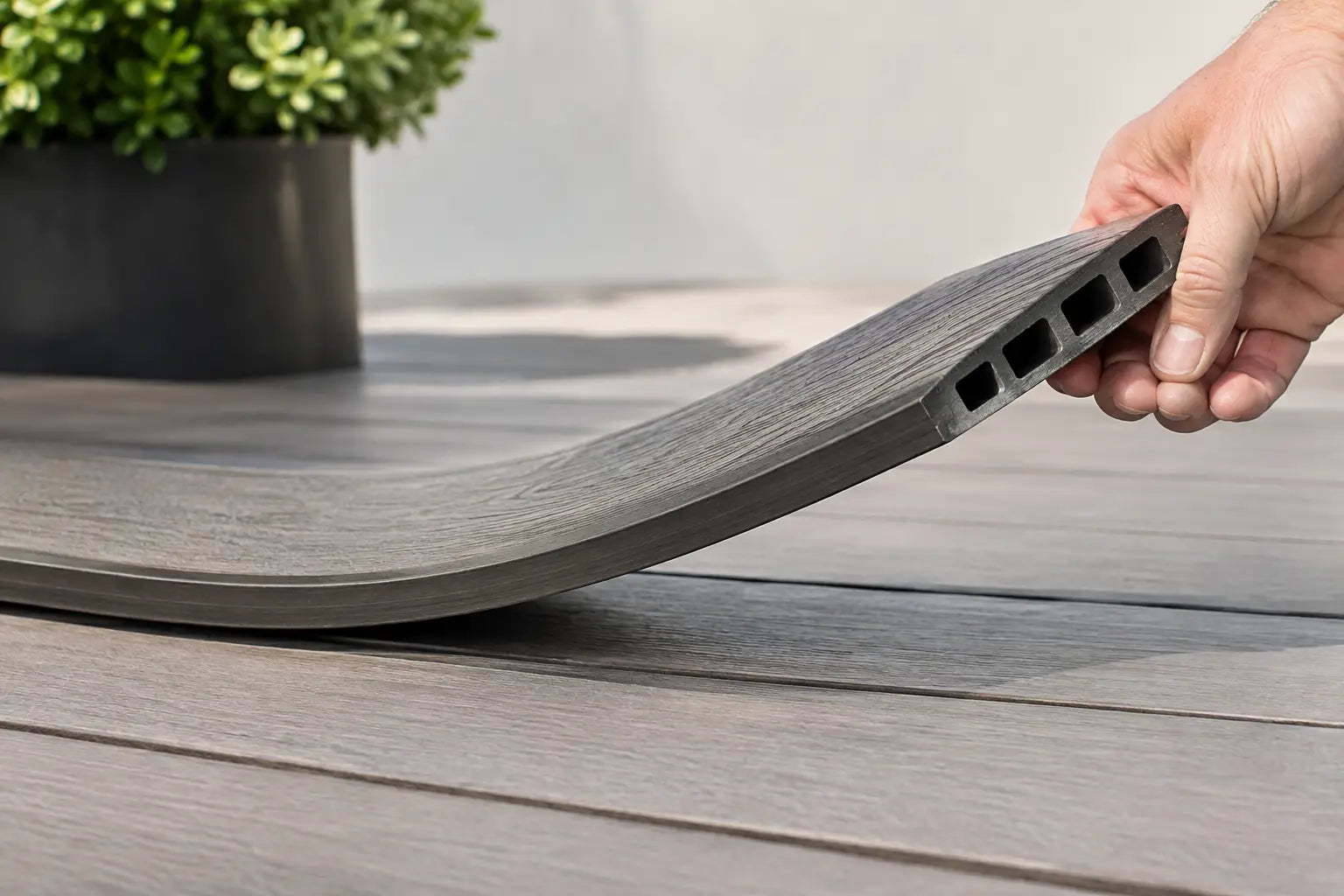
Composite, also known as WPC, consists of a combination of wood fibers and plastic. The result is a solid, modern facade material with a natural wood look and a calm, consistent color. Especially tongue and groove panels and modern wall profiles are popular for facades, canopies, dormers, garden sheds, and exterior walls.
The big advantage is clear: composite does not need to be stained or painted. Periodic cleaning with water and a soft brush is usually sufficient to keep the facade looking neat. The material does not rot like untreated wood and does not attract insects. This allows you to choose a sleek finish that requires little time.
Composite is not completely insensitive to expansion and contraction. Therefore, when installing, take into account the prescribed spacing, fasteners, and ventilation. Also choose a system with matching corner profiles, starting profiles and finishing parts. It is precisely these details that make the difference between loose cladding and a professional end result.
For those who want to combine a warm look with practical convenience, composite is often the strongest choice. WPC Solutions offers complete systems for this that coordinate color, profile, and finish.
Plastic cladding, often referred to as PVC or vinyl siding, is lightweight and relatively easy to install. It is available in smooth, wood grain, and panel profiles. Thanks to the dense top layer, it absorbs little moisture and does not need painting.
This material is well suited for renovations, garages, outbuildings, and homes where limited weight is important. Plastic is usually cheaper to purchase than high-quality composite or metal systems. A gentle cleaning easily removes most dirt.
On the other hand, plastic sometimes looks less luxurious than composite or wood. Cheap profiles can work more strongly with large temperature differences and are more susceptible to damage from a hard impact. Those who choose plastic would be wise not to compare solely on the lowest price. Wall thickness, UV resistance, and the quality of the finishing profiles determine the lifespan.
Fiber cement facade panels and strips have a modern, often matte appearance. The material combines cement with fibers and is resistant to moisture, mold, and vermin. It is widely used in modern homes, commercial buildings, and architectural facades where a calm, flat linearity is desired.
An important advantage is the high fire resistance. Fiber cement also generally remains dimensionally stable in heat and cold. The finish can last a long time, although this depends on the chosen coating and local weather conditions.
Fiber cement is heavier and requires precise installation. Sawing produces dust and requires appropriate tools and safe processing. Damage to edges or coating must be carefully finished. It is therefore low-maintenance after installation, but less accessible for the average do-it-yourselfer than clickable composite profiles.
Aluminum and steel give a facade a distinct, contemporary look. Think of vertical standing seam profiles, flat cassettes, or narrow slats. Coated aluminum is light, does not rust, and requires little maintenance. Steel is very strong, but the quality of the coating and edge finishing is especially important.
Metal is ideal if you are looking for a minimalist, industrial, or high-quality look. The surface is easy to clean and, with a good powder coating, generally discolors slowly. For commercial projects and modern new builds, it is often a logical option.
The downside is the price and the installation. Metal can dent more easily from a hard blow, and rain noise can be audible in certain constructions. In addition, it requires precise detailing around windows, corners, and connections. A mistake in installation is immediately noticeable on a sleek metal facade.
A brick facade has a proven long lifespan and requires little daily maintenance. Brick slips offer a similar look with less weight and can be applied to existing substrates. Both options give a home a timeless, solid character.
However, stone is not automatically the most maintenance-friendly solution. Grouting can wear out, crack, or let in moisture after years. With brick slips, a good substrate, correct bonding, and neat finishing are crucial. A facade that retains a lot of moisture can also suffer from deposits.
Stone is therefore a strong choice for those looking for a classic or durable look and willing to check the grouting in the long term. For a quick, modern facade renovation with a warm wood look, composite is usually more practical.
Natural wood has an appearance that is difficult to fully replicate. Thermally modified wood, hardwood, and impregnated wood can last a long time, provided they are installed correctly. But even durable types of wood require inspection and maintenance. Without oil, stain, or coating, wood grays, and in some applications, cracks, warping, or local deterioration occur.
This graying can be a conscious choice. Those who want a natural, vibrant facade that can change with the seasons may find wood beautiful. Those who want a fixed color and a consistently sleek appearance are better off choosing composite, metal, or a quality plastic system.
Start with the desired look. If you want a wood look and warmth, composite is obvious. If you are looking for a budget-friendly, lightweight solution for an outbuilding, plastic is worth considering. For an architecturally flat or fire-technically demanding design, fiber cement may be a better fit. Metal gives the most pronounced modern look, while stone scores mainly on timelessness.
Then look at the substructure. Cladding is not placed directly against a damp wall. A framework, ventilation space, and proper drainage are necessary for durable installation. Also check local building regulations, fire safety requirements, and any rules from a homeowners association or municipality beforehand.
Finally, don't just compare the price per plank or sheet. Include profiles, fasteners, framework, cutting loss, and installation. A complete system may seem more expensive to purchase, but it saves time, prevents color differences, and results in a much neater final appearance.
A low-maintenance facade is not a choice for one season. Choose a material that suits your home, your taste, and the time you actually want to spend on maintenance. Then the exterior of your house will remain a strong calling card for years - without the paintbrush and ladder returning every year.