Total: €0,00
Taxes and shipping calculated at checkout

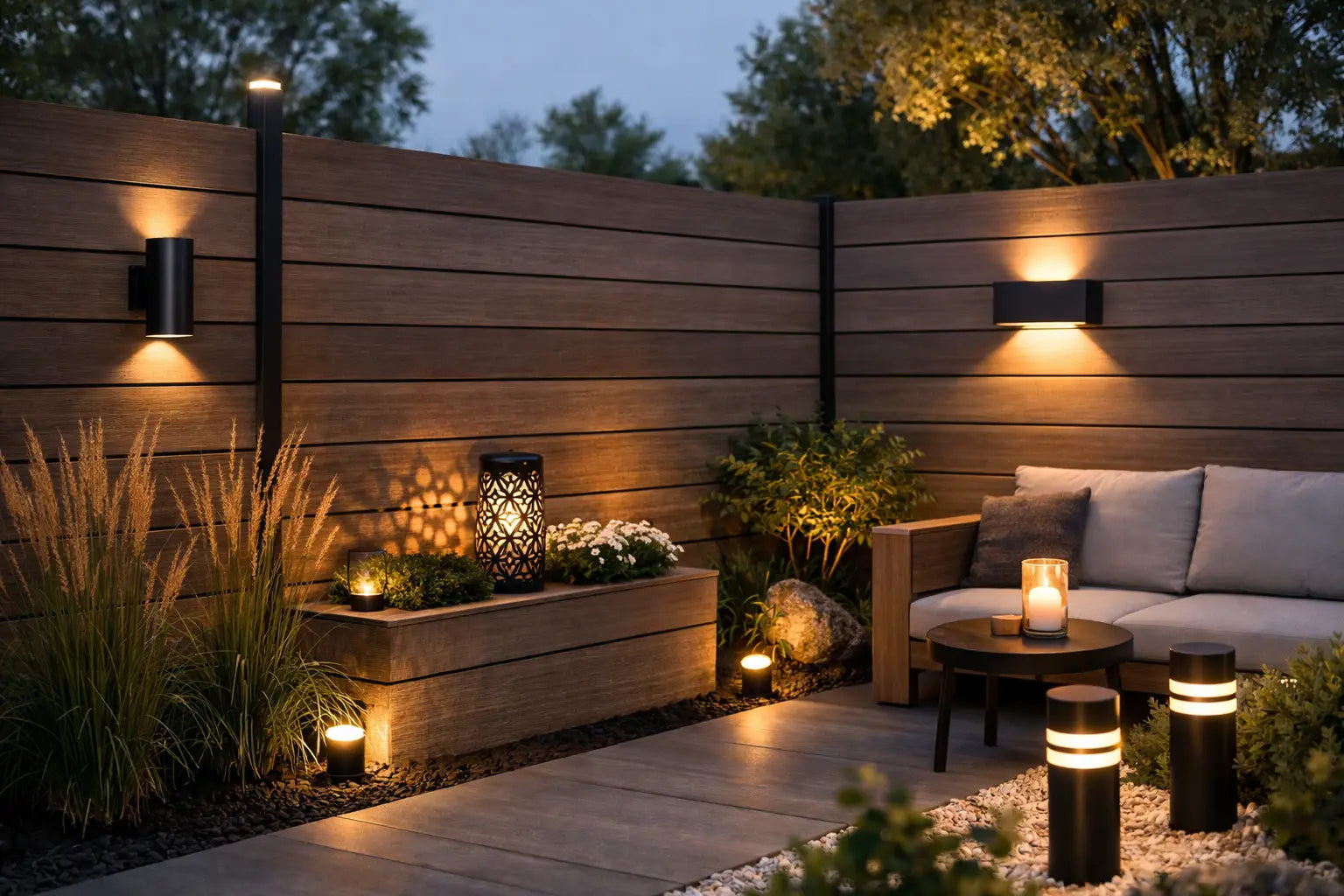
A fence defines the lines of your garden during the day, but disappears without good lighting as soon as the sun goes down. With the right lighting, that same fence transforms into a sleek backdrop for long evenings, a safe pathway, and a garden that feels larger. Anyone looking for top fence lighting ideas isn't just looking for a lamp: it's about light that suits the height, color, and layout of your fence.
The most beautiful fence lighting isn't created by filling every meter with a bright lamp. First, determine the function of the light. Do you mainly want atmosphere on the terrace, visibility along the garden path, or extra security at a gate? That choice determines the light intensity, direction, and placement.
Then, work with zones. Give the seating area warm, soft light, illuminate a walkway more functionally, and accentuate one striking wall or planting area. With a modern composite fence, a calm rhythm often works better than many separate fixtures. The sleek, horizontal lines of composite deserve light that supports that form rather than breaking it.
Always choose outdoor fixtures that are suitable for moisture, rain, and temperature fluctuations. For an American garden installation, low-voltage 12-volt is often a practical choice for accent lighting. Have 120V connections and fixed wiring installed according to local regulations, especially around a patio, spa, or outdoor kitchen.
Compact wall lights at fixed distances from each other give a neat, architectural look. Choose a fixture that shines light downwards if you mainly want to mark a path, terrace edge, or border. An up-and-down light provides more drama but can quickly become too prominent on a low fence.
Matte black, anthracite, and dark grey blend beautifully with modern posts and composite panels. Do not place the lights too high: approximately at eye level or slightly below prevents you from looking directly into the light source when you are sitting at a table.
Does your fence have a capping or a clear top edge? Then small downlights are a very neat solution. They cast a soft beam of light over the vertical or horizontal planks and highlight the length of the fence.
This idea works particularly well along a long side boundary where you don't want to hang decorative accessories. Keep enough distance between the spots. Placed too close together, a row of harsh light spots is created, while a wider distribution creates a luxurious effect.
An LED strip behind a slat, under a top profile, or in a subtle joint provides indirect light. Because the light source itself largely remains out of sight, the result looks modern and calm. Especially with an anthracite, black, or teak-look composite fence, this adds depth in the evening.
Use an aluminum profile with a cover cap for this, not a loose strip directly exposed to weather and dirt. Also, choose a warm white color temperature of approximately 2700K to 3000K. Cool white light can quickly give a garden a business-like parking lot appearance.
Illuminated fence posts are ideal if you want to create a clear structure without burdening the panels themselves. Place a compact fixture on the side of every second or third post. This creates a rhythm that makes the property boundary visible, without the light becoming too busy.
This approach is practical for new construction and renovation, as cables can often be neatly integrated along or within the post construction. Check in advance how the post is constructed and where mounting points can be safely placed. Neat installation is just as crucial for the final appearance as the fixture itself.
A garden door requires functional light. A wall light next to the door, combined with a small downlight above the doorway, makes the lock and threshold clearly visible. This is convenient when moving waste bins, coming home late, or receiving guests via the back entrance.
Do not choose a wide-beamed floodlight directly above the door. This often causes glare and harsh shadows. Targeted lighting with a motion sensor is smarter: light when needed, rest when the garden is empty. Carefully adjust the sensor so that passing animals or traffic outside the garden do not constantly activate the lighting.
Ground spots are suitable for illuminating a special wall, ornamental grass, or climbing plant from below. The light draws the eye upwards and gives a low fence more presence. Use them sparingly. Two to four well-placed spots often create more atmosphere than an entire row.
The downside is maintenance. Ground spots collect soil, leaves, and moisture more quickly than wall lighting. Therefore, do not place them in a spot where rainwater collects and choose fixtures with a decent protection class. Also, direct the beam away from windows and seating areas.
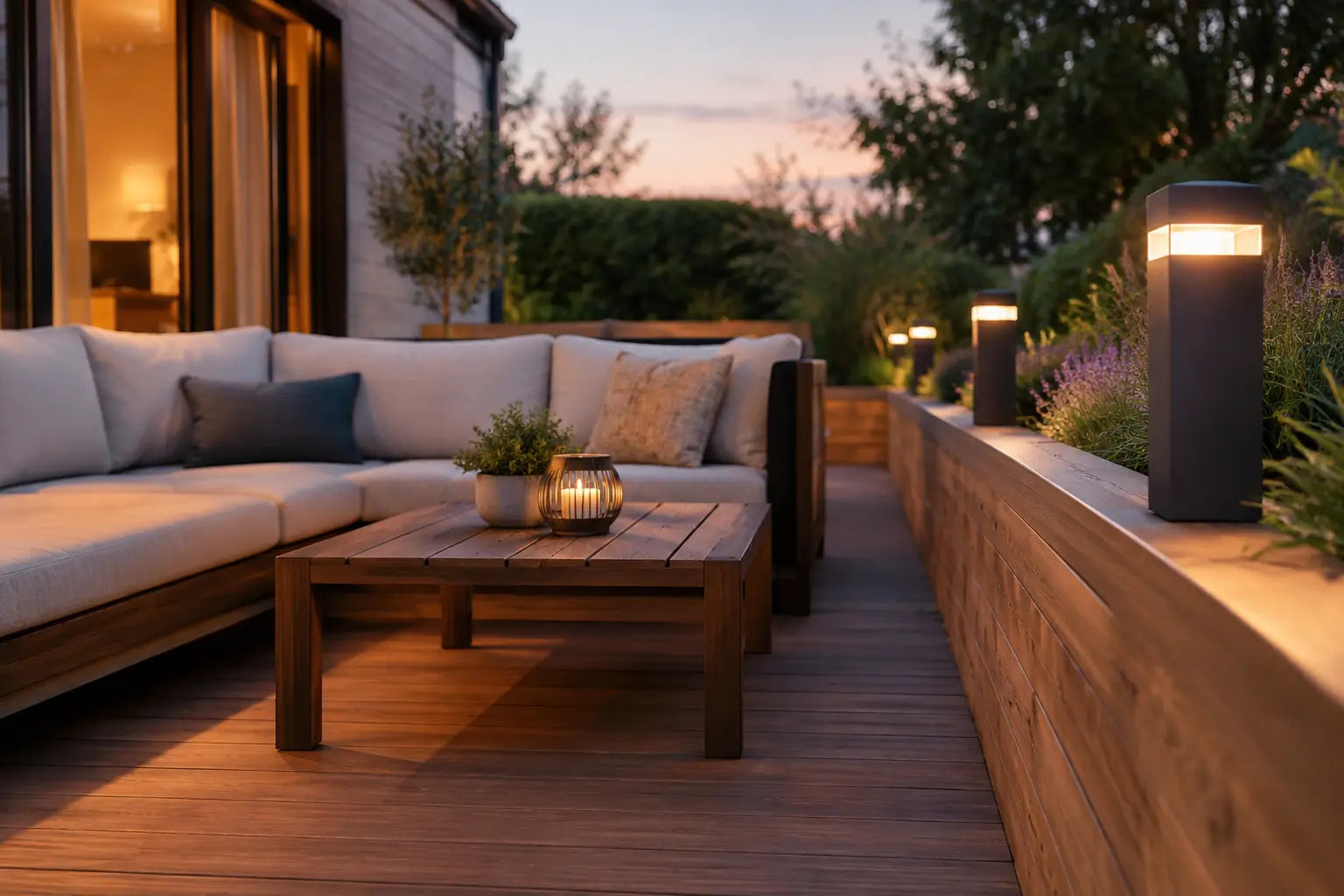
A raised planter against the fence offers an opportunity to combine light and greenery. Install an LED strip or small spot behind the planter so that the light shines upwards along the fence. During the day, the technology remains almost invisible, while in the evening, the planting receives a soft outline.
This idea works well with composite, as the low-maintenance appearance of the wall combines with a sleek planter. Make sure that irrigation and cables remain separate. A waterproof connection and an accessible transformer will save a lot of work later.
Do you want a less permanent solution? Then hang outdoor lanterns on sturdy hooks on some fence posts. This immediately creates a warmer, more informal atmosphere around a lounge area or dining table. The advantage is flexibility: you can adjust the position for a dinner, party, or new garden layout.
Use lanterns as an addition, not as primary lighting for a passage. Rechargeable models are convenient but require discipline. For a patio you use often, wired or quality solar variants are more reliable than cheap lights that provide less light after a few evenings.
Solar wall lights are attractive for an existing fence where you no longer want to hide cables. They are quick to install and work well in a sunny, open location. For a small corner at the back of the garden, they can provide just enough orientation light.
However, do not expect consistent performance if the fence is under tall trees or gets little sun in winter. The size of the solar panel, the battery quality, and the orientation make a big difference. Solar is ideal as an easy addition, but for your main lighting zones, low voltage usually remains the more reliable choice.
Turn one part of the fence into an accent wall, for example, behind the dining table, outdoor kitchen, or lounge. Combine a composite wall with an indirect LED line and some plants or decorative panels. By deliberately lighting one zone, the entire garden gets a stronger focus.
Keep the rest of the fence calm. It is precisely the contrast between an illuminated wall and dark, soft edges that creates depth. This solution is particularly suitable for smaller backyards, where every square meter must be both functional and attractive.
Warm white light is the safest choice for most gardens. It makes wood-look composite, natural planting, and patio furniture softer and more inviting. Use approximately 2200K to 2700K for a distinct ambiance and 2700K to 3000K for a combination of ambiance and practical visibility.
Lumens are at least as important as color temperature. A lamp with too much output makes the fence look flat and can cause nuisance to neighbors. For subtle accents, a low light output is often sufficient. At a gate, stairs, or path, it can be more functional, as long as the light beam is directed downwards and does not cause intrusion or glare.
Dimmable lighting gives you the most control. Make the light brighter while cooking or entering, and dim it later for a relaxed patio. A timer, twilight sensor, or smart controller also prevents lighting from burning unnecessarily all night.
Composite is weather-resistant and low-maintenance, but when installing, treat it as a finishing product that deserves careful preparation. Plan cable routes in advance, use appropriate fastening materials, and only drill where the construction allows. Preferably hide cables behind profiles, along posts, or in a protective cable duct.
Avoid fixtures that retain heat against the fence surface for extended periods. Modern LED lighting remains relatively cool, but a quality fixture with sufficient ventilation remains the best choice. Also, annually check the connections, cover caps, and sensor operation. This takes little time and keeps your garden lighting safe and well-maintained.
A well-lit fence doesn't have to scream for attention. Choose a few strong lighting moments, let the composite lines speak for themselves, and build your garden into a place that remains sleek, safe, and inviting even after sunset.