Total: €0,00
Taxes and shipping calculated at checkout

A facade that looks dull, weathered, or peeling after just a few years costs more than just time. Sanding, priming, and repainting require planning, materials, and regular maintenance. To avoid this, look for the best facade finish without painting that suits the house, the desired look, and the available budget. Composite facade cladding is a strong choice for many homes: sleek, modern, colorfast in use, and designed for years of outdoor living without recurring paint jobs.
The best solution is not the same for every facade. The location of the house, the substructure, the desired wood look, and the degree of ventilation all help determine which material performs well. Below, you can read about the differences between the most popular options and why a complete facade system often delivers more than just beautiful siding.
Paint-free doesn't mean a facade never needs attention. Rain, dust, pollen, and deposits will always be present, especially on facades that receive little sun or are near trees. The difference lies in the finish layer: it doesn't need to be periodically sanded, treated, or repainted to keep the facade looking neat.
A good paint-free facade finish has a color integrated into the material or a durable top layer. The material must also be resistant to moisture, temperature fluctuations, and UV radiation. Annual cleaning with water and a soft brush is usually sufficient to keep the appearance fresh. Avoid aggressive cleaners and abrasive agents, as these can damage even low-maintenance surfaces.
When making your choice, look beyond just the exterior sign. Facade cladding must also be correctly installed, with sufficient ventilation behind the panels, appropriate fastening, and room for the material's natural movement. This determines not only the lifespan but also how neat the facade will look in the long term.
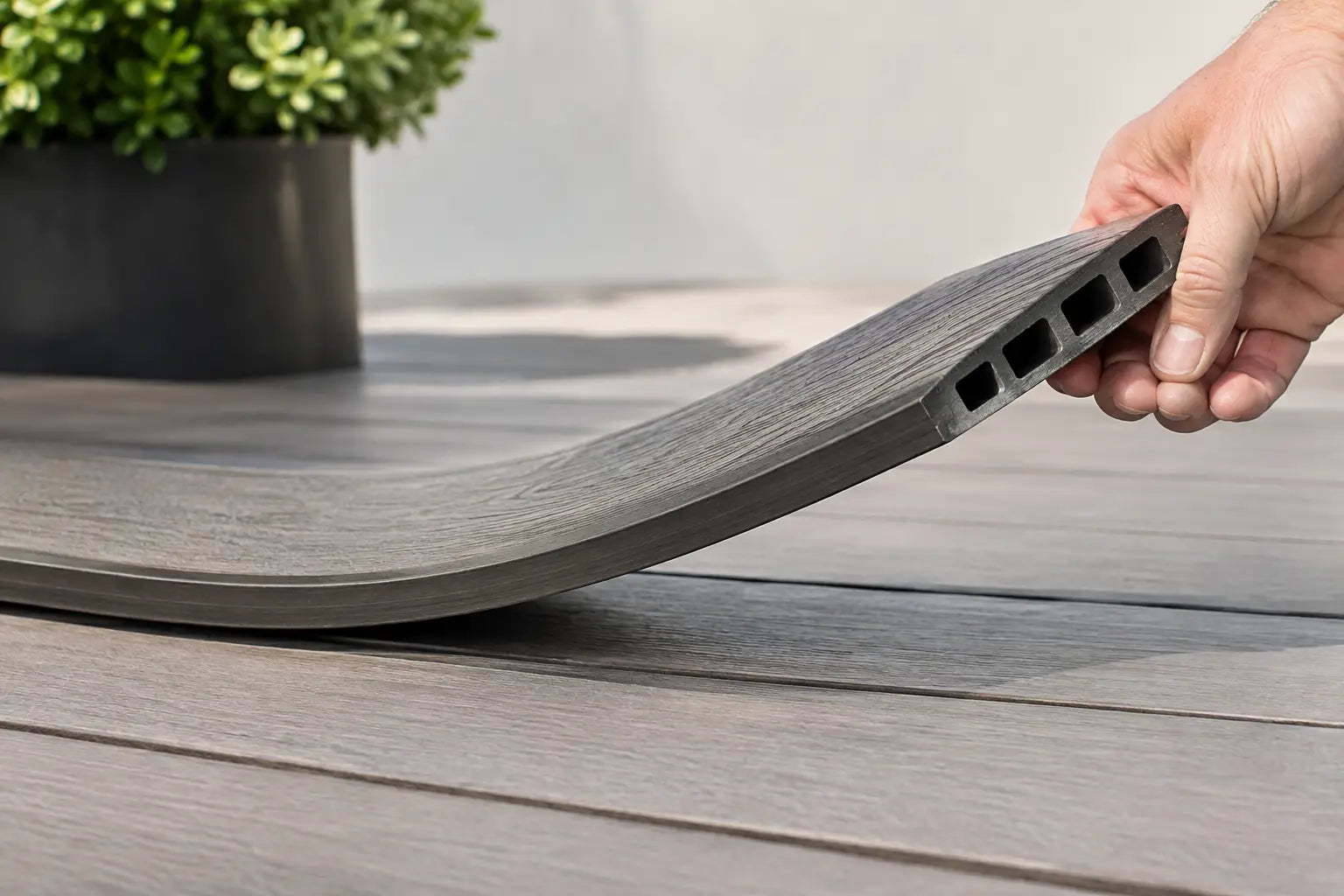
Composite, also known as WPC, combines wood fibers with plastic. The result is a facade panel with the warm, calm appearance of wood and the practical properties of a modern outdoor material. Especially for homes with a contemporary extension, veranda, garage, or accent facade, composite is a popular choice.
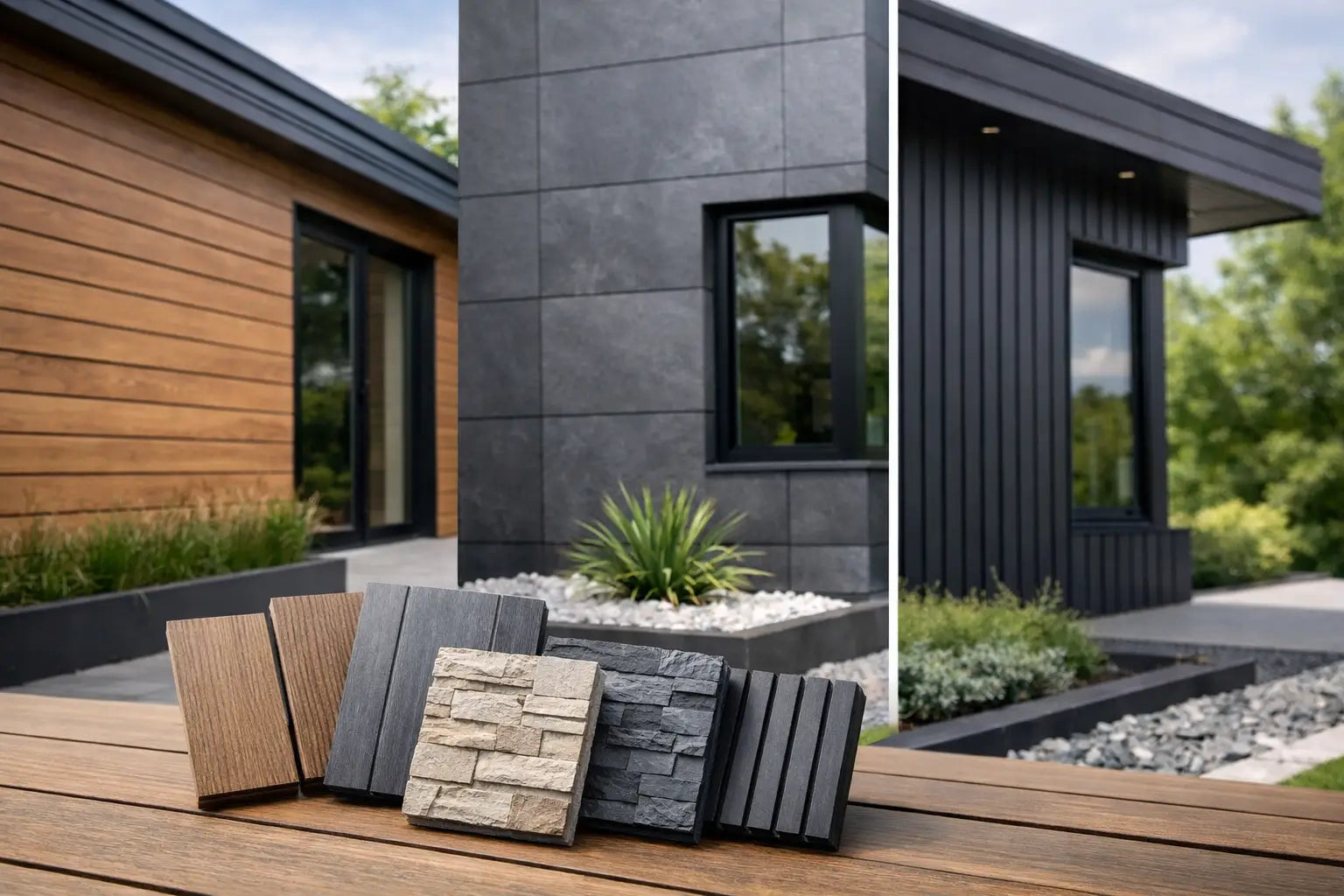
The strength of composite lies in its balance. You get an even color and a neat finish without the knots, cracks, and annual staining required for many wooden facades. Composite siding panels are available in various shades, from warm brown tones to anthracite and black. This allows the facade to easily match windows, fences, decks, or a modern garden.
Pay attention to the quality of the system. Not every composite panel has the same top layer, color stability, or mounting method. Therefore, choose facade cladding specifically designed for vertical application and install it on a sturdy framework. A ventilation cavity behind the cladding helps drain moisture and supports a durable construction.
Plastic facade cladding is lightweight, often affordable to purchase, and highly resistant to moisture. It is a functional solution for, for example, dormer windows, overhangs, gables, and outbuildings. Because plastic does not need to be painted, it remains attractive for those who want quick results with limited maintenance.
The appearance is an important consideration, however. While modern plastic systems are becoming increasingly realistic, the surface of some versions may look less natural than composite or real wood. Strong sun exposure and large temperature differences can also affect the material's performance. Correct installation with sufficient expansion joints is therefore essential.
Plastic is a good fit when light weight, moisture resistance, and a sharp purchase price are priorities. For a facade where a high-quality wood look and a fuller profile are desired, composite often offers more visual depth.
Aluminum, steel, and metal facade panels require little maintenance and do not need to be painted when they are provided with a durable coating. They give a home a distinctly modern or industrial look. Metal is also strong and dimensionally stable, making it suitable for larger facade surfaces and commercial projects.
These advantages, however, come with a different aesthetic than wood. Metal feels cooler and more technical, and damage to a coating can be visible. The purchase and installation costs can also be higher, depending on the profile, insulation structure, and detailing. For a warm residential facade or a garden-oriented extension, composite is often more accessible in terms of appearance and processing.
Brick slips and fiber cement boards are also options that do not require periodic painting. Brick slips add character and fit well with a rural or classic home. Fiber cement has a sleek, flat appearance and is often used in modern architecture.
However, these materials require a different investment and processing. Brick slips are more labor-intensive to install, while fiber cement offers less of the warm appearance that many homeowners seek in a wooden or composite accent facade. Those primarily looking for a low-maintenance wood look usually find composite siding panels to be a quicker solution.
Composite facade cladding is particularly suitable if you want to modernize an existing facade without being tied to annual maintenance. Think of an aging wooden extension, a garage wall that should better match the garden, or a facade section around an entrance that needs more appeal.
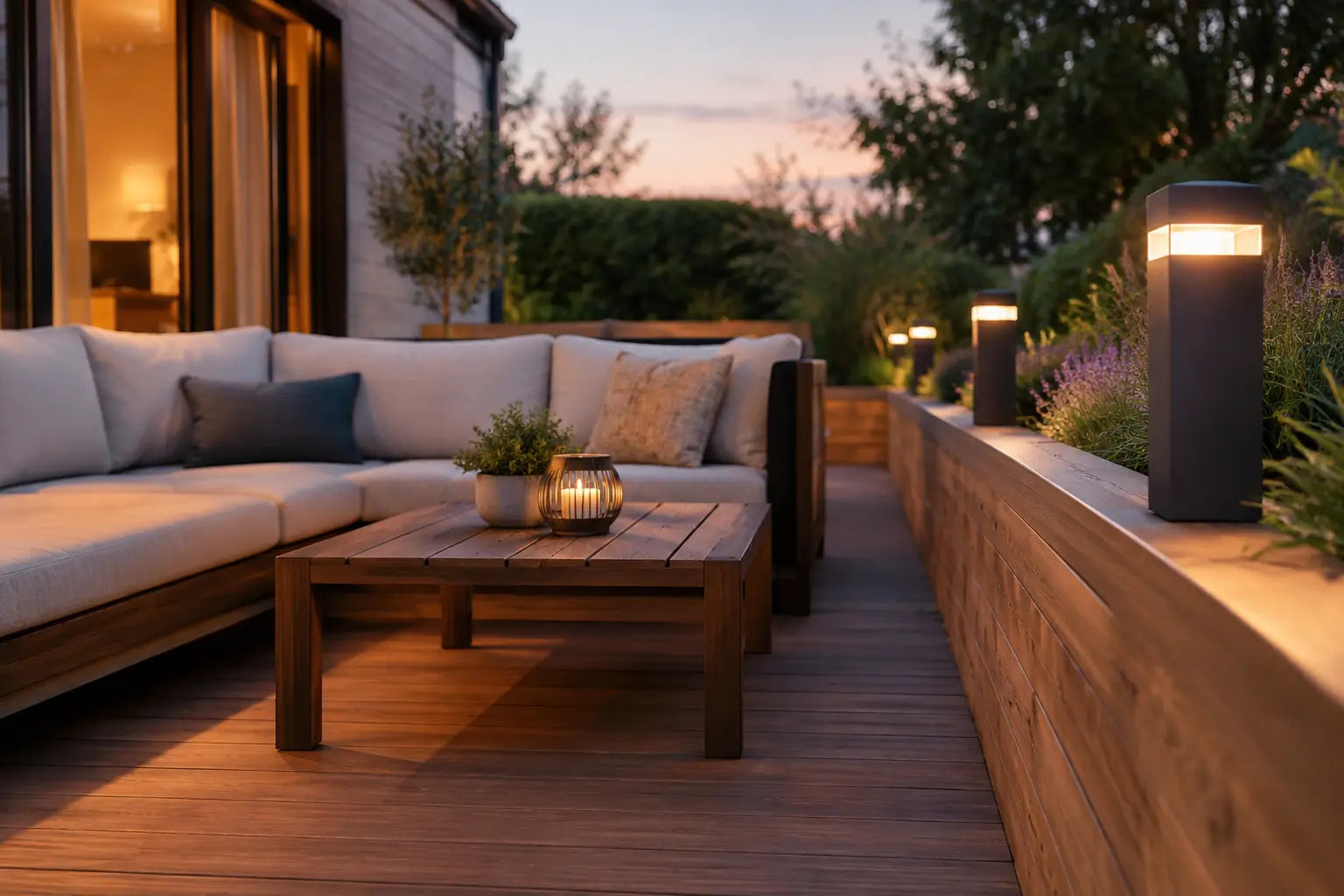
The material also works well in conjunction with other outdoor solutions. A facade in the same color tone as a composite fence, garden door, or deck creates visual harmony in the design. This is especially valuable if the garden and home need to form a cohesive unit. Instead of separate materials with varying aging, you choose a consistent finish that maintains its neat appearance for a long time.
For professionals, a system with matching profiles, fastenings, and finishes also offers speed on the construction site. For DIY enthusiasts, the main advantage is clarity: knowing in advance which panels, corner profiles, and accessories are needed prevents delays and improvisation during installation.
The cheapest facade cladding is not always the most economical choice over ten years. While the material costs for wood may seem attractive, also consider the costs of stain, paint, tools, aerial platform or scaffolding, and labor hours. Furthermore, deferred maintenance can lead to discoloration, moisture problems, or replacement of parts.
Therefore, compare the total investment. Look at the quality of the profile, the finish of the visible side, the required substructure, and the accessories. Also, inquire about normal color variations for the chosen material. No outdoor material remains exactly the same under all circumstances, but a quality composite system is designed to keep that change limited and uniform.
Viewing a sample is not an unnecessary step. Color looks different in direct sunlight than on a screen or under artificial light. Place a test piece near your window frames, roof edge, and paving. This prevents an anthracite color from looking too cool or a wood tone from appearing warmer than expected.
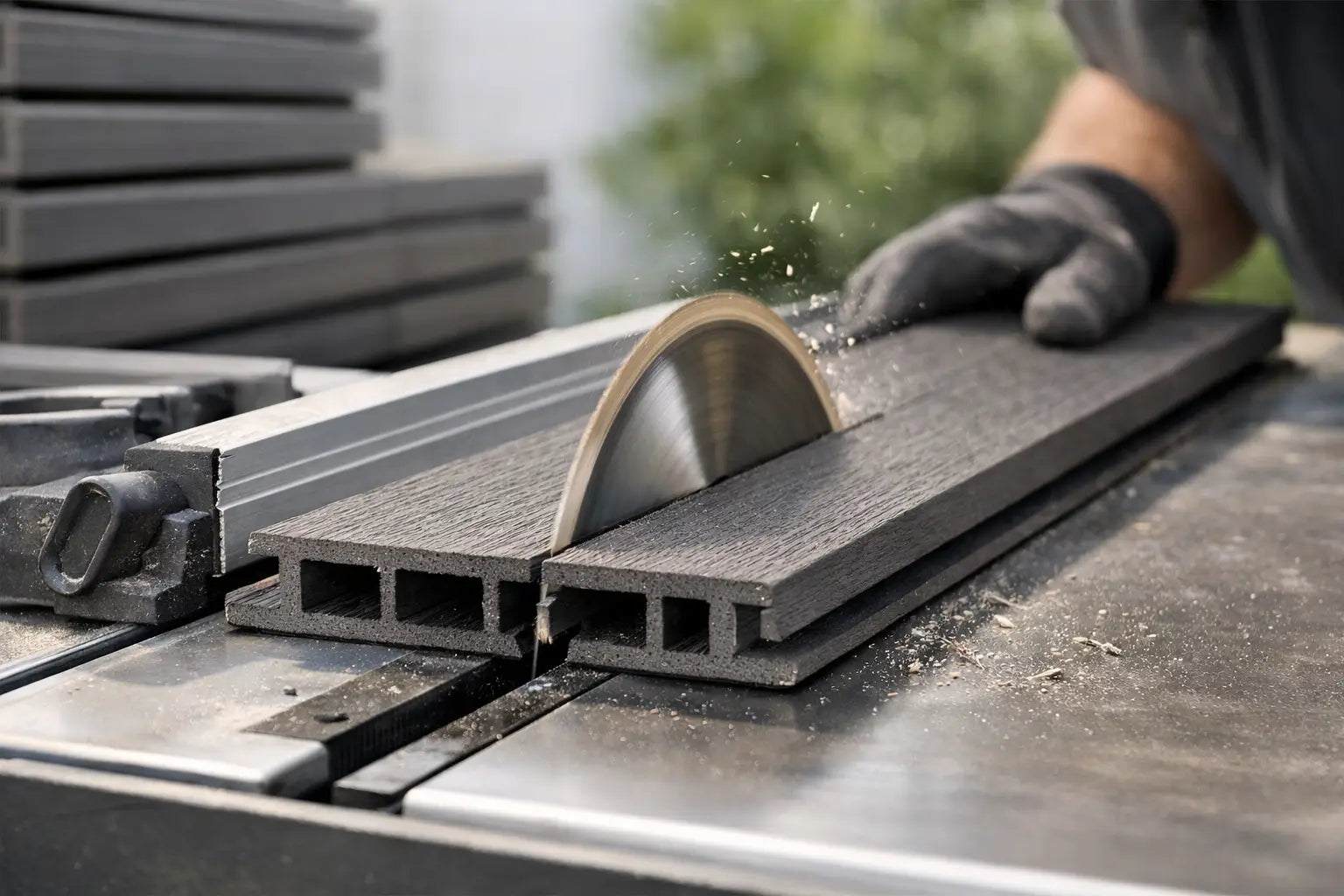
Even the best paint-free facade cladding performs less well with incorrect installation. The subsurface must be flat and sturdy. There should be a ventilated space behind the cladding to allow any moisture to escape. Use battens suitable for outdoor use, adhere to the prescribed center-to-center distance, and carefully finish edges and corners.
Also, consider expansion and contraction. Composite and plastic can move due to heat and cold. Therefore, fixed and sliding attachment points, correct spacing, and appropriate clips are not details but part of a durable facade. If you are unsure about the construction, it is advisable to consult the installation manual beforehand or to engage a professional.
A low-maintenance facade is not a compromise between practical and beautiful. With composite, you choose a calm wood look, a sleek finish, and less time on a ladder with a paintbrush. Carefully measure your facade, match the color and profile to your home, and invest in a complete mounting system. Then your attention will remain where it belongs: enjoying your home, not the next paint job.