Total: €0,00
Taxes and shipping calculated at checkout

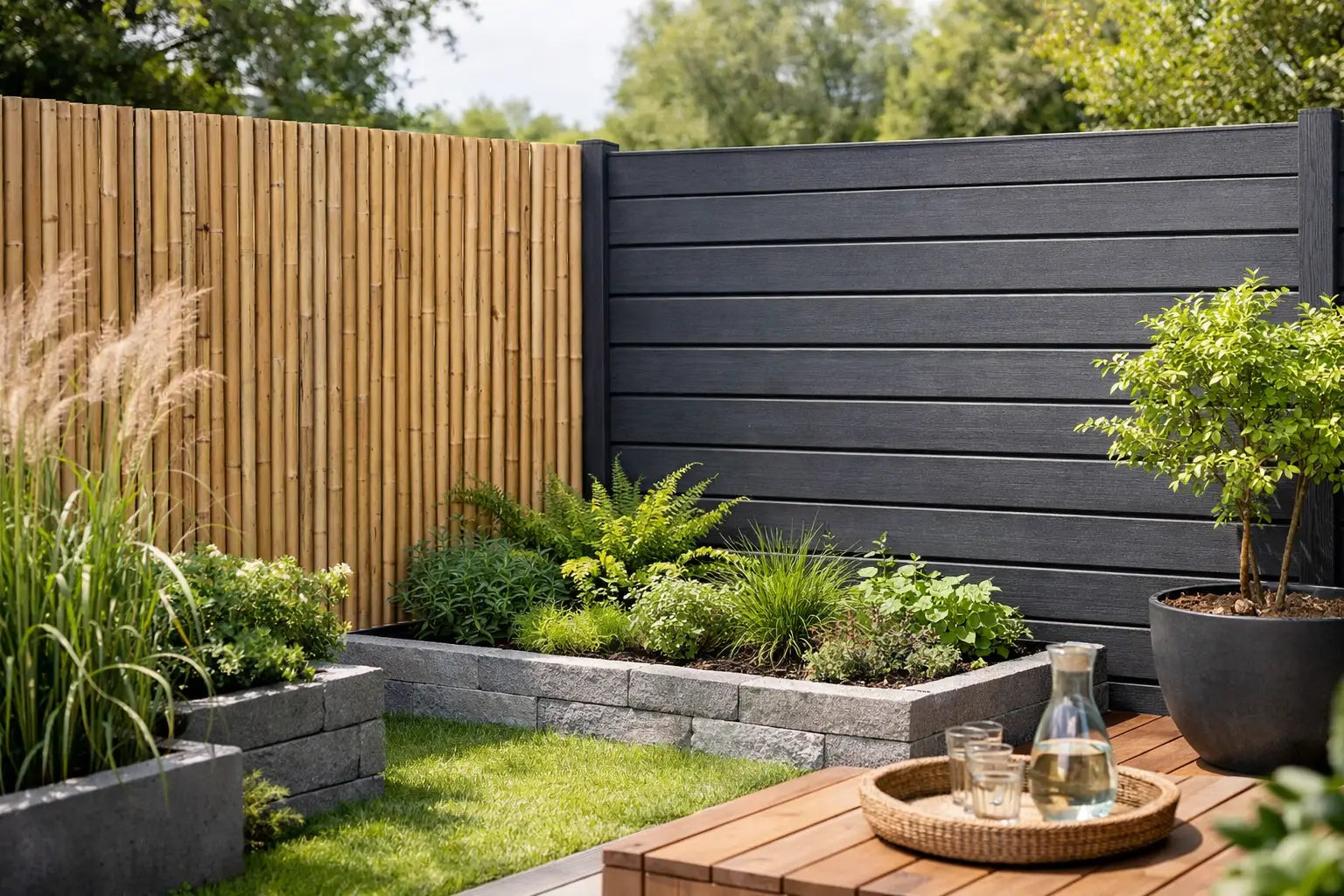
Een tuin die er strak uitziet, maar elk voorjaar weer schuren, beitsen of delen vervangen vraagt, voelt al snel als een project in plaats van een plek om van te genieten. Precies daarom kijken steeds meer huiseigenaren en vakmensen naar een duurzame schutting voor tuin die niet alleen mooi oogt, maar ook jarenlang netjes blijft zonder terugkerend onderhoud.
De vraag is alleen: wat is echt duurzaam? Want dat hangt niet alleen af van het materiaal. Ook levensduur, weerbestendigheid, kleurvastheid, montagegemak en de mogelijkheid om later onderdelen te vervangen spelen mee. Wie alleen naar de laagste aankoopprijs kijkt, is vaak duurder uit op de lange termijn.
Duurzaamheid begint bij de basis: hoe lang gaat een schutting mee onder invloed van regen, zon, vorst en temperatuurschommelingen? Een materiaal dat snel kromtrekt, scheurt of verkleurt, moet eerder worden vervangen. Dan ben je niet alleen meer geld kwijt, maar ook meer tijd en extra materiaal.
Daarnaast gaat duurzaamheid over onderhoud. Traditioneel hout heeft een warme uitstraling, maar vraagt vaak periodieke behandeling om mooi en sterk te blijven. Voor sommige mensen is dat prima. Voor veel tuinbezitters en professionals is het juist een nadeel. Zeker als een erfafscheiding groot is, in volle zon staat of lastig bereikbaar is.
Daarom winnen composiet schuttingen terrein. Composiet combineert een moderne houtlook met een onderhoudsarm karakter. Het materiaal is ontwikkeld voor langdurig buitengebruik en blijft in de praktijk veel consistenter in vorm en afwerking dan veel houtsoorten. Dat maakt het een logische keuze als je een nette, duurzame oplossing zoekt die niet elk seizoen opnieuw aandacht vraagt.
Wie een nieuwe schutting kiest, vergelijkt meestal drie routes: hout, hout in combinatie met beton, of volledig composiet. Elke optie heeft sterke punten, maar ook duidelijke verschillen.
Hout is vaak vertrouwd en direct herkenbaar. Het past in veel tuinen en is in verschillende prijsklassen verkrijgbaar. Tegelijk zit de onzekerheid in verwering, vochtopname en onderhoud. Ook bij goede houtsoorten blijft het resultaat sterk afhankelijk van plaatsing, behandeling en blootstelling aan het weer.
Hout-beton is steviger en beter beschermd tegen optrekkend vocht. De betonnen onderplaat helpt tegen grondcontact en verlengt de levensduur van houten schermen. Het nadeel is dat je nog steeds met hout werkt in het zichtdeel. Je wint dus constructieve duurzaamheid, maar niet per se onderhoudsgemak.
Composiet zit juist sterk op beide punten. Het materiaal is ontwikkeld voor een lange levensduur, heeft een verzorgde uitstraling en vraagt minimaal onderhoud. Voor wie een moderne tuin wil met strakke lijnen en een uniforme afwerking, is dat vaak de meest complete keuze. De initiële investering ligt doorgaans hoger dan bij standaard hout, maar daar staat minder onderhoud en minder kans op vroegtijdige vervanging tegenover.
De beste schutting is niet automatisch de dikste of de duurste. Het gaat om de complete opbouw. Zeker bij een duurzame schutting voor tuin tellen details zwaar mee.
Kijk niet alleen naar de panelen of planken, maar naar het volledige systeem. Denk aan palen, bevestiging, profielen en afwerking. Een sterke plank in een zwakke constructie levert alsnog problemen op. Complete systemen zijn vaak consistenter in passing, stabiliteit en uitstraling.
"Onderhoudsarm" klinkt aantrekkelijk, maar check wat dat concreet betekent. Moet je nog behandelen, oliën of beitsen? Hoe gevoelig is het oppervlak voor groene aanslag, vlekken of verkleuring? Bij composiet blijft onderhoud meestal beperkt tot schoonmaken. Dat scheelt werk en zorgt ervoor dat de schutting ook na jaren verzorgd oogt.
Een schutting koop je niet voor één seizoen. Daarom is kleurvastheid belangrijk. Sommige materialen zien er bij levering uitstekend uit, maar verliezen snel hun uitstraling. Een moderne tuin vraagt om een schutting die ook na meerdere zomers nog strak blijft ogen. Egale kleuren, een nette houtstructuur en een consistente afwerking maken daarin verschil.
Voor doe-het-zelvers telt gebruiksgemak. Voor professionals telt snelheid en voorspelbaarheid. Een systeem met logische opbouw, duidelijke maatvoering en goed passende onderdelen bespaart tijd op de klus en beperkt faalkosten. Zeker bij grotere projecten is dat niet zomaar een detail, maar direct financieel relevant.
Bij een eerste prijsvergelijking lijkt hout soms voordeliger. Maar wie verder kijkt dan de aanschaf, ziet een ander beeld. Hout vraagt vaak terugkerende kosten voor onderhoudsmiddelen, extra arbeid en vroegtijdige vervanging van delen die zijn gaan werken of verweren.
Composiet schuift juist op richting voorspelbare kosten. Je weet beter waar je aan toe bent, zowel qua uitstraling als qua onderhoud. Dat is aantrekkelijk voor particuliere kopers die vooral gemak willen, maar net zo goed voor vakmensen die een materiaal zoeken waarmee ze efficiënt kunnen werken en een strak eindresultaat opleveren.
Daar zit ook het commerciële voordeel van een goed systeem. Je koopt niet alleen een afscheiding, maar rust in onderhoud, een verzorgde uitstraling en een oplossing die beter past bij modern wonen. Dat maakt de investering vaak makkelijker te verantwoorden.
Duurzaam betekent niet dat je moet inleveren op uitstraling. Integendeel. Juist bij moderne schuttingsystemen is de afwerking vaak een grote plus.
In een strakke stadstuin werken antraciet, zwart of warme grijstinten vaak sterk. Ze combineren goed met keramische tegels, aluminium accenten en minimalistische beplanting. In een meer natuurlijke tuin zijn zand-, teak- of houtlooktinten logischer, omdat ze warmte brengen zonder het onderhoud van echt hout.
Ook de opbouw beïnvloedt het beeld. Horizontale lijnen laten een tuin vaak breder ogen en geven een eigentijdse uitstraling. Verticale toepassingen voelen klassieker en kunnen visueel meer hoogte geven. Het juiste effect hangt af van de perceelgrootte, de woningstijl en hoe zichtbaar de schutting in het totaalontwerp is.
Voor veel huiseigenaren draait de keuze uiteindelijk om gemak. Je wilt geen weekend verliezen aan schuurwerk of nabehandeling. Je wilt een schutting die privacy geeft, er verzorgd uitziet en niet na een paar jaar alweer aandacht vraagt.
Dan is onderhoudsarm niet zomaar een bonus, maar een hoofdreden om voor composiet te kiezen. Zeker bij nieuwbouwtuinen, moderne renovaties en gezinstuinen is dat verschil groot. Je houdt meer tijd over en de tuin blijft representatief met minimale inspanning.
Wie online wil bestellen, profiteert bovendien van een praktische plus: complete pakketten, losse onderdelen en duidelijke varianten maken vergelijken eenvoudiger. Dat verkleint de kans op misgrijpen en versnelt het hele traject van oriëntatie tot plaatsing.
Hoveniers, aannemers en montagebedrijven kijken anders naar een schutting dan particuliere kopers. Voor hen gaat het niet alleen om uitstraling, maar ook om verwerkbaarheid, leverbetrouwbaarheid en een systeem dat logisch monteert.
Een onderhoudsarm composietsysteem is dan interessant omdat het voorspelbaar werkt. De maatvoering is consistent, de afwerking strak en de kans op klachten door kromtrekken of intensief onderhoud ligt lager dan bij veel traditionele houtoplossingen. Dat helpt bij oplevering en versterkt de waarde van het project voor de eindklant.
Daarbij speelt beschikbaarheid een rol. Wanneer materialen snel geleverd worden en zowel losse delen als complete sets direct te bestellen zijn, kun je efficiënter plannen. Voor projecten met deadlines is dat simpelweg een voordeel dat meetelt.
Composiet is sterk, maar niet altijd automatisch de enige juiste oplossing. Er zijn situaties waarin hout nog steeds passend kan zijn. Bijvoorbeeld bij een heel specifiek budgetkader, een klassieke tuin waarin natuurlijke vergrijzing juist gewenst is, of een project waar de eigenaar bewust kiest voor traditioneel materiaal en het onderhoud accepteert.
Ook bij monumentale of zeer landelijke settings kan echt hout visueel beter aansluiten. Dan is het wel slim om eerlijk te blijven over de consequenties. Een lagere instapprijs voelt aantrekkelijk, maar vraagt vaak meer aandacht en kosten na plaatsing.
Dat is precies waar een goede keuze begint: niet bij wat op dag één het goedkoopst is, maar bij wat over vijf tot tien jaar nog steeds logisch voelt.
Als je een schutting vervangt, wil je het in één keer goed doen. Dat betekent verder kijken dan alleen kleur of prijs per deel. Let op het complete systeem, de verwachte levensduur, de onderhoudsbehoefte en de stijl die past bij jouw woning of project.
Voor wie een moderne, onderhoudsarme en duurzame erfafscheiding zoekt, is composiet in veel gevallen de meest logische route. Het biedt de uitstraling van hout, maar dan met minder werk en meer zekerheid. Precies daarom kiezen steeds meer klanten voor complete systemen zoals je die bij WPC Solutions vindt: strak afgewerkt, snel leverbaar en gebouwd voor langdurig buitengebruik.
De beste schutting is uiteindelijk de schutting waar je na installatie nauwelijks nog omkijken naar hebt - behalve dan om even tevreden te kijken hoe goed je tuin eruitziet.