Total: €0,00
Taxes and shipping calculated at checkout

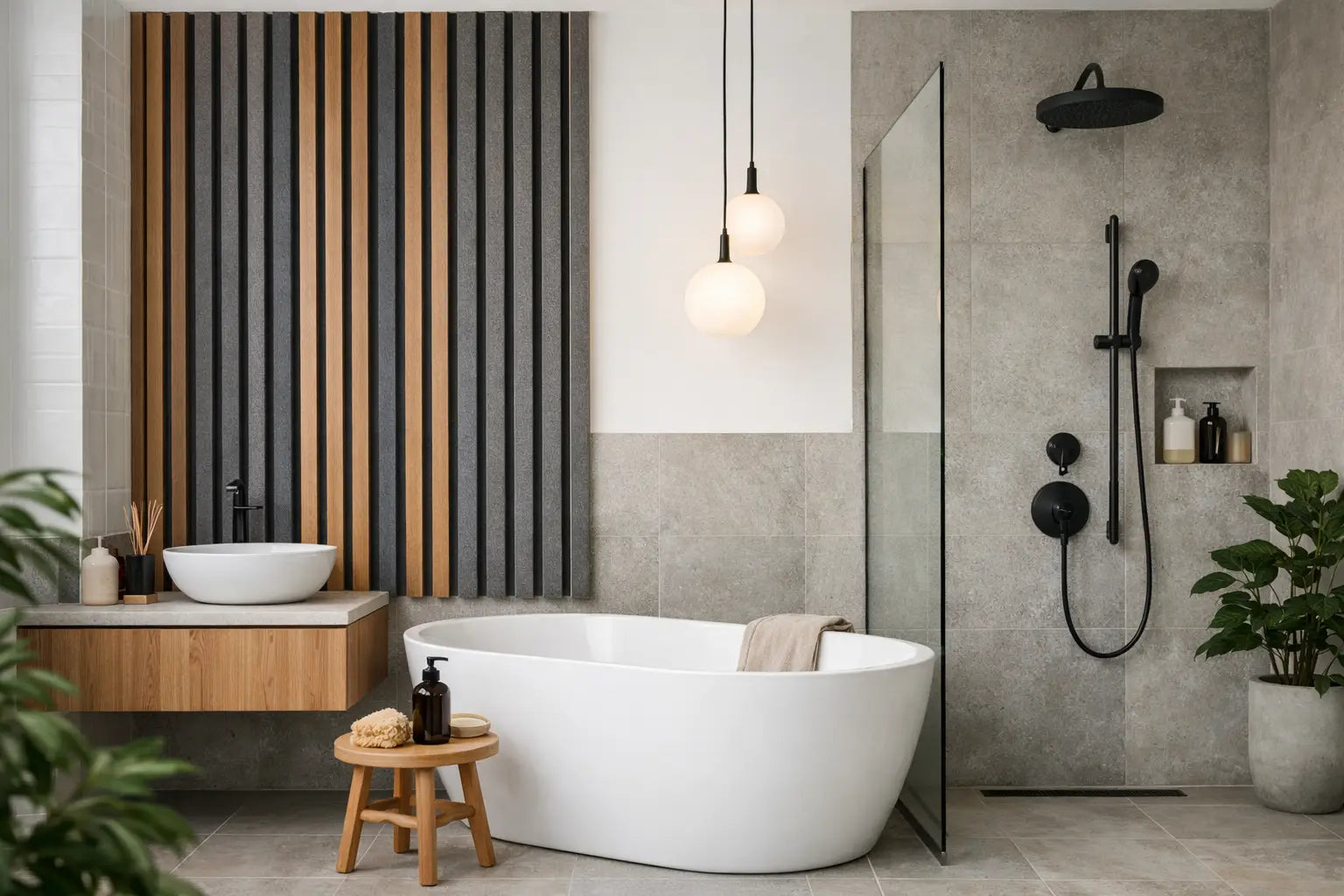
A bathroom with hard tiled floors, glass, and a sleek ceiling can quickly sound hollow. Conversations echo, a hairdryer sounds sharper than necessary, and a large space feels less comfortable. Acoustic panels in the bathroom can noticeably reduce this difference, but only when you apply them in the right place and with the right expectations. After all, a bathroom is not a dry living room: moisture, condensation, and ventilation determine whether a wall finish will remain beautiful for years.
The smart choice, therefore, is not just about color or wood look. First, consider the moisture zone, ventilation, and the material behind the panel. This way, you combine quiet acoustics with the modern, warm look of slat panels without unnecessary risk of damage.
Bathrooms usually contain many smooth, hard surfaces. Ceramic tiles, natural stone, glass, mirrored walls, and cast floors reflect sound instead of absorbing it. Especially in a spacious bathroom with high ceilings, this creates a clear reverberation.
Acoustic wall panels help by absorbing and breaking some of these sound waves. The felt backing and the open space between the slats limit reflection. The result is not a completely silent bathroom, but a space that feels calmer and more pleasant. You notice this especially when talking, listening to music, or using a hairdryer and electric toothbrush.
For those who primarily use a bathroom functionally, acoustics do not need to be a top priority. But in a luxurious en-suite bathroom, a spacious family bathroom, or a wellness area, it is a finish that adds comfort and appeal at the same time.
The location is decisive. Acoustic panels are generally suitable for dry or slightly damp areas of the bathroom, provided the room is well-ventilated. Think of the wall near the vanity unit, an accent wall opposite the bath, or a dry ceiling area outside the direct shower zone.
Do not place panels where they will be continuously wet. The wall in a walk-in shower, the inside of a shower enclosure, and areas with direct water jets require completely waterproof materials, such as tiling, waterproof wall panels, or a certified system. Caution is also advisable next to a bath without a splash screen when water regularly hits the wall.
A practical rule of thumb: if condensation remains on that wall for a long time after showering, or if you can hit that spot with the shower head? Then it is better to opt for a moisture-resistant wall finish specifically developed for wet zones. If you still want to implement the slat look, let the acoustic panels start outside the splash zone. This keeps the design sleek and the application responsible.
A wall behind a freestanding bath can work perfectly if there is no direct water exposure. The back wall of a toilet, a niche next to the vanity unit, or a partition wall in a large bathroom are also strong applications. The vertical slats make a low ceiling appear optically higher, while horizontal mounting can make a narrow bathroom appear wider.
Use panels consciously as an accent. Covering an entire bathroom with slats can become busy, especially alongside outspoken tiles or marble look. One clear wall usually gives the most high-quality result and keeps maintenance manageable.