Total: €0,00
Taxes and shipping calculated at checkout

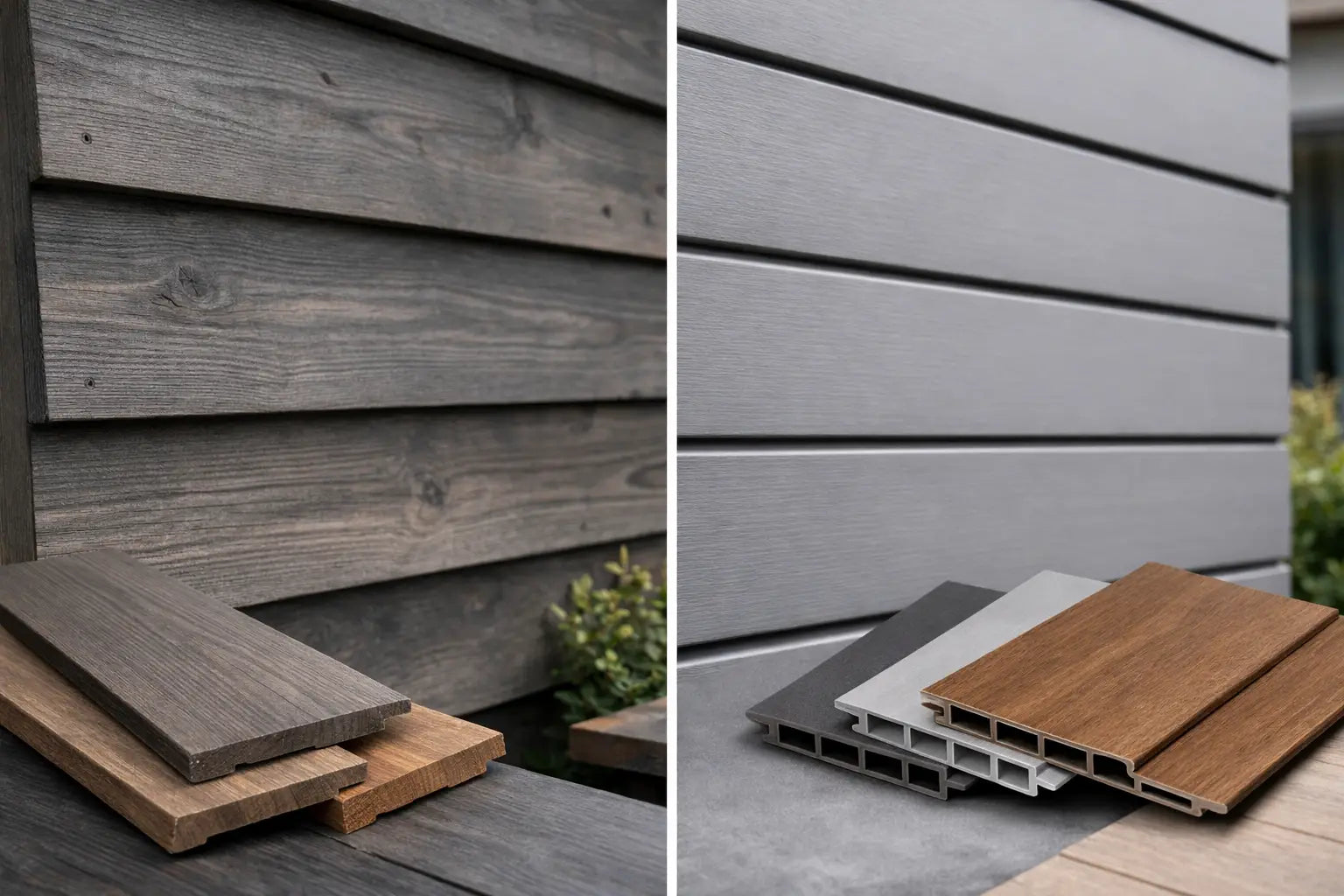
Wie een gevel strak en onderhoudsarm wil afwerken, komt al snel uit bij dezelfde vraag: kies je voor rabatdelen of kunststof gevelbekleding? Op papier lijken die opties soms elkaars alternatief, maar in de praktijk loopt het onderscheid minder zwart-wit. Rabatdelen zeggen iets over het profiel en de manier van monteren. Kunststof gevelbekleding zegt vooral iets over het materiaal. Juist daardoor is een goede vergelijking essentieel als je een gevel wilt die jarenlang mooi blijft zonder terugkerend schuur-, lak- of schilderwerk.
Rabatdelen zijn delen die zo zijn gevormd dat ze overlappend of aansluitend op elkaar gemonteerd worden. Dat profiel wordt veel gebruikt voor gevels, schuttingen en wandafwerking, omdat het zorgt voor een nette belijning en een gesloten geheel. Rabat kan gemaakt zijn van hout, composiet of kunststof. Het woord verwijst dus niet automatisch naar een specifiek materiaal.
Kunststof gevelbekleding is breder. Dat is een materiaalcategorie waar verschillende profielen onder kunnen vallen, waaronder rabatprofielen. Wie twijfelt tussen rabatdelen of kunststof gevelbekleding vergelijkt dus vaak eigenlijk twee dingen door elkaar: een montagesysteem tegenover een materiaalsoort. De juiste vraag is meestal: wil je een rabatprofiel, en zo ja, kies je dat dan in hout, composiet of kunststof?
Voor veel huiseigenaren en vakmensen is dat een belangrijk verschil. Je bepaalt namelijk eerst de uitstraling van de gevel en daarna pas welk materiaal daar het best bij past.
Rabatdelen zijn populair omdat ze direct zorgen voor een moderne, rustige gevel. De lijnen zijn strak, de montage oogt verzorgd en kleine oneffenheden in de onderconstructie zijn vaak beter op te vangen dan bij volledig vlakke panelen. Zeker bij woningen, tuinverblijven, dakkapellen en aanbouwen is dat een groot voordeel.
Daarnaast geven rabatdelen veel ontwerpvrijheid. Je kunt kiezen voor horizontale plaatsing voor een bredere, modernere look of juist voor verticale montage als je hoogte en een meer architectonisch effect wilt benadrukken. Ook in kleur en houtlook is er veel mogelijk, waardoor je sneller een afwerking vindt die past bij zwarte kozijnen, lichte steenstrips of juist een warme natuurlijke stijl.
Toch zit er een nuance in. Kies je rabatdelen in traditioneel hout, dan koop je vooral uitstraling, maar neem je ook onderhoud mee. Hout moet behandeld worden, kan vergrijzen, werken en op termijn beschadigen door vocht en UV. Voor wie de look van hout wil zonder dat onderhoud, komt composiet of hoogwaardige kunststof veel logischer uit.
Kunststof gevelbekleding wordt vaak gekozen om één duidelijke reden: gemak. Het materiaal is weerbestendig, vormvast en onderhoudsarm. Geen schilderbeurten, geen bladderende lagen en veel minder kans op kromtrekken of scheuren dan bij onbehandeld hout. Dat maakt het interessant voor zowel particuliere renovaties als grotere projecten waar snelheid en voorspelbare prestaties belangrijk zijn.
Voor professionals telt nog iets anders mee: montagegemak en consistentie. Kunststof systemen zijn vaak ontwikkeld als compleet geheel, met bijpassende profielen en afwerkingsstukken. Daardoor werk je sneller, lever je strakker op en voorkom je gedoe met nabewerkingen op locatie.
Wel is niet elke kunststof gevelbekleding hetzelfde. Goedkopere varianten kunnen minder natuurlijk ogen of sneller verkleuren. Daarom is de combinatie van materiaalopbouw, kleurvastheid en profielkeuze doorslaggevend. Een gevel moet niet alleen op dag één strak zijn, maar ook na jaren buitengebruik nog representatief ogen.
Bij de keuze tussen rabatdelen of kunststof gevelbekleding draait veel om uitstraling. Wie een warme, natuurlijke gevel zoekt, kijkt vaak eerst naar hout of houtlook. Wie een zeer strakke en uniforme afwerking wil, komt sneller uit bij kunststof of composiet systemen met een moderne belijning.
Dat betekent niet dat kunststof per definitie kunstmatig oogt. De betere systemen benaderen de uitstraling van hout verrassend goed, maar dan zonder noesten die openwerken, zonder kleurverschil door verwering en zonder de noodzaak om de gevel om de paar jaar opnieuw aan te pakken. Juist voor woningen waar design en gemak samen moeten gaan, is dat een sterk punt.
Rabatprofielen versterken dat effect. Ze geven de gevel ritme en diepte, terwijl het totaalbeeld rustig blijft. Daardoor zijn ze geschikt voor zowel een volledige gevel als een accentvlak bij bijvoorbeeld een entree, uitbouw of veranda.
In de praktijk wordt de beslissing zelden alleen op uiterlijk genomen. Onderhoud en levensduur wegen zwaar mee, zeker als je een investering doet voor de lange termijn. Houten rabatdelen vragen structureel meer aandacht. Dat kan prima zijn als je bewust kiest voor echt hout en het onderhoud geen bezwaar vindt. Maar veel mensen willen vooral een gevel die er verzorgd uitziet zonder terugkerende kluslast.
Daar scoort kunststof gevelbekleding sterk. Schoonmaken met water en een zachte borstel is meestal voldoende om de gevel netjes te houden. Geen schuren, geen lakken en geen jaarlijkse controle op afbladdering. Voor drukke huiseigenaren is dat een directe winst. Voor vakmensen betekent het minder kans op klachten achteraf over onderhoudsgevoelige oppervlakken.
Ook de levensduur speelt mee. Een goed systeem is bestand tegen regen, vorst, zon en temperatuurschommelingen. Daardoor blijft de gevel langer functioneel en visueel sterk. De hogere aanschafprijs ten opzichte van simpel hout wordt daardoor vaak gecompenseerd door minder onderhoud en minder vervanging op termijn.
Montage is een onderdeel waar het verschil tussen systemen snel zichtbaar wordt. Rabatdelen zijn van nature praktisch omdat de profielen in elkaar grijpen of overlappen. Dat versnelt de plaatsing en helpt om een gesloten gevelvlak te creëren. Voor renovaties en nieuwbouw is dat aantrekkelijk, zeker wanneer planning en afwerking strak moeten zijn.
Bij kunststof gevelbekleding hangt veel af van het gekozen systeem. Werk je met complete profielen, start- en eindstukken en een duidelijke onderconstructie, dan bouw je efficiënt en met een nette afwerking. Dat is vooral interessant als je snelheid wilt combineren met een professioneel eindresultaat.
Wel blijft correcte montage belangrijk. Denk aan ventilatie achter de bekleding, uitzettingsruimte waar nodig en een goede bevestiging op een stabiele achterconstructie. Wie daarop bespaart, levert in op levensduur en uitstraling. Een sterk product komt alleen goed tot zijn recht als het systeem juist wordt verwerkt.
Bij een tuinkantoor, overkapping, aanbouw of gevelrenovatie is de slimste keuze meestal niet puur rabatdelen of puur kunststof gevelbekleding, maar een combinatie van profiel en materiaal die aansluit op het gebruik. Zoek je een klassieke houten look en vind je periodiek onderhoud acceptabel, dan kunnen houten rabatdelen nog steeds passend zijn.
Wil je de warme uitstraling van hout, maar zonder de terugkerende onderhoudslast, dan zijn composiet rabatdelen vaak de meest logische stap. Ze combineren een verzorgde houtlook met een lange levensduur en veel minder werk. Juist daarom kiezen steeds meer huiseigenaren en professionals voor complete onderhoudsarme systemen in plaats van traditioneel hout.
Voor projecten waar snelheid, strakke afwerking en voorspelbare prestaties voorop staan, is hoogwaardige kunststof gevelbekleding eveneens sterk. Zeker als je werkt met moderne architectuur, donkere kleurstellingen of grote geveloppervlakken wil je materiaal dat vormvast blijft en visueel consistent oogt.
Modern bouwen vraagt om materialen die niet alleen mooi zijn, maar ook praktisch presteren. Een gevel moet bestand zijn tegen weer, weinig onderhoud vragen en passen bij een strakke architectonische stijl. In dat speelveld winnen onderhoudsarme systemen snel terrein.
Daarom is de vraag rabatdelen of kunststof gevelbekleding vaak het best te beantwoorden met: kies het profiel dat past bij de uitstraling, en het materiaal dat past bij je gebruik. Rabat is ideaal als je ritme, diepte en een verzorgde lijnwerking wilt. Kunststof of composiet is ideaal als je onderhoud wilt beperken en lang plezier wilt houden van dezelfde uitstraling.
Bij WPC Solutions zie je precies waarom die combinatie zo sterk werkt: de uitstraling van hout, de voordelen van moderne materialen en een systeem dat geschikt is voor zowel particuliere projecten als professionele verwerking. Dat maakt de keuze niet ingewikkelder, maar juist slimmer.
Een gevel koop je niet voor één seizoen. Kies daarom niet alleen wat nu mooi oogt, maar vooral wat over vijf of tien jaar nog steeds strak aanvoelt, goed presteert en geen extra werk oplevert.