Total: €0,00
Taxes and shipping calculated at checkout

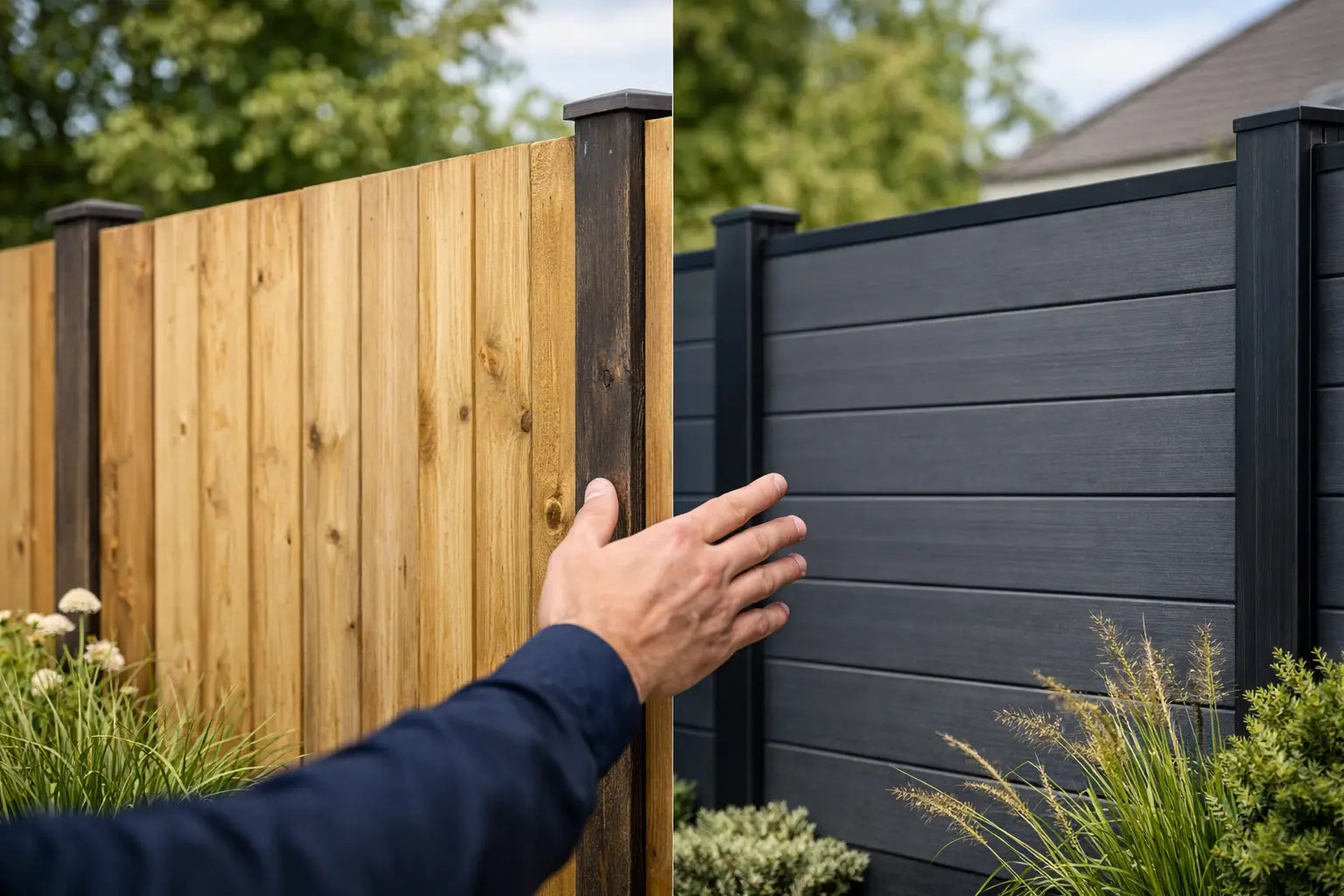
De keuze tussen hout of composiet schutting voelt vaak simpel tot je echt gaat vergelijken. Op het eerste gezicht geven beide privacy, sfeer en een nette erfafscheiding. Maar zodra je kijkt naar onderhoud, levensduur, kleurvastheid en totale kosten, zie je snel waar het verschil in de praktijk zit.
Wie een nieuwe schutting plaatst, koopt niet alleen een rij panelen of planken. Je kiest voor jarenlang aanzicht in je tuin, voor hoeveel tijd je kwijt bent aan onderhoud en voor hoe strak het geheel er over vijf of tien jaar nog uitziet. Precies daar wordt de vraag interessant: ga je voor traditioneel hout, of voor een moderne composiet oplossing met houtlook?
Een houten schutting blijft populair omdat het materiaal bekend aanvoelt. Hout heeft een natuurlijke uitstraling, is in veel stijlen verkrijgbaar en past goed in zowel klassieke als landelijke tuinen. Zeker als je houdt van een warme, levendige nerfstructuur, is hout een logische kandidaat.
Composiet is ontwikkeld voor mensen die die uitstraling wél willen, maar de nadelen van hout liever overslaan. Het materiaal combineert een strakke afwerking met een onderhoudsarm karakter. Je krijgt dus een moderne schutting met de look van hout, maar zonder jaarlijks schuren, beitsen of zorgen over snelle verwering.
Het grootste verschil zit niet alleen in hoe het eruitziet op dag één, maar in hoe het zich houdt op dag 1000. Hout verandert door vocht, zon en temperatuur. Composiet is veel stabieler en daardoor interessanter voor wie langdurig een nette, consistente afwerking wil houden.
Als uitstraling de doorslag geeft, is het slim om verder te kijken dan alleen de eerste indruk. Hout oogt vaak heel authentiek, maar dat beeld verandert na verloop van tijd. Sommige mensen vinden vergrijzing mooi en natuurlijk. Anderen ervaren het juist als rommelig of gedateerd, zeker wanneer kleurverschillen zichtbaar worden tussen oude en nieuwe delen.
Bij composiet draait het meer om controle. Je kiest een kleur en een stijl, en die blijft veel constanter. Dat geeft een strakker eindbeeld, vooral in moderne tuinen met grote tegels, zwarte accenten, aluminium details of minimalistische beplanting. Een composiet schutting oogt vaak rustiger en meer uniform, wat veel huiseigenaren en vakmensen als een plus zien.
Toch is het geen zwart-witkeuze. In een heel natuurlijke tuin met veel groen, organische vormen en een informele sfeer kan hout visueel beter passen. In een nieuwbouwtuin of een strak ontworpen buitenruimte sluit composiet meestal sterker aan.
Hier wordt het verschil tussen hout of composiet schutting voor veel mensen meteen duidelijk. Hout vraagt onderhoud. Niet misschien, maar gewoon structureel. Om het materiaal mooi te houden, moet je denken aan reinigen, behandelen en op termijn ook repareren of vervangen van delen die kromtrekken, scheuren of verweren.
Dat onderhoud is niet voor iedereen een probleem. Sommige mensen vinden het prima om elk seizoen tijd in de tuin te steken. Maar wie weinig tijd heeft, of simpelweg geen zin heeft in terugkerend werk, merkt al snel dat hout meer aandacht vraagt dan vooraf gedacht.
Composiet is juist sterk in gemak. Een periodieke schoonmaakbeurt is in de meeste gevallen voldoende om de schutting netjes te houden. Je hoeft niet te schilderen of te beitsen, en dat scheelt niet alleen tijd, maar ook terugkerende kosten. Voor drukke huishoudens, verhuurwoningen en projectmatige toepassingen is dat een groot voordeel.
Een schutting staat dag en nacht buiten. Regen, UV-straling, vorst en warmte werken dus continu in op het materiaal. Hout is gevoelig voor die omstandigheden. De mate waarin hangt af van de houtsoort, de afwerking en hoe goed de constructie is geplaatst, maar het blijft een materiaal dat werkt en slijt.
Composiet is juist ontworpen voor langdurige buitentoepassing. Het materiaal is beter bestand tegen vocht en heeft minder last van splijten, rotten of sterke vervorming. Daardoor blijft de schutting in veel situaties langer strak en functioneel.
Dat betekent niet dat elk composiet product automatisch hetzelfde presteert. Kwaliteit in samenstelling, afwerking en systeemopbouw maakt veel verschil. Goede panelen, stevige palen en passende bevestiging zorgen samen voor een degelijk resultaat. Voor zowel particulieren als professionals loont het dus om niet alleen naar de plank zelf te kijken, maar naar het complete systeem.
Op aanschafprijs lijkt hout soms aantrekkelijker. Dat is precies waarom veel mensen in eerste instantie die kant op denken. Maar een eerlijke vergelijking stopt niet bij de prijs op de offerte of in de shopping cart.
Bij hout moet je rekening houden met onderhoudsmiddelen, tijd, mogelijke vervanging van onderdelen en een kortere esthetische levensduur. Het materiaal kan technisch nog staan, terwijl het visueel al niet meer voldoet aan wat je wilt. En juist dat speelt mee als je waarde hecht aan een verzorgde tuin of nette projectoplevering.
Composiet ligt in aanschaf vaak hoger, maar compenseert dat door lagere onderhoudskosten en een langere nette uitstraling. Voor wie vooruitrekent in plaats van alleen naar de startprijs kijkt, valt composiet vaak gunstiger uit. Zeker bij grotere tuinen of meerdere erfafscheidingen wordt dat verschil snel relevant.
De juiste keuze hangt ook af van wie de schutting plaatst. Doe-het-zelvers kijken vaak naar montagegemak, foutmarge en onderhoud achteraf. Vakmensen letten daarnaast op maatvastheid, levertijd, systeemlogica en de vraag of een project strak en voorspelbaar afgewerkt kan worden.
Hout is bekend terrein, maar ook minder uniform. Dat kan tijdens montage extra correctiewerk vragen. Kleine afwijkingen in vorm of maat zijn bij natuurproducten nu eenmaal mogelijk. Voor een ambachtelijke aanpak is dat niet altijd een probleem, maar bij een strak lijnenspel kost het tijd.
Composiet scoort juist sterk op consistentie. Dat maakt het interessant voor mensen die een modern, recht en verzorgd eindresultaat willen zonder verrassingen tijdens de montage. Complete schuttingsystemen met bijpassende palen, schermen en accessoires werken efficiënter en zorgen vaak voor een nettere afwerking.
Voor projecten waar snelheid, uitstraling en lage onderhoudslast samenkomen, is dat een duidelijke meerwaarde. Zeker als levering en bestelgemak meetellen, kiezen steeds meer klanten bewust voor een systeemoplossing in plaats van losse materialen die nog op elkaar afgestemd moeten worden.
Composiet heeft veel voordelen, maar hout is niet ineens irrelevant. Er zijn situaties waarin hout nog steeds logisch is. Bijvoorbeeld wanneer je specifiek de charme van echt natuurmateriaal zoekt, bewust kiest voor een landelijke uitstraling of een beperkt budget hebt en onderhoud voor lief neemt.
Ook bij heel specifieke maatwerktoepassingen of wanneer bestaande houten elementen in de tuin moeten worden doorgetrokken, kan hout visueel de beste match zijn. Dan is consistentie met de rest van de buitenruimte belangrijker dan onderhoudsgemak.
Het eerlijke antwoord is dus niet dat composiet altijd wint. Het juiste materiaal hangt af van je prioriteiten. Wil je karakter en een meer natuurlijke veroudering, dan kan hout passend zijn. Wil je strak design, minder werk en een langdurig nette uitstraling, dan ligt composiet duidelijk voor.
Wie zijn tuin onderhoudsarm wil inrichten, komt vaak vanzelf bij composiet uit. Dat geldt voor huiseigenaren die klaar zijn met periodiek schilderwerk, maar net zo goed voor hoveniers en aannemers die een betrouwbaar eindresultaat willen afleveren. Ook bij moderne nieuwbouw, renovatieprojecten en luxe buitenruimtes sluit composiet vaak beter aan op het totaalbeeld.
Daarnaast speelt comfort een grote rol. Een schutting moet privacy geven en er goed uitzien, zonder dat die elk jaar opnieuw aandacht opeist. Dat idee van gemak, lange levensduur en een verzorgde houtlook is precies waarom composiet in korte tijd zo sterk terrein heeft gewonnen.
Bij WPC Solutions zie je die behoefte terug in complete systemen die direct online te bestellen zijn, met een moderne afwerking en focus op langdurige prestaties. Dat maakt de stap van oriënteren naar echt kiezen een stuk eenvoudiger.
Als je twijfelt tussen hout of composiet schutting, kijk dan niet alleen naar hoe het materiaal vandaag oogt. Kijk vooral naar hoeveel werk, kosten en uitstraling je over jaren nog acceptabel vindt. Een goede schutting staat niet alleen stevig op de erfgrens, maar ook stevig in je planning voor de lange termijn.