Total: €0,00
Taxes and shipping calculated at checkout

You choose a composite fence precisely to spend less time sanding, staining, and replacing. But how do you maintain a composite fence so that the color and sleek wood look remain beautiful? The answer is reassuringly simple: regular light cleaning, not allowing stains to set in, and avoiding aggressive agents. This will keep your garden fence presentable, without the maintenance burden of real wood.
Composite consists of a combination of wood fibers and plastic. This composition makes the planks weather-resistant and colorfast, but not completely insensitive to dirt. Rain, pollen, mud, algae, and splashes from the barbecue can adhere to the surface. With a regular, practical routine, you can prevent this from accumulating.
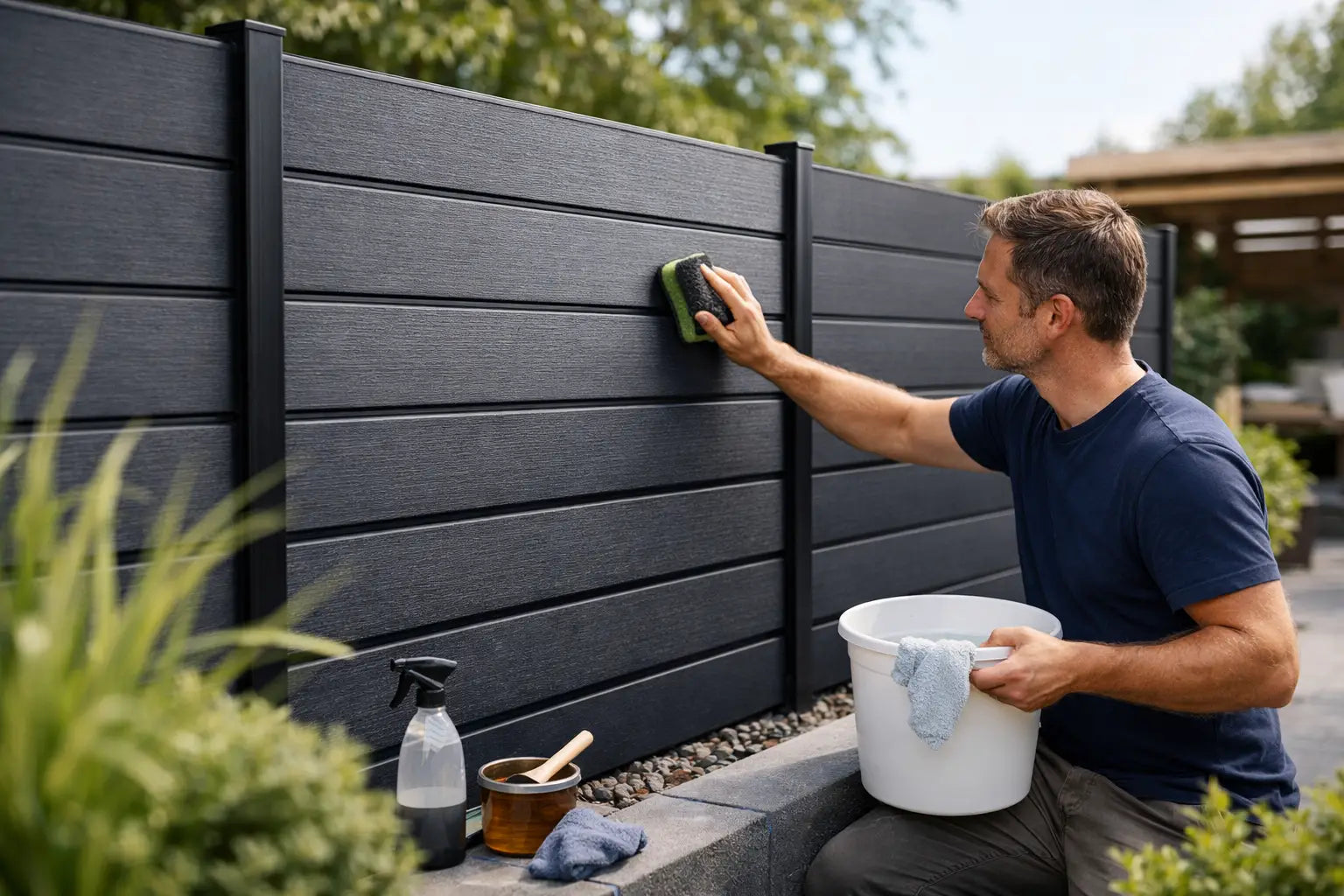
For normal maintenance, you usually only need lukewarm water, a soft brush, and a mild, pH-neutral cleaner. First, rinse off loose dirt with a garden hose. Then, clean the planks lengthwise with the soft brush and rinse with clean water. This prevents sand or dirt from scratching the surface.
Preferably do this once or twice a year: in the spring, when green growth and winter dirt become visible, and possibly in the autumn after a season with a lot of leaves and rain. Is the fence close to trees, a sprinkler system, or a busy patio? Then an extra cleaning might be wise. Low-maintenance doesn't mean dirt disappears by itself, after all.
Choose a cloudy, dry day. In direct sunlight, soap sometimes dries too quickly, which can cause streaks. Also, work in manageable sections, especially with a long fence. This provides the most even result and makes it easier to immediately address spots that need extra attention.
The faster you treat a stain, the less intensive cleaning you'll need. Mud streaks, leaves, or dried rain marks can usually be removed with water and a soft brush. For grease splatters around an outdoor kitchen or barbecue, a mild degreaser often works well. Apply it first according to the instructions on the packaging and always rinse thoroughly.
Do you see green growth on a shady side? Then use a cleaner suitable for composite and avoid products with aggressive chlorine compounds or strong acids. These can affect the surface, cause discoloration, or leave a haze. A scourer, steel brush, or sandpaper is also not a solution. Composite does not need to be sanded, and a damaged surface attracts dirt more quickly.
Stubborn stains require patience, not more force. Let a suitable cleaning agent work briefly, brush gently, and repeat the treatment if necessary. Always test a new product first in an inconspicuous area. The finish varies per type of composite plank, color, and structure. What works well on a classic, brushed plank is not automatically suitable for a co-extruded plank with a protective top layer.
A high-pressure cleaner is usually not the first choice. A jet that is too hard, an incorrect nozzle, or too small a distance can cause streaks, rough spots, and visible lines. Especially with planks that have a protective coating, you want to avoid that risk.
Is there exceptionally stubborn dirt and does the manufacturer allow its use? Then use low pressure, a wide fan spray, and keep a good distance from the plank. Aim the jet along the plank, never continuously at one point. In most cases, a garden hose with a brush provides a nicer and safer result.
A sleek composite system consists not only of fence planks. Aluminum posts, capping, U-profiles, and fasteners also determine the appearance. Include these components during cleaning with a soft cloth and mild soap. This prevents dirt from accumulating in corners and connections.